Online Reporter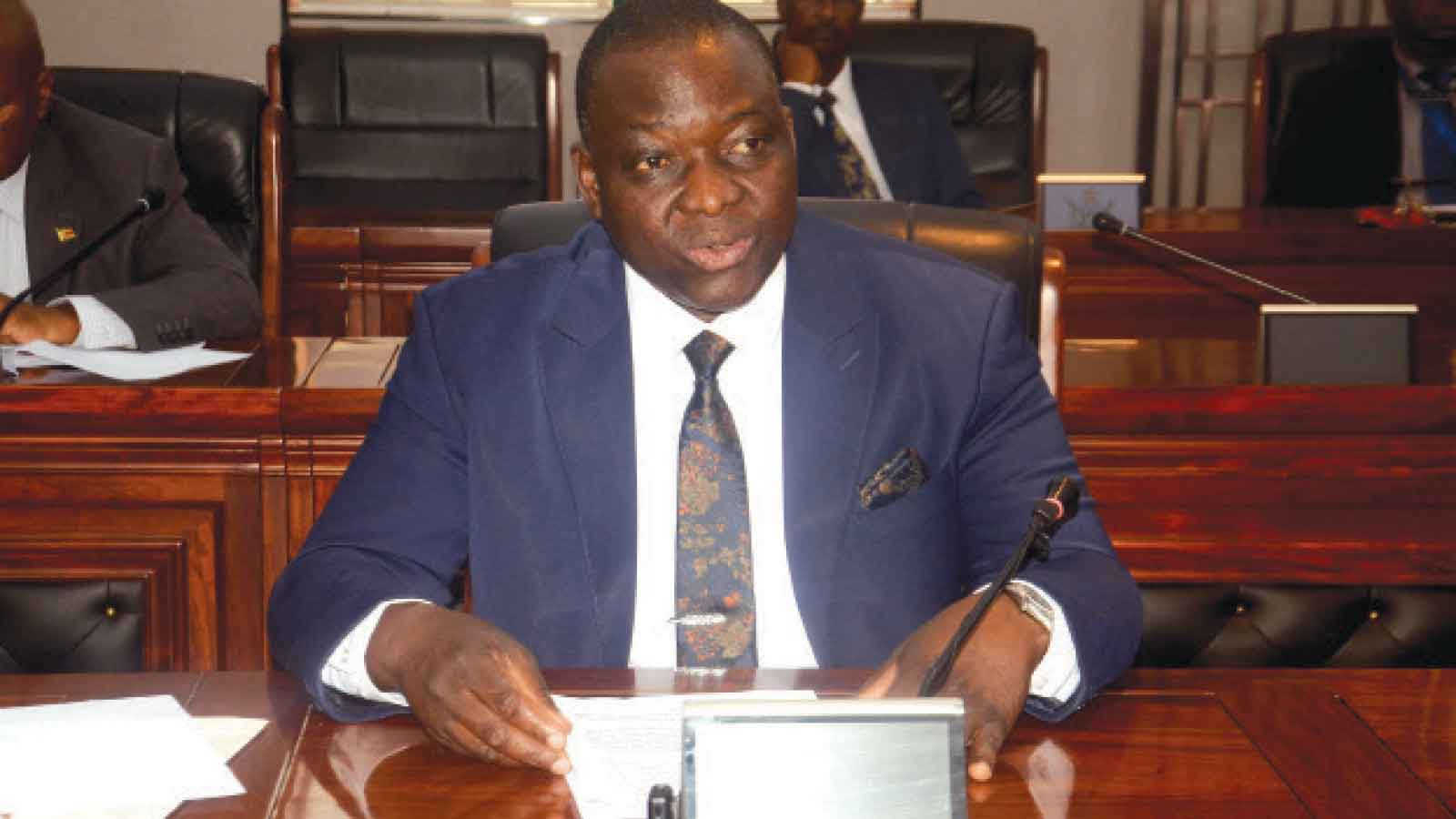
We publish here the 31st post Cabinet media briefing presented by Information, Publicity and Broadcasting Services Minister, Dr Zhemu Soda, in Harare yesterday.
Cabinet received and approved the National Social Contract made by Government, Organised Business and Organised Labour (2026-2030), which was presented by the Minister of Local Government and Public Works on behalf of the Honourable Vice President, Dr Mohadi, Chairman of the Cabinet Committee on Social Development.
The nation is informed that the Social Contract represents an agreement between Government, Business and Labour concerning their rights and obligations towards each other, and how they should work together in pursuit of common goals. In line with the National Development Strategy 2 (2026-2030), the Tripartite Negotiating Forum was mandated to strengthen social cohesion anchored on trust, dialogue and shared national values, fostering mutual accountability and collective action towards inclusive and sustainable development.
Such best practices were drawn from countries including Singapore, Tunisia, Sweden, among others, which are known for having transformed their economies through social contracts.
The Social Contract Agreement put together government led by the Minister of Finance, Economic Development and Investment Promotion; seven business organisations led by the Employers Confederation of Zimbabwe; and three Labour Federations and Confederations including the Zimbabwe Congress of Trade Unions, the Zimbabwe Federation of Trade Unions and the Zimbabwe Confederation of Public Sector Trade Unions.
The nation is informed that the Social Contract focusses on three interconnected pillars including Economic, Labour and Social Pillars. Each of the three pillars provides a comprehensive roadmap for addressing key national challenges identified under it and ways for promoting inclusive and sustainable development.
The Social Contract, therefore, represents a pragmatic, consensus-driven framework for addressing challenges through strengthened social dialogue, coordinated action and shared accountability among social partners.
2.0 PROPOSED PROGRAMME FOR CLOUD SEEDING FOR THE 2026/2027 RAINFALL SEASON
Cabinet received a report regarding the Status of the Cloud-Seeding Plan for the 2026/2027 Rainfall Season, which was presented by the Minister of Agriculture, Mechanisation and Water Resources Development, Dr Anxious Masuka.
In light of the unprecedented Super El Nino warnings being issued by Global climate agencies, Government is intensifying mitigatory measures, including cloud-seeding efforts to increase chances of precipitation.
The nation is informed that cloud seeding is set to commence on November 01, 2026.
Three aircrafts based in Harare, Bulawayo and Masvingo will be used for the exercise.
The Harare station will cover all the Mashonaland provinces, the Bulawayo base will cover all the Matabeleland provinces, while the Masvingo base will cover Midlands, Manicaland and Masvingo provinces.
Government continues to mobilise resources to ensure the successful implementation of this critical programme.
3.0 MEMORANDUM OF UNDERSTANDING BETWEEN THE REPUBLIC OF ZIMBABWE AND THE GOVERNMENT OF THE REPUBLIC OF INDONESIA IN THE FIELD OF AGRICULTURE
Cabinet approved the Memorandum of Understanding between Zimbabwe and the Government of the Republic of Indonesia in the Field of Agriculture, as presented by the Minister of Transport and Infrastructural Development, Honourable Felix Mhona, as the Acting Minister of Justice, Legal and Parliamentary Affairs.
The Memorandum seeks to establish a comprehensive framework for cooperation in agriculture development, food diversification, crop and livestock production mechanisation, digital agriculture, trade and technology transfer, among other aspects.
Through the bilateral cooperation, Zimbabwe will benefit on modernising farming systems, enhancing livestock production, and opening of new international trade networks and synergies.
4.0 MEMORANDUM OF UNDERSTANDING BETWEEN THE REPUBLIC OF ZIMBABWE AND THE UNITED REPUBLIC OF TANZANIA IN THE FIELD OF AGRICULTURE
Cabinet also approved the Memorandum of Understanding between the Republic of Zimbabwe and the United Republic of Tanzania in the Field of Agriculture, which was presented by the Minister of Transport and Infrastructural Development, Honourable Felix Mhona, as the Acting Minister of Justice, Legal and Parliamentary Affairs.
The Memorandum of Understanding seeks to strengthen cooperation in areas including agricultural productivity, food and nutrition security, value addition, agro-industrialisation, regional trade, technology transfer and institutional collaboration.
The Memorandum of Understanding will further provide a framework for deepening the already existing bilateral cooperation between the two nations, Zimbabwe and the Republic of Tanzania, which date back to the Liberation Struggle for the Independence of Zimbabwe.
5.0 REPORT ON THE AFRICA FOOD SYSTEMS FORUM HELD IN KIGALI, RWANDA
Cabinet considered and noted the Report on the Africa Food Systems Forum held in Kigali, Rwanda from September 1-4, 2026, as presented by the Minister of Agriculture, Mechanisation and Water Resources Development, Honourable Dr Anxious Masuka.
The Africa Food Systems Forum attended by 5 000 delegates and held under the theme “Investing in Africa Agri-Food Systems: Nourishing Nations, Growing Jobs, Building Resilience” sought to spotlight innovations, technologies, best practices, business models, policy delivery mechanisms to accelerate food systems transformation in Africa.
The Forum also celebrated the 20th Anniversary of the Alliance for Green Revolution for Africa since its formation in 2006.
The Forum reviewed progress, identified challenges, highlighted successes, and illuminated priorities to bridge the implementation gap for food systems transformation.
The Minister was the keynote speaker during the Session on “Turning El Nino intelligence into Climate Resistant Food Systems for Africa” The Minister’s presentation focused on Zimbabwe’s preparedness for a super El Niño, highlighting the climate-proofed Pfumvudza/Intwasa programme, irrigation development, the Village Business Units concept and the six pillars of the Summer Plan among other mitigatory programmes and strategies.
The other sessions that were attended by the Minister included the following: Beyond Production: Building Market Systems that Create Jobs at Scale; the High-Level Ministerial Roundtable on Transforming Food Systems in the Context of Global Conflict and the Energy Crisis; Digitalisation: Financing Generative AI for Agricultural Advisory; Council of the Wise and the Presidential Summit.
On the sidelines of the Forum, the Minister also held bilateral meetings with the former President of Botswana, Dr Mokgweetsi Eric Keabetswe Masisi; the Deputy Director General of the Food and Agriculture Organisation, Mr Maurizio Martina, and the Vice President of the International Fund for Agricultural Development, Ms Gerardine Mukeshimana.
The country intends to host a future edition of the Forum following Nigeria’s withdrawal from the 2027 hosting arrangements and this will greatly enhance Zimbabwe’s international visibility and help to attract investment.
The Forum identified the following six priority areas that create jobs, food security and wealth, namely: investment and finance; food security and nutrition; climate resilience; enhancing global, regional and national collaboration for climate action; youth and digital innovation; and trade, marketing and value chains.
These priority areas are critical for accelerated implementation of the Agriculture Food Systems and Rural Transformation Strategy and the Kampala Comprehensive Africa Agriculture Development Programme Declaration.
I THANK YOU!