

 onlinemedia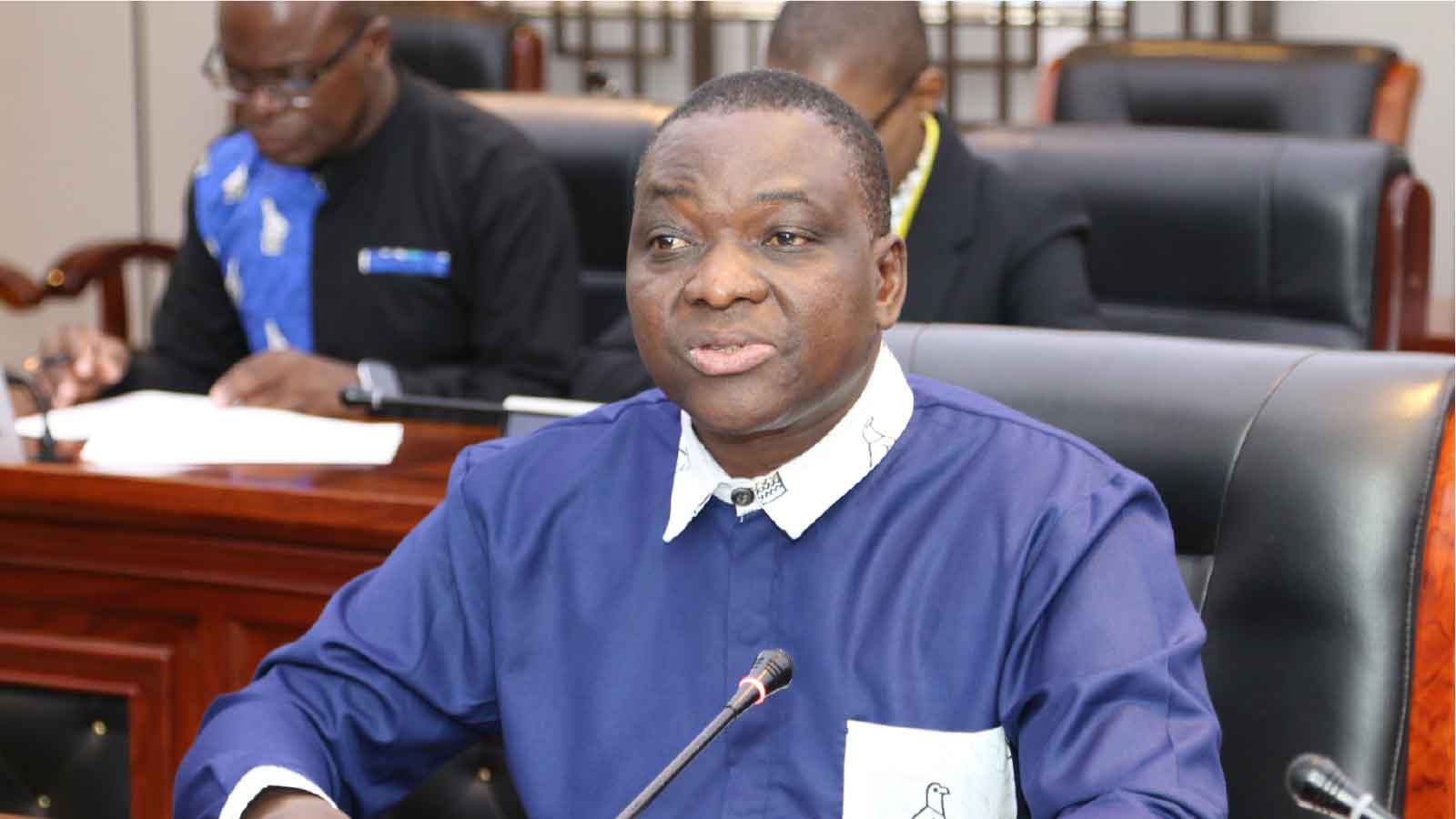
We publish here the 15th post-Cabinet media briefing presented by Information, Publicity and Broadcasting Services Minister, Dr Zhemu Soda in Harare yesterday.
As Chairperson of the Zimbabwe National Committee on Drug and Substance Abuse, the Minister of Defence, Honourable Oppah Muchinguri-Kashiri, presented an Update on the National Drug and Substance Abuse Response, which was approved by Cabinet.
The Zimbabwe National Committee on Drug and Substance Abuse is implementing a Multi-Sectoral Drug and Substance Abuse Plan (2024–2030), which is tailored to mitigate and ultimately eliminate the drug and substance abuse scourge in Zimbabwe.
The Committee coordinates actions across Government Ministries, law enforcement agencies and the private sector, and seeks to achieve set targets through seven strategic pillars follows: supply chain reduction; demand reduction and prevention; harm reduction, treatment and rehabilitation; psycho- social support and community re-integration; resource mobilisation and economic strengthening; media and communication; and legal and policy reforms.
The Committee is successfully disrupting illicit supply networks and has achieved significant milestones as per the following selected highlights:
- A total of 2 889 accused persons were arraigned before the courts and 381 convictions were secured;
- Approximately 453 drug suppliers, 2 436 individual end-users, and 31 drug bases were dismantled in the selected districts of Manicaland and Mashonaland West Provinces;
iii. Drugs and illicit substances valued at approximately ZiG 79 931 130.00 were confiscated. These included crystal meth, cocaine, ecstasy tablets, dagga, khat and unregistered medicines including cough syrups; and
- Removal of 32 children living and working on the streets.
The Committee also conducted regulatory compliance inspections across the country’s provinces, with 615 liquor-licensed premises having been inspected and 36 unlicenced premises fined and closed.
Other strategic interventions include robust awareness and prevention campaigns covering 285 918 beneficiaries; acquisition of drug-testing kits and the re-integration of 171 children with their families.
Community-based prevention systems are underway, while vibrant drug rehabilitation, training and entrepreneurship programmes have been rolled out to approximately 37 937 youths and women.
A US$1 million Youth Empowerment Fund has also been launched.
Government continues to spearhead the legislative and policy framework in order to strengthen coordination, accountability, prevention, rehabilitation, treatment and enforcement interventions.
2.0 UPDATE ON THE WATER, SANITATION AND HYGIENE SITUATION IN ZIMBABWE
Cabinet noted and approved the Update on the Water, Sanitation and Hygiene Situation in Zimbabwe as presented by the Minister of Agriculture, Mechanisation and Water Resources Development, Honourable Dr Anxious Jongwe Masuka.
The Inter-Ministerial Committee on Water, Sanitation and Hygiene (WASH) also known as the WASH National Committee is implementing an integrated multi- sectoral and Whole-of-Government approach for sectoral policy and strategy development. The Committee is also implementing a number of projects and programmes, and the following notable milestones have been achieved in the following broad areas:
- Development of a multiplicity of sectoral policy interventions such as the National Sanitation and Hygiene Policy and Strategy; WASH Compact; WASH in Health Care facilities; Insurance Strategy for rural water supplies and others;
- Access to potable water in rural areas improved from 71 percent in 2016 to 81 percent in 2025;
iii. Access to sanitation facilities improved from 63 percent in 2016 to 65 percent in 2025; and
- Basic hygiene improved from 8 percent in 2016 to 11,9 percent in 2025.
Regarding urban water security, most centres have sufficient raw water to last until the next run-off season, as the raw water supply dams are 70 percent to 98 percent full. As at May 14, 2026, the national dam levels were at 93,1 percent, compared to 88 percent at the same time in 2025. The available water in the major dams will facilitate irrigation of 243 888 hectares throughout the season.
Meanwhile, Government has adopted “The Dam is the economy” model, which regards water infrastructure as the central engine for rural transformation towards the attainment of Vision 2030.
Cabinet advises that dam water supplies are being augmented by the borehole drilling initiative under the Presidential Rural Development Programme.
A total of 5 258 boreholes have been drilled thereby catalysing the development of 1 589 Village Business Units across all the country’s provinces.
In addition, a total of 4 837 solar- powered water schemes have also been developed across the 8 rural provinces of the country.
The interventions have been extended to schools, with 79 percent of schools now having access to borehole water.
Another critical milestone is in research and development initiatives, which have seen the development of innovations.
These include life pumps and other models of handpumps to augment water accessibility and enhanced sanitation under the following projects: Siakobvu water project, Save Alluvial Aquifer, and others.
Government has also identified a number of priority areas for the multi-sectoral control of cholera.
3.0 REPORT ON THE 23RD UNITED NATIONS TOURISM COMMITTEE ON TOURISM AND SUSTAINABILITY MEETING AND 2ND UN TOURISM REGIONAL CONGRESS ON WOMEN EMPOWERMENT IN TOURISM
Cabinet approved the report on the hosting of the 23rd United Nations Tourism Committee on Sustainability Meeting and the Second United Nations Tourism Regional Congress on Women Empowerment in Tourism held at Elephant Hills Hotel in Victoria Falls from April 27, to May 1, 2026, which was presented by the Minister of Tourism and Hospitality Industry, Honourable Barbara Rwodzi.
The meetings, which were attended by a strong contingent of international and local delegates comprising, inter-alia, representatives from Costa Rica, Dominican Republic, Egypt, Sri Lanka, Zambia, Kenya and Montenegro were held under the patronage of the First Lady, Dr Auxillia Mnangagwa.
The Meetings achieved, among others, the following milestones:
- strengthening policy development;
- crafting of sustainable models for financing Women in Tourism Business;
iii. promotion of targeted gender responsive financial policies;
- promotion of tourism financing to enhance community level and sector-wide inclusion;
- commitment to mentoring, investor match-making, and rural economic inclusion; and
- leveraging technology in Tourism.
Accordingly, Cabinet adopted the following key resolutions: to support the establishment of the inclusive National Committees to drive preparations for the forth-coming International Year of Sustainable and Resilient Tourism to be held in 2027; scaling-up capacity-building to ensure that sustainability principles are embedded across institutions and communities; and the need to leverage flagship events aimed at showcasing Africa’s biodiversity, rural livelihoods, and resilient economies.
Government will also strengthen women’s empowerment initiatives to ensure that no one is left behind in tourism development.
4.0 REPORT ON ZIMBABWE’S PARTICIPATION IN EXPO 2027 BELGRADE, REPUBLIC OF SERBIA
Cabinet noted and approved the Report on Zimbabwe’s Participation in EXPO 2027 Belgrade, Republic of Serbia as presented by the Minister of Foreign Affairs and International Trade, Honourable Professor Amon Murwira.
Expo 2027 Belgrade is a Specialised Expo which takes place between World Expos and focuses on a specific area of human life being ,namely ” Play for Humanity”.
Expo 2027 Belgrade is structured around three thematic sub-themes namely: Power of Play; Play for Progress; and Play Together.
The event will be hosted by the Balkan Region for the first time and is expected to attract over 4,1 million visitors from over 120 countries and international organisations. Participation in Expo 2027 Belgrade offers Zimbabwe a cost-effective, high visibility platform to promote Brand Zimbabwe, attract investment and strengthen diplomatic ties across European and global markets.
The country will benefit through engagement and participation with global innovation programmes, showcasing Zimbabwe’s creative sector as both a cultural asset and an emerging economic driver.
Youth participation at the Expo will be vigorously promoted in various activities at the Expo.
5.0 PROPOSED HOSTING OF THE CREATIVE ECONOMY EXPO OF ZIMBABWE (SCEEZ): OCTOBER 2026
The Minister of Sport, Recreation, Arts and Culture, Honourable General (Rtd) Anselem Sanyatwe presented the proposal for hosting the Creative Economy Expo of Zimbabwe in October 2026, which Cabinet adopted.
Government, through the Ministry of Sport, Recreation, Arts and Culture will host the “Kuzyana Sport and Creative Economy Expo” at the Zimbabwe International Trade Fair Grounds in Bulawayo Metropolitan Province from October 7-11, 2026.
“Kuzyana” a Zimbabwean Tonga word meaning “to dance” serves as the perfect unifying title for the inaugural Sport-Creative Economy Expo.
The Expo seeks to position Zimbabwe as a regional hub for sport and creative economy development by 2030, while unlocking the economic potential of the two sectors.
The Expo will run under the theme “Kuzyana: Towards Vision 2030 through Sports and Creative Industries.”
6.0 REPORTS ON PRIORITY PROJECTS FOR THE FIRST 100-DAY CYCLE OF 2026
Cabinet received and considered reports on progress made in the implementation of priority projects as at Day-50 of First 100-Day Cycle, which were presented by the Ministers of Foreign Affairs and International Trade; and Home Affairs and Cultural Heritage.
The Minister of Foreign Affairs and International Trade, Hon. Professor, Amon Murwira reported progress on projects under his Ministry as follows:
- a) Regarding Zimbabwe’s bid for a non-permanent seat on the United Nations Security Council for the term 2027-2028, the Ministry has successfully reached out to 106 out of the 193 member countries, representing 55 percent against the initial target of 60 percent;
- b) Renovation of the VVIP Lounge at the Robert Gabriel Mugabe International Airport is almost complete;
- c) For the Zimbabwe Annual Diaspora Conference, a total of 24 out of 30 investment and partnership commitments were secured, representing an 80 percent achievement of the target;
- d) Preparation of the Global Strategy Document has reached 80 percent; and
- e) 10 Memoranda of Understanding were signed during the Zimbabwe-Ghana Joint Permanent Commission on Cooperation held in Kumasi, Ghana.
The Minister of Home Affairs and Cultural Heritage, Honourable Kazembembe Kazembe, reported on progress on projects under his Ministry as follows:
- a) Construction of Insiza District Registry Offices in Matabeleland South Province is at 80 percent completion;
- b) Construction of the Great Zimbabwe Visitors Centre in Masvingo Province has been completed;
- c) Electronic Traffic Management System installation at 20 sites in Harare Metropolitan Province has reached 60 percent completion; and
- d) Construction of Kasambabezi Border Post in Matabeleland North Province has reached 95 percent completion.
7.0 FIRST QUARTER 2026 ECONOMIC DEVELOPMENTS AND OUTLOOK
Cabinet considered and noted the First Quarter 2026 Economic Developments and Outlook as presented by the Minister of Finance, Economic Development and Investment Promotion, Honourable Professor Mthuli Ncube.
The First Quarter of 2026 was characterised by elevated global uncertainty, primarily reflecting escalating geopolitical tensions in the Middle East which have contributed to higher energy prices, increased commodity price volatility and unfavourable global financial conditions.
The developments pose downside risks to the outlook of the domestic economy through their impact on the balance of payments, agriculture output (fertiliser shortages), inflation, exchange rate and foreign reserves build-up.
To date, the domestic economy has remained broadly resilient, anchored by sustained macro- economic stability and the successful rainfall season that has underpinned agricultural activity and continued policy reforms that are supporting and enhancing the ease of doing business.
Commodity markets in the First Quarter of 2026 were characterised by renewed upward pressures and heightened volatility, driven largely by escalating geo-political tensions affecting global energy supply chains.
Increasing production and transport costs which tend to contribute to rising inflationary pressures are being managed in order to protect jobs, sustain livelihoods and cushion the general citizenry.
Economic growth is still projected to moderate around 5 percent in 2026, reflecting anticipated strong agriculture sector recovery and mining sector growth underpinning overall growth of the economy.
However, elevated fertiliser prices and higher shipping and insurance costs are increasing agricultural input costs, with potential adverse effects on crop yields, food security and overall economic activity.
Government has already removed some of the taxes on diesel, thereby helping to contain costs and inflation and support growth endeavours.
Fiscal developments in 2026 have so far been anchored on continued revenue recovery and expenditure containment, with total revenues projected to reach US$9,4 billion against a total expenditure of US$9 billion.
This performance reflects improved revenue collection and effective expenditure management.
Year-on-year inflation declined sharply from elevated levels in 2025 where it peaked above 90 percent mid-year to 4,1 percent in January 2026, before easing further to 3,8 percent in February and then slightly increasing to 4,4 percent in March due to the Middle East-related crude oil price shock.
This sustained decline highlights the effectiveness of stabilisation measures implemented by the Government.
In the outlook, export performance is expected to remain relatively strong, supported by gold, other minerals including Platinum Group of Minerals and Lithium, and Tobacco in the medium term.
8.0 REPORT ON THE AFRICA FORWARD SUMMIT: NAIROBI, KENYA: 11-12 MAY, 2026
The Minister of Foreign Affairs and International Trade, Honourable Professor Amon Murwira presented the Report on the Africa Forward Summit: Africa-France Partnerships for Innovation and Growth, which was adopted by Cabinet.
The Summit was held in Kenya from May 11 to 12, 2026.
Zimbabwe’s major objective in attending the Summit was to advance the engagement and re-engagement strategy by promoting Global and Pan African Solidarity.
The Summit also provided an invaluable platform for Zimbabwe to promote its image as a country ready to provide global leadership in preparation for the United Nations Security Council non-permanent seat elections to be held in New York on June 3, 2026.
The outcomes of the Summit included, inter-alia, adoption of the Africa Forward 2026 Declaration anchored on economic transformation, regional sovereignty and African integration.
The economic transformation thrust entails moving from a model of resource extraction to industrialisation and value-addition within Africa, while regional sovereignty pertains to the support for Africa-led solutions to peace and security, particularly in Sahel and Horn of Africa as well as reforming the United Nations Security Council representation.
The African integration thrust emphasises leveraging the African Continental Free Trade Area (AfCTA) for the greater economic integration among the 54 member States.
9.0 REPORT ON THE INAUGURAL SESSION OF THE ZIMBABWE-EQUATORIAL GUINEA JOINT COMMISSION ON COOPERATION
The Minister of Foreign Affairs and International Trade Honourable Professor Amon Murwira also presented the Report on the Inaugural Session of the Zimbabwe- Equatorial Guinea Joint Commission on Cooperation, which was approved by Cabinet. The Inaugural Session was held on May 9, 2026.
The objectives of the Joint Commission on Cooperation were as follows: to promote regional and pan-African cultural, economic and political cooperation and integration; to consolidate the longstanding political and diplomatic relations between Zimbabwe and Equatorial Guinea; to expand bilateral economic cooperation and thereby unlock more trade and investment opportunities; and to finalise operationalisation of the legal instruments aimed at deepening sectoral collaboration.
The salient outcomes of the Joint Commission on Cooperation included the following: mutual commitment to the acceleration of economic cooperation, regional integration and enhancing political and diplomatic consultations; promoting economic trade; cooperation in education; rationalisation of visa fees; and affirmation of the need to cooperate in the agriculture, wildlife management, fisheries, tourism and mining sectors.
Significantly, the session provided a platform to finalise Agreements and Memoranda of Understanding to be signed during the President of Equatorial Guinea’s visit to Zimbabwe in June 2026, namely: Agreement on Economic and Trade Cooperation; Training of Translators and Interpreters; and the Memorandum of Understanding in the Field of Education. In general, the event successfully reinforced strong bilateral relations between Zimbabwe and Equatorial Guinea.
10.0 REPORT ON THE PARTICIPATION OF THE REPUBLIC OF ZIMBABWE AT THE ELEVENTH REVIEW CONFERENCE OF THE TREATY ON THE NON-PROLIFERATION OF NUCLEAR WEAPONS
Cabinet approved the Report on Zimbabwe’s participation at the 11th Review Conference of the Treaty on the Non-Proliferation of Nuclear Weapons held in New York, United States of America from April 27 to 30, 2026, which was presented by the Minister of Defence, Honourable Oppah Muchinguri-Kashiri.
Zimbabwe’s participation was aimed at promoting international peace and security, and to foster technological and scientific development through peaceful uses of nuclear energy.
The visit also provided an opportunity to advance Zimbabwe’s United Nations Security Council non-permanent seat bid by highlighting the country’s commitment to peace and security through the full and balanced implementation of the Treaty on the Prohibition of Nuclear Weapons.
The outcomes of Zimbabwe’s participation included enhanced engagement and collaboration with international organisations and countries that are committed to the peaceful uses of nuclear energy.
Going forward, Government will consider options to catalyse industrialisation and power generation through nuclear energy technology.
It is noteworthy that Zimbabwe was elected to serve as the Vice President of Review Conference and Vice Chair of the Main Committee on the Peaceful Uses of Nuclear Energy.
The election affirmed Zimbabwe as a champion of disarmament and the peaceful settlement of disputes.
I THANK YOU!



 Online Reporter