Online Reporter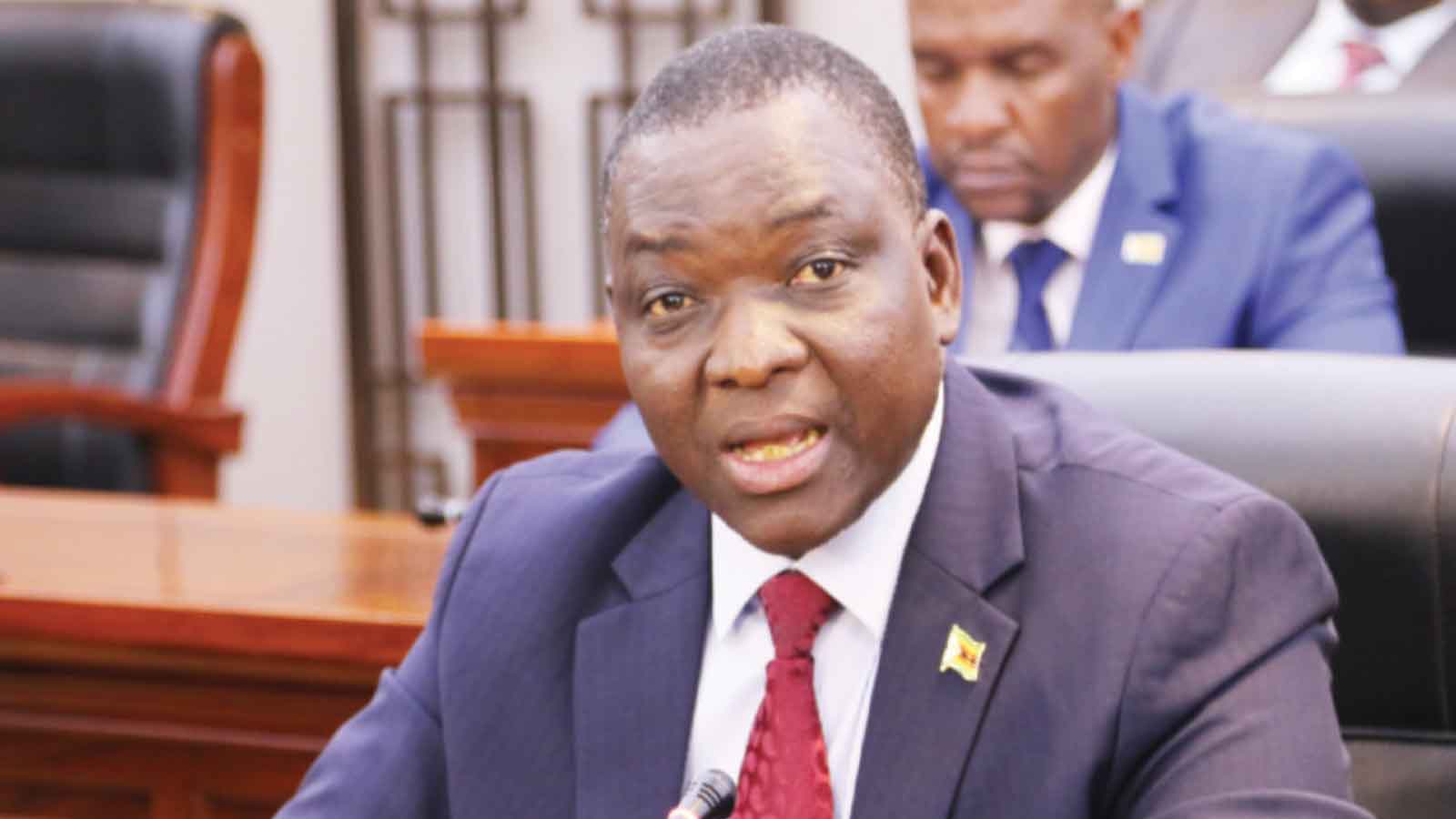
We publish here the 30th post-Cabinet media briefing presented by Information, Publicity and Broadcasting Services Minister, Dr Zhemu Soda, in Harare yesterday.
On the back of the recently-issued 2026/2027 Summer Season Rainfall Outlook predicting below-normal rainfall across the country, Cabinet approved the “Update on the 2025/2026 Summer Plan Incorporating the Drought Plan”, as presented by the Minister of Agriculture, Mechanisation and Water Resources Development, Honourable Dr Anxious Jongwe Masuka.
Faced by two major threats, (i) a super El Niño which will cause below normal rainfall and associated with high temperatures and (ii) geopolitical tensions which have elevated the prices of fuel and fertiliser and disrupted supply, the 2026/2027 season presents a critical stress test of Zimbabwe’s agricultural resilience and forward planning.
In this context, and building on the lessons from the 2024/2025 season, when Zimbabwe experienced its worst drought since 1980, the 2026/2027 Summer Plan comprises six interconnected interventions and resilience pillars, namely:
(i) Enhanced Strategic Grain Reserve;
(ii) Accelerated Climate-Smart
Production;
(iii) Integrated Financing Architecture;
(iv) Livestock Drought Mitigation;
(v) Enhanced Imports; and
(vi) Coordination, Early-Warning Systems and Capacity-Building Support.
With the six strategic interventions, the national total cereal production expected for the 2026/2027 season is 1,6 million metric tonnes, with an expected Strategic Grain Reserve target of 600 000 metric tonnes.
This translates to an expected cereal production deficit of 266 881 metric tonnes to 541 881 metric tonnes for the 2026/2027 season.
The private sector will be allowed to import to meet commercial needs for both food and feed, while households will continue to import basics for household needs, which will be reviewed upwards.
Building agricultural resilience under the climate-proofing agenda at both household and national levels is therefore the Second Republic’s bold expression of Zimbabwe’s Vision 2030 developmental aspiration of a food-secure, prosperous and empowered upper-middle income society.
In this regard, His Excellency the President, has issued a statement targeted at Chiefs, Headmen and Village Heads.
2.0 PROPOSED MEASURES TO ADDRESS INFORMAL VENDING AND ASSOCIATED ACTIVITIES IN THE HARARE CENTRAL BUSINESS DISTRICT
In line with the Vision 2030 objectives and Minimum Service Delivery Standards of smart and orderly cities consistent with a prosperous upper-middle income society, Cabinet approved the Proposed Measures to Address Informal Vending and Associated Activities in the Harare Central Business District, which were presented by the Minister of Transport and Infrastructural Development, Honourable Felix Tapiwa Mhona, as Chairman of the Cabinet Committee on Utilities and Infrastructural Development.
The measures, which focus on illegal vending, will restore order, safeguard public health, formalise livelihoods and improve the overall functionality of Harare, Zimbabwe’s Capital City.
Interventions to address other urban management challenges being faced by the City, such as illegal transport operations, deteriorating road infrastructure and organised crime will be announced in due course, as the programme proceeds.
Highlights of the measures include a coordinated approach that balances enforcement with the provision of lawful decent trading alternatives under four pillars, namely: (i) Legislate, (ii) Provide, (iii) Formalise and (iv) Enforce.
Servicing of 100 identified vending sites across Harare’s suburbs with potable water, ablution facilities, lighting, shelter, waste management and storage is set to be accelerated.
A new modern satellite market for traders will be developed on the periphery of the CBD. A 60-Day One-Stop Formalisation Drive will be launched in liaison with the City of Harare and all the relevant stakeholders, while a Harare Vendors Council is established for co-management of sites and dispute resolution, and formalised vendors will be linked to financial institutions for working capital.
Other mitigation mechanisms include the constitution of a CBD Urban Management Command chaired by the City of Harare to “Clear, Clean, Keep” the City clean and orderly, with illegal vendors being relocated under strict enforcement.
Meanwhile, processing of the Municipal Police and Courts Bill is being expedited in order to enable the Harare Municipal Police to enforce relevant by-laws, and to operationalise Municipal Courts so as to ensure expeditious prosecution of municipal offences through simplified procedures.
The Ministry of Local Government and Public Works has already launched the cleaning up of Harare streets and the relocation of vendors to official sites under a 60-day exercise.
Full details of this exercise and the approved immediate, medium and long-term measures will be announced and implemented by the responsible Ministry and Local Authority as the programme proceeds.
3.0 REPORT ON THE EIGHTH MEETING OF THE INTERNATIONAL SOLAR ALLIANCE REGIONAL COMMITTEE FOR AFRICA
As Acting Minister of Energy and Power Development, the Minister of Transport and Infrastructural Development, Honourable Felix Tapiwa Mhona, presented the Report on the Eighth Meeting of the International Solar Alliance Regional Committee for Africa, and Cabinet noted the Report.
The meeting, which was held from August 25th to 27th, 2026 in Victoria Falls, ran under the theme “Moving from Ambition to Action”, representing a call to translate Africa’s political commitments on solar energy into mobilised capital, investible project pipelines and measurable development outcomes.
Officially opened by His Excellency the President Mnangagwa, the platform deliberated on practical measures to accelerate solar energy deployment, mobilise investment, strengthen technical capacity and expand access to affordable, reliable and sustainable energy.
Three landmark initiatives were launched at the closing ceremony, namely:
(i) the Solar Technology and Application Resource Centre (STAR-C) at Chinhoyi University of Technology;
(ii) the Solar Universal Gender Assessment Tool; and
(iii) the Zimbabwe-International Solar Alliance Country Partnership Framework. Zimbabwe also signed the “Solar Agriculture for She” pact, which is an implementation agreement targeting decentralised solar energy to support agricultural productivity, particularly in irrigation, cold storage, crop drying and agro-processing.
Another key highlight was deliberation on the need for African countries to accelerate the adoption of electric vehicles and utility battery energy storage systems.
On the sidelines, the Minister of Energy and Power Development held meetings with the International Solar Alliance Director-General; the African Union Commissioner on Energy and Infrastructure; and the Ambassador of Algeria to Zimbabwe.
Accordingly, Zimbabwe is strategically positioned to leverage the outcomes of the 8th International Solar Alliance Regional Committee Meeting and accelerate the transformation of its abundant solar energy potential into tangible socio-economic development.
The country will therefore leverage its strategic partnership with the International Solar Alliance to mobilise concessional and private sector financing, develop bankable solar projects, attract technology and investment partners, and to strengthen local value addition and manufacturing.
4.0 HEALTH SECTOR UPDATE REPORT – JULY 2026
In order to sustain progress towards achieving the National Development Strategy 2: 2026-2030 (NDS 2), Universal Health Coverage and the National Health Strategy, the Minister of Health and Child Care, Honourable Dr Douglas Tendai Mombeshora, presented the Health Sector Update Report as at end of July 2026, which was approved by Cabinet.
During the first half of 2026, Government continued to implement reforms to strengthen health system governance, expand access to quality health services, modernise infrastructure, improve the health workforce and to enhance availability of medicines and medical technologies.
Consequently, significant progress was recorded across several health sector strategic areas, while challenges continue to be innovatively addressed.
Major achievements recorded during the review period include the launch of the National Health Strategy (2026-2030); increased health financing with high utilisation of released capital projects funds; reduction of health workers vacancies, while attending to specialist posts shortages; improved availability of essential drugs and medicines; attainment of service delivery targets in global HIV targets among adults, childhood immunisation coverage, institutional maternal mortality, cervical cancer screening and treatment expansion, and in epidermic preparedness and cholera response.
Government continues to modernise health infrastructure, as it attends to critical initiatives such as completion of Lupane Provincial Hospital and operationalisation of the National Health Insurance framework, among other innovative health financing mechanisms.
5.0 THE CHARTERED SECRETARIES(PRIVATE) AMENDMENT BILL, 2026
Cabinet considered and approved the Chartered Secretaries (Private) Amendment Bill, 2026, which was presented by the Minister of Justice, Legal and Parliamentary Affairs, Honourable Ziyambi Ziyambi, as Chairman of the Cabinet Committee on Legislation.
The Bill amends the Chartered Secretaries (Private) Act (Chapter 27:03) to modernise the legislative framework governing the Institute established under the Act by updating its institutional nomenclature, expanding its statutory mandate, and aligning its functions with contemporary governance, accountancy and professional regulatory requirements.
In particular, the Bill transforms the Institute into the Chartered Governance and Accountancy Institute in Zimbabwe and broadens the categories of professionals eligible to receive professional education, training and examination under the restructured institute.
The amendments will strengthen the development of governance, accountancy, auditing and related professional skills in Zimbabwe.
6.0 MEMORANDUM OF UNDERSTANDING BETWEEN THE REPUBLIC OF ZIMBABWE AND THE GOVERNMENT OF SWEDEN ON COOPERATION IN THE AREAS OF ENVIRONMENT, CLIMATE AND SUSTAINABLE USE OF NATURAL RESOURCES
Cabinet considered and approved the Memorandum of Understanding Between the Republic of Zimbabwe and the Government of Sweden on Cooperation in the Areas of Environment, Climate and Sustainable Use of Natural Resources, which was presented, once again, by the Minister of Justice, Legal and Parliamentary Affairs, Honourable Ziyambi Ziyambi, as Chairman of the Cabinet Committee on Legislation.
The MoU enhances cooperation between the Parties in environment and conservation, particularly in the areas of capacity-building; information sharing; pollution reduction; carbon trading and knowledge exchange.
Other cooperation areas include enhanced climate mitigation actions; sustainable use of natural resources; climate change; and enhanced weather and climate services for early-warning in the face of extreme weather events.
7.0 REPORT ON THE ELEVENTH SESSION OF ZIMBABWE-CHINA JOINT COMMISSION ON ECONOMIC, TECHNICAL AND TRADE COOPERATION (JETC): HARARE: AUGUST 26, 2026
As part of efforts to leverage Zimbabwe’s international relations for national development, Cabinet noted the Report on the 11th Session of the Zimbabwe-China Joint Commission on Economic, Technical and Trade Cooperation, held in Harare on August 26th, 2026, as presented by the Minister of Justice, Legal and Parliamentary Affairs, Honourable Ziyambi Ziyambi on behalf of the Minister of Foreign Affairs and International Trade.
The Joint Commission reviewed bilateral economic cooperation since the convening of the 10th Session in 2018, and agreed on measures to translate the Zimbabwe-China All Weather Community with a Shared Future strategic partnership, into tangible economic and developmental outcomes.
Under the strategic Pillar on International Trade and Investment Promotion and Local Production, Zimbabwe welcomed China’s Unified Quarantine Announcements, which facilitate entry of selected African products, including dried chillies, coffee beans, cocoa nuts and cashew nuts, without separate Sanitary and PhytoSanitary protocols.
Furthermore, the Parties emphasised alignment of investments to mutually beneficial priorities such as value addition, beneficiation, industrialisation, local production and development of domestic value chains.
The Parties further agreed to strengthen cooperation in e-Commerce, Digital Trade, Artificial Intelligence and Emerging Technologies.
Other areas explored included an MoU on Trade in Services to facilitate opportunities for qualified Zimbabwean English-Language teachers and other professionals in China; and direct air connectivity through the signing of a Bilateral Air Services Agreement to facilitate tourism, trade and the general movement of people and goods.
These initiatives are consistent with the Second Republic’s economic diplomacy thrust of leveraging international relations to create opportunities for Zimbabwe and its citizens.
8.0 REPORT ON THE HIGH-LEVEL COMMEMORATION OF THE 65TH ANNIVERSARY OF THE FIRST SUMMIT OF THE NON-ALIGNED MOVEMENT: BELGRADE, SERBIA: AUGUST 31st TO SEPTEMBER 1st, 2026
Zimbabwe’s Engagement and Re-Engagement drive continues, as presented by the Acting Minister of Defence, the Minister of Home Affairs and Cultural Heritage, Honourable Kazembe Kazembe, in his Report to Cabinet on the High-Level Commemoration of the 65th Anniversary of the First Summit of the Non-Aligned Movement held in Belgrade, Serbia from August 31st to September 1st, 2026.
Held under the theme “The Legacy of Non-Alignment: Lessons for Today’s World”, the Commemorative Meeting provided a strategically important platform for multi-lateral and bi-lateral engagements, and for Zimbabwe to express its gratitude for Non-Aligned Movement Members States’ support in the country’s successful bid for a UN Non-Permanent Seat.
The Commemorative Meeting also underscored the critical role played by the Non-Aligned Movement in promoting peaceful resolution of conflicts and sovereign equality of States.
In that regard, Member States further noted that non-alignment denotes an independent sovereign posture, and international cooperation on development-oriented projects.
The Minister of Defence, who presented Zimbabwe’s National Statement on behalf of His Excellency the President, Cde. Dr. Emmerson Dambudzo Mnangagwa, also held bi-lateral meetings with Sudan’s Minister of Foreign Affairs; and Serbia’s Minister of Defence on the sidelines of the Commemorative Meeting.
9.0 REPORT ON ZIMBABWE’S PARTICIPATION AT THE 76TH SESSION OF THE WORLD HEALTH ORGANISATION REGIONAL COMMITTEE FOR AFRICA (RC 76): ADDIS ABABA, ETHIOPIA: AUGUST 24-28, 2026
The Minister of Health and Child Care, Honourable Dr Douglas Tendai Mombeshora, presented the Report on Zimbabwe’s Participation at the 76th Session of the World Health Organisation Regional Committee for Africa (RC 76) held in Addis Ababa, Ethiopia from August 24th to 28th, 2026 and Cabinet approved the Report.
The Regional Committee deliberated on regional health priorities, including Universal Health Coverage, health financing, health workforce development, health security, emergency medical teams, and local manufacturing and regulation of medical products.
The 76th Session was officially opened by the President of Ethiopia, His Excellency Taye Atske Selassie and the subsequent sessions reinforced the importance of country ownership, sustainable domestic financing, resilient health systems and enhanced African capacity to produce essential medicines and health technologies.
The Minister held some bilateral meetings, including with the Susan Thompson Buffet Foundation where areas of mutual interest were discussed.
He also convened a side-meeting of Ministers or representatives of 6 SADC Member States which agreed to set up a technical committee to explore the establishment of a Regional Medicines and health Commodities Pooled Procurement Initiative.
I THANK YOU