Online Reporter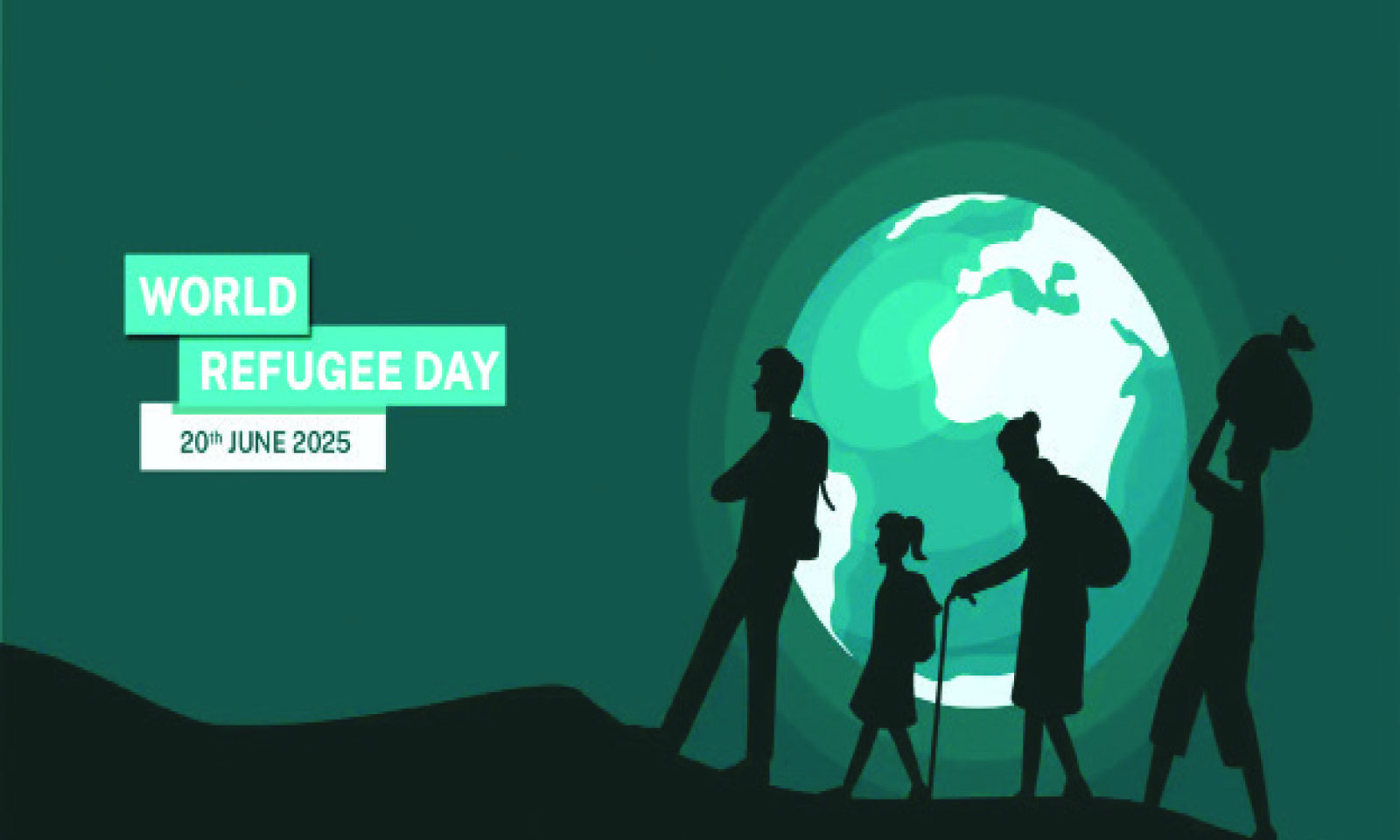
Norman Pinduka
JUNE 20 marks the world’s annual commemoration of World Refugee Day — an opportunity to honour the resilience, lives and contributions of refugees worldwide.
Since 2001 the United Nations and states around the globe not only remember refugees but also commemorate the precarity or vulnerability that this group of forcibly displaced people endures in different settings.
This year’s World Refugee Day is being celebrated under the theme “In solidarity with refugees”.
The United Nations High Commissioner for Refugees notes that the 2025 theme emphasises the need to honour refugees not just with words of support but also with actions, which include ensuring they have opportunities to thrive in the communities that have welcomed them.
World Refugee Day comes when the world is contending with unparalleled levels of displacement, with the United Nations Refugee Agency reporting that globally by the end of 2024, over 122 million people had been displaced due to various socio-economic, political and environmental stressors.
Africa finds itself entwined in such a crisis with millions of Africans having fled their homes in search of safe havens within the continent.
In response to International and Regional Law, including various measures that have been established to accommodate refugees, African states have made considerable strides to assist refugees despite limited resources.
However, some refugees continue to live in precarious situations, which points to a shift in approach as the continent works towards Agenda 2063 — the Africa we want.
This advocates for inclusive and flexible development plans that take into account the continent’s current configurations.
Against such a background and bearing in mind the essence of the theme “In solidarity with refugees”, it is important to underscore the essentiality of economic inclusion in addressing refugee precarity in Africa.
Refugee precarity is an unstable condition that speaks to the human insecurities and vulnerability that refugees are exposed to as a result of their legal status limbo, difficulties in accessing resources and various socio-economic stressors.
More often than not such a condition impedes refugees’ capacity to integrate and prosper in host communities.
The position is also exacerbated by the strain that the forcibly displaced place on host communities, which often results in misunderstandings and tensions.
Consequently economic inclusion can be a panacea to the precarious living conditions of some African refugees.
Economic inclusion robustly aligns with the goal of refugeehood, which is about ensuring that refugees rebuild their lives.
The provision of platforms and opportunities to refugees, whether encamped or not, is hence essential in reviving their hope.
Several African countries have made strides in promoting the economic inclusion of refugees.
Progressive policies that allow refugees to work, own and utilise land have been established in countries such as Uganda, Zimbabwe and Ethiopia.
They remain essential. However, solidarity with refugees conjures the need to think, unthink and rethink the economic inclusion of refugees in host states.
This goes beyond establishing policies to providing them with the necessary support for firm participation in the economic facets of host states, which has the potential to lessen or even end refugee precarity.
As Africa continues to seek an answer to the plight of refugees on the continent ending precarity through economic inclusion, in solidarity with refugees, necessitates several measures.
The first is to acknowledge the legal status of refugees. Refugees are not the same as undocumented migrants, illegal immigrants or migrants in general.
They are people who have been forcefully relocated and given secure spaces in host nations where they can lawfully live. Such recognition comprises protection and access to opportunities.
It therefore takes the role of refugee advocates to engage relevant authorities so that the status and position of refugees are upheld.
It is in this context that refugees can be included in economic development plans and policies.
Refugee economic inclusion also includes eliminating barriers to their full participation in the economic spheres of host States.
In this regard solidarity with refugees therefore entails recognising their struggles.
This further calls for an appreciation of the migration process a three-tier process that characterises the lives of refugees.
First in the process is the pre-migration phase where refugees are exposed to push factors such as armed conflict and violence.
Second is the migration transient in which refugees face life-threatening conditions such as violence, food insecurity and the threat of wild animals.
Third is the post-migration where there can be loss of hope due to family separation, difficulties in settling, post-migration trauma and non-acceptance by local communities.
It is imperative to establish and implement comprehensive measures that enhance the overall well-being of refugees.
Solidarity with refugees requires ensuring that they feel welcome creating a sense of belonging which can have a significant influence on their mental stability and emotional health.
To realise the full participation of refugees in local economies which is important for overall economic growth it is important to think and rethink community relations to foster understanding between refugees and local communities.
Such an initiative has the potential to eliminate impediments and reduce prejudice promoting coexistence between refugee and local communities.
Solidarity with refugees goes beyond words to creating a viable environment where each and every refugee thrives socially and at a personal level while contributing economically.
Norman Pinduka (PhD) is a lecturer of Politics and International Relations at Africa University and writes in his personal capacity — [email protected]