admin
admin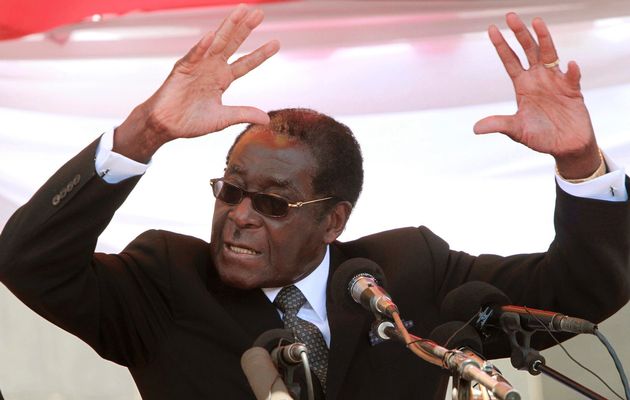
Mabasa Sasa in Santa Cruz, Bolivia
THE G77+China must take charge of their development agendas, crafting policies that are best-suited to their specific individual circumstances, but feeding into a broader thrust that creates a more just global economic, political and social order. According to a draft declaration prepared by G77+China leaders meeting here and seen by our Harare Bureau, there is no generic approach to development as often espoused by the Bretton-Woods institutions.
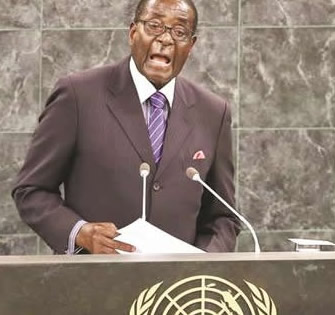
President Mugabe is among global leaders attending the 50th commemorative summit of the G77+China, which draws membership from 133 countries and is the largest single bloc in the United Nations.
The draft declaration dovetails with sentiments expressed by President Mugabe on arrival in Santa Cruz de la Sierra on Friday.
Ministry of Foreign Affairs officials also said most of the proposals in the draft declaration were consistent with the Zimbabwe Agenda for Sustainable Socio-Economic Transformation.
The draft reads in part: “We affirm that the 21st century is the time for countries and the peoples from the South to develop their economies and societies in order to fulfil human needs sustainably . . . we agree to build on our traditional values and practices of solidarity and collaboration for mutual benefit and on the strength of our people, to achieve progress in our countries and in South-South co-operation.
“We emphasise that each country has the sovereign right to decide its own developmental priorities and strategies considering that there is no one-size-fits-all approach.
“We stress the need for international rules to allow policy space and policy flexibility for developing countries, as they are directly related to the development strategies of national governments.
“We further emphasise the need for policy space to enable our countries to formulate development strategies, expressing national interests and differing needs which are not always taken into account by international economic policy making in the process of integration with the global economy.”
On Friday, President Mugabe said the G77+China should be at the forefront of creating a global order that opposed domination by Western powers.
“We should come together economically, come together politically, come together socially to form a really really active and operational Group of 77 that will stand firm and can be relied on to protect our interests and aspirations,” President Mugabe said.
The draft declaration touches on this saying: “We pledge to continue the tradition of our countries on building national development and uniting at the international level towards the establishment of a just international order in the world economy that supports developing countries achieve our objectives of sustained economic growth, full employment, provision of basic goods and services to our people and living in harmony with nature.
“We are proud of the legacy and achievements of the G77 and China in defending and promoting the interests of the developing countries over the past 50 years, which has contributed gradually to greater strength and influence on economic, social and environmental issues.
“We pledge to build on this foundation and continue making progress towards a world order that is just, equitable, stable and peaceful.”
The draft says, “imbalances in the global economy” coupled with “inequitable structures and outcomes in trading, financial, monetary and technical systems” required a powerful G77+China.
Leaders have noted that there are several areas of divergence between G77+China positions and those of the West.
These include on sexual rights and sex education, which Africa and much of the Arab world believe the West are trying to smuggle into mainstream policy via “women’s rights”.
Furthermore, the West is trying to push for issues of peace and security to be treated as stand-alone development matters, while developing countries viewed these as “enablers of development” and were thus cross-cutting and could not be looked at in isolation.
Related to this, developing countries were largely of the view that making peace and security stand-alone items on the development agenda would “securitise” them and place them firmly within the ambit of the United Nations Security Council.
The issue of climate change has also raised divergent views, with some G77+China members viewing this as a stand-alone matter, while others maintain that it is cross-cutting as it relates to agriculture, food security and rural development, among others.
For the post-2015 development agenda, G77+China have agreed on several broad areas for attention.
These include: ending poverty; empowering women and girls, and achieving gender equality; quality education and life-long learning; healthy living, food security and nutrition; energy access; employment and equitable growth; reform of international financial institutions, and international credit rating systems; technological development; and South-South co-operation.
On issues affecting landlocked developing countries, G77+China leaders are likely to discuss preparations for the 2nd UN conference focused on this, scheduled for Austria in November.
They are also expected to review the 2003 Almaty (Kazakhstan) Programme of Action and propose new areas to pursue, such as economic transformation through industrialisation, value addition and beneficiation.


 Online Reporter