Online Reporter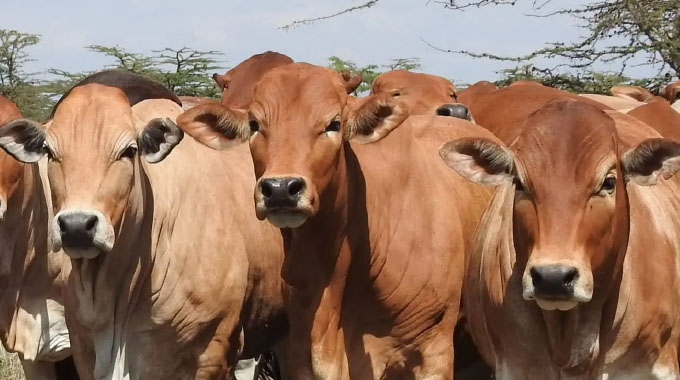
Sikhulekelani Moyo, Zimpapers Business Hub
WITH the effects of climate change continuing to impact negatively on production in the livestock sector, experts have called on key stakeholders to adopt innovative ways of herd management, with fodder production and artificial insemination, among others being recommended.
The livestock industry in Zimbabwe, which provides employment for hundreds of thousands of people in rural areas and contributes substantially to the agricultural economy, is facing increasing challenges due to climate change. Matabeleland South provincial livestock specialist, Mr Hatitye Zondai urged farmers to find new ways to protect their production with innovation being a priority.
“Farmers can utilise artificial insemination, fodder production and preservation, small stock production, breeding of local and indigenous breeds and small dams construction, to mitigate the effects of climate change,” said Mr Zondai.
Events such as droughts, cyclones and extreme weather conditions can devastate fertile land, leading to crop failures that adversely affect livelihoods.
The El Niño phenomenon in 2023 highlighted these vulnerabilities, bringing unpredictable rains and soaring temperatures that severely impacted the agricultural sector.
As Zimbabwe is in the middle of 2024, the effects of El Niño continue to threaten livestock health and productivity.
Water shortages and insufficient feed have pushed farmers to invest heavily in purchasing hay and feed, straining their finances.
The situation emphasised the urgent need for effective strategies, particularly the conservation of grass into hay and silage to secure reliable feed sources during droughts or unexpected weather changes.
Seasoned livestock farmer, Mr Obert Chinhamo of Biano Farm, said without farmers adapting to the effects of climate change, productivity will start dropping and the scope of business will be affected.
“Silage making, fodder production, ammoniation and hay baling will help us during dry seasons. The rains are not much and the seasons are getting shorter, so it means the grass does not grow as much as we think it does,” said Mr Chinhamo.
“This needs us to be innovative enough and look for fodder crops that mature early, like sugar graze sorghum, velvet bean, lab lab and combination pastures that are drought tolerant.
“As livestock farmers, especially in Matabeleland, we need to be prepared for drought and dry seasons, which usually run from May and December, and it is something we need to always be ready for.”
Mr Chinhamo said livestock reproduction is directly related to nutrition.
During a recently held field day at Mr Chinhamo’s Biano Farm, he revealed that they are prepared for the dry season with about 1 000 tonnes of silage and about 2 000 bales of between 250 to 300kgs of hay.
“Even if we have drought for the next two years, we are prepared and we are still baling until August,” said Mr Chinhamo.
Meanwhile, Zimbabwe Beef Producers Society chairperson, Mr George Chiunda, said this year, there is a lot of grass and farmers should harvest as much as they can before it is ravaged by veld fires.
“The one challenge that is going to happen this year is — although we had good rains and got a lot of grass — if we do not harvest it or protect it from fires, we will have ashes of all the grass that we have,” said Mr Chiunda.
“Also, climate change is a very big thing, and we need to manage it; we need to start looking at innovative ways of converting whatever grass that we have into a better feed to keep the herd we have.”
He said there is a need for stakeholder collaboration for the nation to achieve a target of 1 million cattle by 2030.
To grow the national herd, the Government is spearheading different initiatives, including an artificial insemination programme to farmers in rural areas, which involves cross-breeding with semen from selected quality bulls.
The Government is expecting the livestock industry to grow to US$3,4 billion by 2025 after the sector makes positive strides in improving productivity and combating cattle mortality following the outbreak of tick-borne diseases, which have ravaged almost half a million of cattle since 2016.