Online Reporter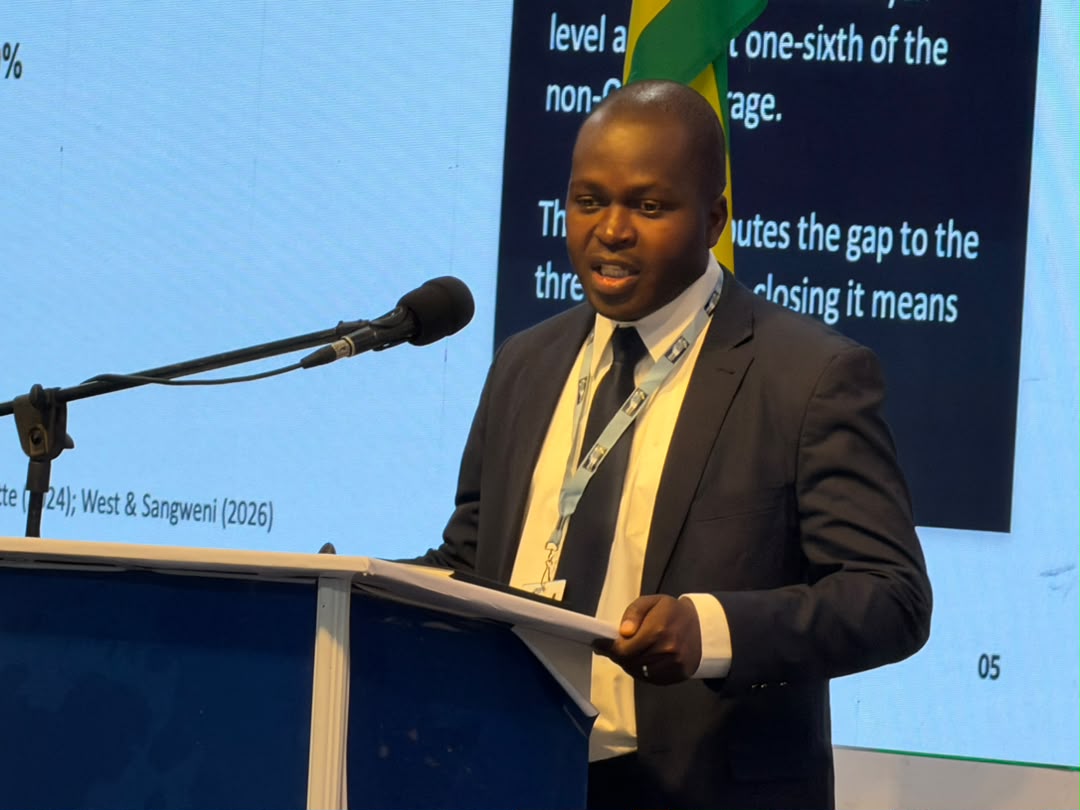
Judith Phiri [email protected]
Zimbabwe has been called on to transform diaspora remittances from largely consumption-driven inflows into long-term productive capital, with economic stakeholders advocating for innovative investment vehicles.
Diaspora remittances reached $2.45 billion in 2025, serving as a critical lifeline for Zimbabwe’s economy and household survival.
Presenting a paper on Mobilising Diaspora Remittances for Long Term Savings: Policy Reforms to Advance National Development Strategy 2 (NDS2) at ZEDCON 2026, Mr Terrencd Kamoto from Insurance and Pensions Commission (IPEC) said Zimbabwe is among the top remittance receivers in the sub-
Saharan.
“The money is going to utilities,
healthcare, school fees, household consumption and funeral expenses. While these are legitimate needs, but every dollar that is consumed is a dollar that is not available for savings, pension contribution or insurance premiums, which is what creates investable capital.
“So we have noticed that from diaspora, there is interest in investments, but what is happening is they are investing in housing. The reason we see a lot of housing across the country, but this is happening informally,” he said.
“It is exposing these people to fraud, title disputes and even demolitions. So I’m sure you have
noticed a lot of demolitions that are happening in the country recently. These assets also
cannot be mortgaged or put into institutional capital for NGOs too.”
He recommendes a diaspora long-term capital mobilisation framework, which has got three instruments, each built on one of the benchmark lessons.
Mr Kamoto said they were also proposing that they must be USD nominated, held in ring-faced funds, and jointly supervised by IPEC and the Reserve Bank of Zimbabwe.
“So, the first one, we are saying that diaspora micro-endowments insurance builds on the Philippine experience, which is a 20-year hybrid of life cover and savings payable through mobile money, remittance operator, or embassies.
“It pays a death benefit or the maturity value plus bonus borrowing from Egypt, which allows up to 85 percent withdrawal for every five years,” he added.
“The second instrument that we are proposing is the diaspora retirement investment fund, built on the Egypt experience. It is a self-financed USD pension with the retirement age 70 and any option of 55 years retirement. It allows also 85 percent withdrawal for every five years and converts to a fixed inflation linked or unit
linked annuity, with the contributions, returns, and benefits fully tax exempt.”