Online Reporter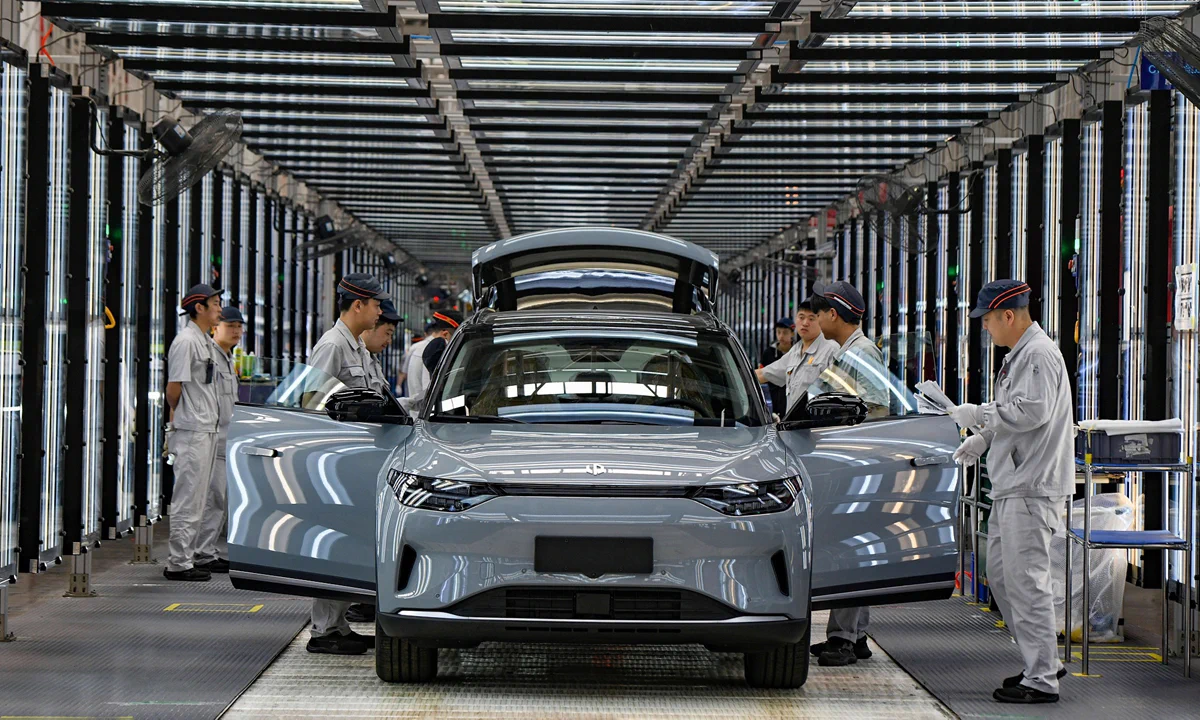
By Saxon Zvina
China’s release of the 15th Five‑Year Plan for Intelligent Connected New Energy Vehicles confirms something quietly remarkable: Beijing is no longer setting aspirational stretch goals. It is codifying a trajectory it has already delivered in practice.
A Proven Chinese Industrial Benchmark
By 2030, new‑energy vehicles (NEVs) are to account for 70% of new passenger‑vehicle sales. In July 2026, China already hit 65.1%. The fuel‑consumption target of 3.3 L/100 km was achieved by domestic manufacturers back in 2025.
Three Chinese automakers — BYD, SAIC and Geely — rank within the global top ten, and Chinese‑brand vehicles outsold Japanese brands worldwide for the first time since 2000. Even the plan’s genuinely demanding targets, such as a 27% reduction in battery‑electric‑vehicle energy consumption, represent engineering challenges with known technical solutions.
The lesson for Africa is not simply China’s ambition. It is that China has demonstrated what a mature, executed industrial policy can achieve — and time is growing short for Africa to build comparable frameworks of its own.
The Unresolved African Resource‑trade Paradox
Africa spends more than $120 billion annually importing hydrocarbons. Nigeria’s gasoline‑import bill alone reached roughly $10 billion in 2025. Ghana’s oil‑and‑gas imports consumed 29.4% of its total import expenditure. This is more than a routine energy line‑item: it constitutes large‑scale capital flight that crowds out investment in schools, clinics and power infrastructure.
Meanwhile, the Democratic Republic of Congo holds over 70% of global cobalt reserves. The continent supplies cobalt, lithium and copper essential for the global energy transition, yet captures nearly none of the value‑added manufacturing returns. As one analysis observes: Africa is not resource‑poor; it is bargaining‑power‑poor.
This completes a self‑reinforcing trap: raw minerals are exported cheaply, refined fuels are imported expensively, and little intermediate industry takes root locally. Every electric vehicle deployed within Africa weakens that structure. Every EV left off local roads serves to entrench it.
Early Policy Moves, Crippling Infrastructure Gaps
Policy momentum is building across the continent, yet progress remains too slow.
Ethiopia has effectively banned gasoline‑vehicle imports and targets 500 000 EVs by 2030, alongside local assembly and battery‑value‑chain development. Rwanda has prohibited commercial gasoline‑powered motorbikes within Kigali. Uganda aims for EVs to make up 30% of new vehicle registrations by 2030.
Morocco is constructing Africa’s first EV‑battery gigafactory in partnership with Chinese firm Gotion High‑Tech, with €100 million backing from the African Development Bank. SADC has also launched a five‑year mineral‑beneficiation project covering six member states.
These are meaningful building blocks. Yet the infrastructure shortfall remains severe: across 26 African EV markets with more than 400 000 vehicles in operation, fewer than 1 000 functional charging stations exist — approximately one charger for every 400 cars, compared with a global good‑practice benchmark of one per 10‑30 vehicles. Addis Ababa alone requires roughly 350 MWh of daily charging capacity.
Charging infrastructure is no minor technical detail; it represents the binding bottleneck. Without adequate charging networks, import bans and tax incentives risk benefiting only wealthy urban early adopters.
Three Strategic Priorities for Africa’s EV Transition
First, deploy mineral‑market leverage to drive on‑shore mineral processing. The SADC initiative marks a promising start, but it needs real teeth: coordinated export duties on raw lithium, cobalt and manganese, paired with incentives for domestic refining and cathode production. Indonesia’s nickel‑sector experience demonstrates that targeted export‑policy measures can encourage industry to build local processing capacity.
Such policy leverage works best when supported by reliable power supplies, skilled labour and viable market access. The DRC’s dominant position within global cobalt markets represents market influence that has so far been under‑utilised. Acting collectively, African mineral producers can help set terms of trade instead of passively accepting external ones.
Crucially, such policy leverage cannot deliver its full promise without strengthened domestic governance.
Anti‑corruption measures and improved institutional effectiveness are indispensable prerequisites: unchecked corruption can siphon away mineral‑derived revenues, deter responsible investment, and undermine efforts to channel resource gains toward local industrialisation.
African nations will need concrete, actionable steps to strengthen governance, so that resource wealth can genuinely serve domestic development objectives.
Second, build local deployment ecosystems rather than becoming purely import‑driven markets. Chinese automakers are already entering African markets: GAC has rolled out two EV models in Ethiopia, and Ghana signed an assembly‑plant MoU in June 2025.
Vehicle arrivals are inevitable. The critical question is whether African governments channel this market entry toward local assembly, workforce training and charging‑network roll‑out, or allow their territories to function merely as showrooms for fully finished imports. Ethiopia’s integrated formula combining import restrictions, local‑assembly targets and skills‑training centres offers a replicable model. Foreign‑company participation also opens potential avenues for local joint ventures and knowledge transfer.
Third, frame EV adoption primarily around fiscal and energy sovereignty rather than climate‑compliance obligations. The $120 billion‑per‑year fuel‑import bill provides Africa’s most compelling domestic political rationale for electrification. This argument rests less on emissions benchmarks negotiated in Brussels, and far more on foreign‑exchange preservation, energy security and insulation against global‑oil‑price shocks. Nigeria’s Minister of State for Petroleum Resources put it plainly: capital flowing out to pay for hydrocarbon imports “should remain within Africa to fuel our own development priorities”. This framing resonates politically with domestic constituencies, whereas abstract carbon accounting often does not.
A Closing Window for African Industrial Ambitions
China’s planning illustrates the value of treating mineral supply chains, manufacturing capacity, infrastructure roll‑out and export strategy as one unified policy agenda, instead of separate portfolios managed by disconnected ministries.
Africa possesses mineral wealth, growing urban consumer demand, and an expanding set of policy reference points. Its main gap lies in coordination: between nations, across value‑chain segments, and across the artificial divide separating energy policy from industrial policy.
The cost of inaction extends beyond persistent fossil‑fuel dependence. There is a tangible risk that Africa becomes a permanent raw‑material supplier for global EV industrial systems, importing finished vehicles and batteries that embed overseas manufacturing margins. This would recreate an old unequal trade pattern in a new, green‑tinged form.
Policy instruments to avoid this outcome are already available: Ethiopia’s regulatory framework, Morocco’s gigafactory development, SADC’s beneficiation programme, and Kenya’s EV‑leasing pilots. What remains missing is scale, cross‑border coordination, and political resolve to treat critical minerals as instruments of industrial strategy rather than simple extractive‑revenue sources.
China spent two decades translating policy intent into industrial strength. This analysis suggests Africa may have roughly five years of favourable headroom. If momentum stalls, minerals will keep leaving the continent in raw form, and opportunities for local industrial deepening will diminish. Realising domestic manufacturing potential will demand not only smart mineral policies, but also sustained domestic governance‑enhancement and anti‑corruption efforts, deep‑rooted domestic reforms, regional alignment and constructive international‑partner engagement.
—
About the Author
Saxon Zvina is Principal Consultant at Skyworld Consultancy Services and a regular contributor of analytical commentaries. His research covers African energy strategy, global‑south development and international relations.
Email: [email protected] | X: saxonzvina2