


 Online Reporter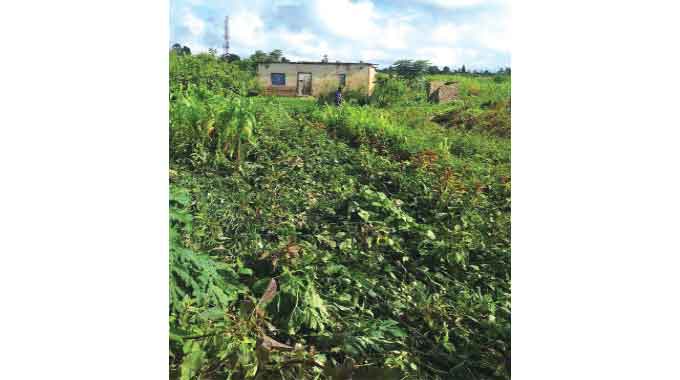
Theseus Shambare
IT has been a week since torrential rains swept through Epworth, parts of Chitungwiza, Glen View 7 and Budiriro, washing away homes, displacing families and turning once-familiar streets into rivers of mud and debris.
For one family, which asked not to be named to protect its privacy, January 24 is a date etched permanently into memory after they nearly lost all their three children to raging floodwaters.
At their home, the back wall gave in under the force of the water, sweeping the children into the current before frantic neighbours rushed in to pull them to safety.
And for residents like Tafirenyika Chigudu, the lingering question is no longer whether the floods will return, but whether a lasting solution will finally emerge to break the cycle of destruction.
Chigudu, whose one-bedroom house was swallowed by floodwaters from Jacha River in Epworth, recalls the desperate hours he spent trying to save his family’s belongings.
“We received a downpour, and the run-off water started to rise from the river. I tried using buckets but the flood was too strong,” he said, his voice still heavy with fear. As the waters rose, the disaster quickly spilled beyond collapsed walls to disrupt access to essential services for entire communities.
Residents from Overspill, who would ordinarily walk to Domboramwari Police Station, Epworth Polyclinic or nearby churches, were forced to rely on public transport, travelling nearly nine kilometres to access help. This followed the partial destruction of a footbridge linking Overspill, Solani and Domboramwari.
Chigudu’s experience is far from unique, as more than 46 homes were swept away a fortnight ago, leaving families in temporary shelters and turning once-bustling neighbourhoods into mud-laden pathways.
Ward 5 councillor Chamunorwa Takundwa, in whose jurisdiction Epworth High School has been turned into a temporary evacuation centre, said affected families remain housed at the school as the authorities work on longer-term solutions.
“They are expected to return to their respective places as we implement development interventions,” he said.
Councillor Takundwa said residents are currently receiving food, shelter and hygiene support from the Government and its partners, including MSF and Red Cross Zimbabwe.
Red Cross teams have provided tarpaulins, buckets and water, sanitation and hygiene support to help families cope in the immediate aftermath.
MSF has also ensured continuity of care by providing medication refills to patients with chronic conditions whose treatment was disrupted by the floods.
Despite repeated warnings from the authorities, officials estimate that roughly 2 500 homes in Epworth remain vulnerable to flooding due to their location on wetlands and along riverbanks.
Epworth South Member of Parliament Mbofana Taedzwa Mutana urged residents to heed the warnings and move to designated safe areas.
“It is unacceptable that some people continue to build on wetlands and riverbanks despite repeated advisories,” he said.
“Many of these people have been allocated new numbers under the regularisation programme initiated by the President, but some are deciding to remain in risky areas.”
“These areas are dangerous, especially during heavy rains, because floods not only destroy homes but also create stagnant water where diseases like cholera and typhoid can thrive,” he said.
Cooperation
Epworth Mayor Councillor Nyarai Rutsito called for cooperation, saying the local authority has identified expansion areas and land for housing and cemeteries.
“Yet some families ignore this and continue to extend buildings on wetlands, which is putting their lives and those of their neighbours at risk,” she said.
“We must preserve our rivers and wetlands to protect the community.”
The latest disaster has once again highlighted the urgent need for long-term urban planning and a structural response to decades of haphazard settlement in Epworth.
Epworth Local Board Secretary Dr Wilton Mhanda said the recently proposed Epworth Master Plan seeks to transform the area into a resilient, self-sustaining and prosperous city by 2030.
“The plan addresses decades of informal development, infrastructural deficits and unsafe housing along rivers and wetlands,” he said.
“It is designed to align Epworth with national, continental and global development agendas such as Vision 2030, Agenda 2063 and the United Nations Sustainable Development Goals.”
Epworth currently has a population of over 206 000, projected to grow to more than 325 000 by 2042, making administrative upgrades critical to managing rapid urban expansion.
Upgrading the local board’s administrative status, Dr Mhanda said, will equip the local authority with greater resources, legislative authority and financial autonomy.
He said the master plan’s central objective is to address informality and flood risk while promoting a balanced mix of land uses, including residential, commercial, industrial and recreational spaces.
“Currently, high- and medium-density residential areas rely on inadequate on-site sewage disposal, which poses severe public health risks,” said a senior local authority official who preferred anonymity.
“Unapproved housing built on wetlands faces constant flooding danger, and a balanced land-use mix is vital for economic diversification and local job creation.”
Dr Mhanda, however, acknowledged that many residents may not be able to purchase new houses if relocation is required.
“We may seek guidance from the Government so that houses can be built and let to residents using payment plans that they can afford,” he said.
He said if fully implemented, the master plan could ensure that by 2030 Epworth no longer faces repeated flood trauma.
The recent floods have also accelerated the implementation of urban development initiatives launched by President Mnangagwa under the “Call to Action — No Compromise to Service Delivery” blueprint.
Key programmes include the Urban State Land Management Policy; Minimum Service Delivery Standards; and the Local Authorities Technical Services Unit, which supports infrastructure delivery.
Other initiatives such as high-rise housing developments, including the Midlands Park Flats and Sakubva Urban Renewal, emphasise vertical construction to maximise land use.
Smart city and traffic projects, including interchanges and road upgrades, aim to improve mobility and unlock economic opportunities near the Robert Gabriel Mugabe International Airport.
Department of Civil Protection director Mr Nathan Nkomo said flooding in areas like Epworth is predictable and preventable if land use regulations are respected.
“Many residents continue to occupy unsafe land even after repeated warnings, and they must be relocated to safer areas as we enforce compliance,” he said.
Environmental Management Agency spokesperson Amkela Sidange said wetlands are not only buffers against floods but also critical to water security.
“Encroachment on wetlands is not just a disaster risk issue; it is an environmental crime that threatens the community’s life support system,” she said.
Epworth’s master plan also prioritises infrastructure development, including bulk water supply systems and comprehensive wastewater management.
Plans for additional schools, clinics and law-enforcement facilities are intended to relieve pressure on overstretched services.
University of Zimbabwe lecturer Dr Walter Svinurai said urban transformation depends on enforcement and community buy-in.
“Without trust and cooperation, the cycle of informal settlement, flooding and displacement will continue,” he said.
For residents like Chigudu, the master plan offers tentative hope alongside lingering uncertainty.
“If the authorities build affordable houses and guide us safely to them, it will make a real difference,” he said.
The floods may have destroyed homes, but they have opened a narrow window to turn disaster into lasting resilience for generations to come.



