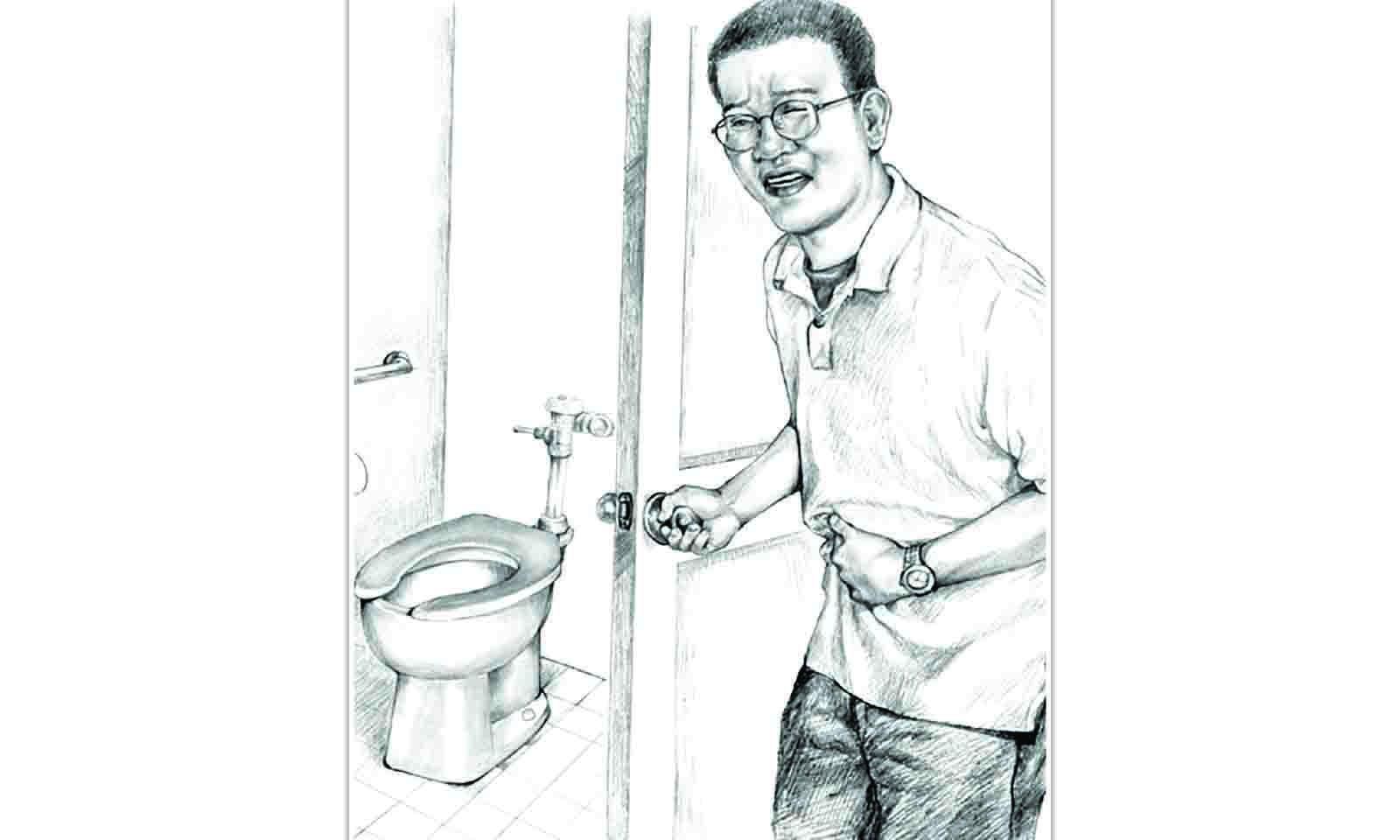
AS you sink down onto a toilet seat used by hundreds of other people the same day, you might be wondering: how long do pathogens survive in bathrooms?
Once you set foot in a public toilet, it can be impossible to resist the overwhelming feeling of “ick”.
The sight of urine splattered on the toilet seat and the floor, the pungent scent of somebody else’s bodily fluids — it can really slam against your senses.
You might open the stall door with your elbow, flush with your foot, or drape the entire seat in toilet paper and execute a squat if you find the whole thing too gross to contemplate.
But can you actually catch diseases from merely sitting on the seat?
Or are the elaborate techniques some people use to avoid contact completely unnecessary?
Here’s what microbiologists have to say.
WHAT YOU PROBABLY WON’T CATCH
“Theoretically, yes (you can catch diseases from the toilet seat), but the risk is vanishingly low,” says Jill Roberts, a professor of public health and microbiology at the University of South Florida.
Take sexually transmitted diseases (STDs). Most of the bacteria and viruses that can cause them, from gonorrhea to chlamydia, cannot survive for long outside of an organism’s body, let alone on a cold, hard surface like a toilet seat.
That’s why it’s thought that the majority of STDs an only be transmitted via direct contact of the genitalia and exchange of bodily fluids.
“If toilet seats could (easily) transfer STDs, we would see them frequently across all age groups and in people with no history of sexual activity,” says Roberts. Draping the toilet seat with paper before sitting on it, or using a toilet-seat cover, might feel like the cleanest way to use a public toilet. However, a layer of toilet paper or a toilet cover will likely not protect you from pathogens — they are made of porous materials, so they cannot stop germs from seeping through and touching your genitals.
When women hover over the toilet to urinate, they contract the pelvic floor and pelvic girdle muscles.
This obstructs the flow of urine from the bladder, making it necessary to push harder and exert unnecessary strain on the pelvis. It also means that women might not empty their entire bladder in the process, which can sometimes even lead to a urinary tract infection.
As it happens, the risk of catching diseases in the bathroom, in general, doesn’t come from your genital contact with the toilet seat.
THE HANDS ARE THE PROBLEM
Rather, it comes from your hands touching the toilet seat and becoming contaminated with bacteria or viruses from small particles of your or other people’s bodily substances, says Roberts —and then you touching your face and mouth with these soiled hands.
“The threat is not to your rear end, it is to your mouth from your hands,” says Roberts.Faeces can also contain traces of norovirus. This highly contagious pathogen is easily spread via contaminated surfaces, as well as via food or drink, or direct contact with someone who is unwell. It is extremely resilient.
On some surfaces, it can survive for up to two months. And just a little bit can go a long way in making somebody sick—it’s thought that between 10 and 100 particles of the virus can be enough to infect someone. —BBC
AS you sink down onto a toilet seat used by hundreds of other people the same day, you might be wondering: how long do pathogens survive in bathrooms?
Once you set foot in a public toilet, it can be impossible to resist the overwhelming feeling of “ick”.
The sight of urine splattered on the toilet seat and the floor, the pungent scent of somebody else’s bodily fluids — it can really slam against your senses.
You might open the stall door with your elbow, flush with your foot, or drape the entire seat in toilet paper and execute a squat if you find the whole thing too gross to contemplate.
But can you actually catch diseases from merely sitting on the seat?
Or are the elaborate techniques some people use to avoid contact completely unnecessary?
Here’s what microbiologists have to say.
WHAT YOU PROBABLY WON’T CATCH
“Theoretically, yes (you can catch diseases from the toilet seat), but the risk is vanishingly low,” says Jill Roberts, a professor of public health and microbiology at the University of South Florida.
Take sexually transmitted diseases (STDs). Most of the bacteria and viruses that can cause them, from gonorrhea to chlamydia, cannot survive for long outside of an organism’s body, let alone on a cold, hard surface like a toilet seat.
That’s why it’s thought that the majority of STDs an only be transmitted via direct contact of the genitalia and exchange of bodily fluids.
“If toilet seats could (easily) transfer STDs, we would see them frequently across all age groups and in people with no history of sexual activity,” says Roberts. Draping the toilet seat with paper before sitting on it, or using a toilet-seat cover, might feel like the cleanest way to use a public toilet. However, a layer of toilet paper or a toilet cover will likely not protect you from pathogens — they are made of porous materials, so they cannot stop germs from seeping through and touching your genitals.
When women hover over the toilet to urinate, they contract the pelvic floor and pelvic girdle muscles.
This obstructs the flow of urine from the bladder, making it necessary to push harder and exert unnecessary strain on the pelvis. It also means that women might not empty their entire bladder in the process, which can sometimes even lead to a urinary tract infection.
As it happens, the risk of catching diseases in the bathroom, in general, doesn’t come from your genital contact with the toilet seat.
THE HANDS ARE THE PROBLEM
Rather, it comes from your hands touching the toilet seat and becoming contaminated with bacteria or viruses from small particles of your or other people’s bodily substances, says Roberts —and then you touching your face and mouth with these soiled hands.
“The threat is not to your rear end, it is to your mouth from your hands,” says Roberts.Faeces can also contain traces of norovirus. This highly contagious pathogen is easily spread via contaminated surfaces, as well as via food or drink, or direct contact with someone who is unwell. It is extremely resilient.
On some surfaces, it can survive for up to two months. And just a little bit can go a long way in making somebody sick—it’s thought that between 10 and 100 particles of the virus can be enough to infect someone. —BBC


 Online Reporter