Online Reporter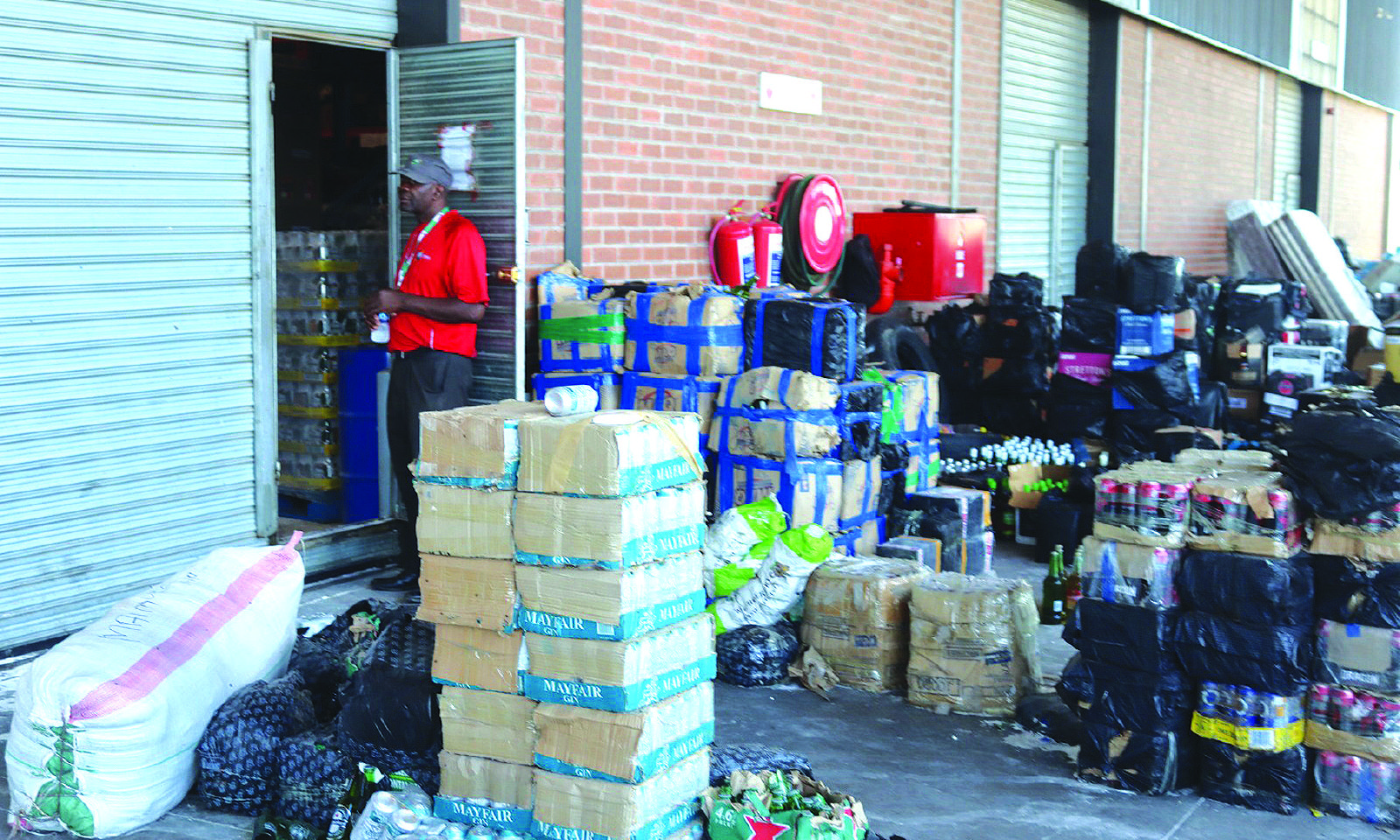
Thupeyo Muleya
Beitbridge Bureau
FOR years, the bustling border between Zimbabwe and South Africa has been a lifeline for many, connecting families, traders and communities.
But beneath the surface of this vital trade route lies a darker reality: the rampant smuggling of goods that threatens livelihoods, undermines the economy and endangers lives.
From banned drugs to stolen livestock, the illicit trade has spiralled out of control, leaving ordinary citizens to bear the brunt of its consequences.
Residents have watched as goods flow illegally across the Limpopo River, bypassing formal channels and leaving the authorities struggling to stem the tide. Many fear the consequences: reduced funding for essential services, unfair competition for law-abiding traders and rising crime linked to smuggling networks.
In response, the Government has intensified its crackdown on border crime through a multi-agency task force, targeting the smuggling activities that have reached alarming levels. The authorities estimate that millions of dollars are lost due to evasion of customs duty and export levy leakages at official entry points and surrounding areas.
Some of the most notorious illegal crossing points — Mai Maria, Panda Mine, Dite, Tshikwalakwala, Mawale, River Ranch (Beitbridge East), Sentinel, Tshivhara and Shashe (Beitbridge West) — are always abuzz with nocturnal activity.
Under the cover of darkness, smugglers hurriedly ferry goods across the Limpopo River, navigating well-worn trails with practised ease. The atmosphere is thick with whispered deals, the hum of small boats and the distant growl of trucks waiting to receive their illicit cargo. Here, household groceries, cement, furniture, banned genetically modified foods, marijuana, illicit cough syrups and alcohol find their way into Zimbabwe, while minerals, stolen livestock and cigarettes disappear into South Africa.
Smugglers often bypass the official border post, opting, instead, for nearby flanks where they load goods onto intercity buses and cargo trucks in Beitbridge for distribution across Zimbabwe.
Enforcement
As enforcement intensifies, State warehouses managed by the Zimbabwe Revenue Authority (Zimra) at the Beitbridge Border Post are overflowing with confiscated goods.
Zimra commissioner for customs and excise Mr Batsirai Chadzingwa recently informed Parliament’s Public Accounts Committee that all 16 State warehouses at the border were filled to capacity with seized goods.
These warehouses include Freight Warehouse, Malume Warehouse, Bus Terminal Southbound Warehouse and multiple Manica transit sheds.
“Most goods were being held after they were intercepted for falling under the restricted or prohibited goods category, and these include meat,” he said.
Mr Chadzingwa said Zimra is legally required to hold seized goods for 60 to 90 days before disposal. Some appropriated goods, such as motor vehicles, blankets, mealie meal and groceries, are distributed to Government departments, hospitals and social welfare organisations.
Surveillance
To curb smuggling, the Government has deployed advanced surveillance tools, including drones, commercial and baggage scanners, and canine units. It also conducts motorised patrols. This has enhanced border security and minimised revenue losses essential for funding Government programmes.
As a result of the ongoing operation, interceptions have significantly increased.
Said Mr Chadzingwa: “Interceptions are increasing daily and we are having a serious shortage of warehousing space.”
In 2024, enhanced surveillance measures resulted in 255 interceptions and 55 vehicle seizures. Speaking at the International Customs Day commemorations recently, Finance, Economic Development and Investment Promotion Minister Professor Mthuli Ncube praised the deployment of technology in combating smuggling.
“The extensive use of technologies like drones has significantly enhanced risk management and fraud detection capabilities,” he said.
“In 2024, Zimra managed to collect US$467 476,39 and ZiG9 617 873,70 as a result of the use of scanners and drones. They have made unprecedented seizures of different types of drugs, with 55 vehicle detentions and a total of 255 interceptions. The drone project exemplifies the desire to secure our borders, protect society and stop revenue leakages through smuggling and other vices.”
Prof Ncube emphasised the crucial role of customs authorities as the first line of defence in border security and revenue collection.
He called for greater stakeholder collaboration in combating illicit trade and ensuring secure trade routes.
“By leveraging advanced technologies, we can enhance our capacity to monitor trade, travel and economic activities, securing much-needed revenue,” he added.
Influx
In presenting the 2025 National Budget Statement, Prof Ncube noted that smuggling continues to pose a serious threat to Zimbabwe’s economic development.
“The influx of imported goods sold at artificially low prices — well below what should be expected given ex-works prices, insurance, freight and duty costs — suggests widespread tax evasion, particularly through smuggling. “Food items, medicines and alcohol that evade formal inspections pose significant dangers, as they are not subject to the necessary health and safety controls,” he said.
Treasury recently promulgated Statutory Instrument 7 of 2025, listing 19 product categories that will be presumed smuggled unless importers can provide valid documentation proving that all applicable duties have been paid.
Under the new regulations, retailers must present documentary proof of duty payments upon request by Zimra officers. Failure to do so will result in the immediate seizure of goods under the Customs and Excise Act.
Additionally, the seller or owner will be liable for unpaid duties and prescribed penalties.
The affected products include alcoholic and non-alcoholic beverages; cement; clothing and footwear; dairy products; diapers; electrical appliances, cables and accessories; ploughs; processed meat; rice and pasta; sugar; tyres and motor spare parts, as well as washing powder and liquid detergents.
Seizures
Meanwhile, Zimra has impounded goods valued at approximately US$2,4 million during the multi-agency operation that is targeting importers and cross-border transporters involved in smuggling. The operation has witnessed the seizure of dozens of vehicles, including cross-border buses and haulage trucks, and the confiscation of illicit goods such as foodstuffs and second-hand clothes.
According to Zimra, the enforcement operation is targeting transporters and non-compliant importers. The operation, which involves inspections of vehicular traffic, particularly commercial and passenger transport vehicles on cross-border trade routes, was intensified towards the festive season.
“To date, our State warehouses are at full capacity with recovered goods,” said Zimra Commissioner-General Ms Regina Chinamasa. We have seized items with a total duty value of ZiG46 242 385 (about US$1,8 million, using the official exchange rate) and US$572 199. The ultimate goals are to curb smuggling, promote voluntary compliance and encourage ethical business practices.
“Once voluntary compliance improves, controls will remain as part of the ongoing risk management to sustain compliance.”
Political backing
The fight against smuggling has also garnered support from political stakeholders, with a high-level delegation of ZANU PF officials drawn from the party’s economic development cluster recently visiting the illegal crossing points along the Limpopo River to assess the situation.
The delegation, led by Lieutenant-General Engelbert Rugeje (Retired), included senior party officials Cde Elifasi Mashaba (Secretary for Business Development); Cde Anastancia Ndhlovu (Director — Economic Affairs Department); Cde Collen Mharadzano (Director — Business Development); and Cde Francis Hungwe (Director — Economic Development and Empowerment).
They were joined by members of the local security cluster; senior immigration and customs officials; and parliamentarians Cdes Albert Nguluvhe (Beitbridge East), Thusani Ndou (Beitbridge West) and Senator Tambudzani Mohadi. Lt-Gen Rugeje (Retd) underscored the urgency of the anti-smuggling campaign, linking it to Zimbabwe’s broader economic security.
“It is clear that it is not business as usual, and our economy is under attack, thus we all need to come together and rescue our people from further exploitation by currency manipulators and economic saboteurs, who include smugglers of goods into our country,” he said.
For years, smuggling has bled Zimbabwe’s economy, depriving the nation of critical revenue and fuelling crime along the border.
As the authorities tighten their grip, it is fast becoming clear that the era of unchecked smuggling could be coming to an end.