Andrew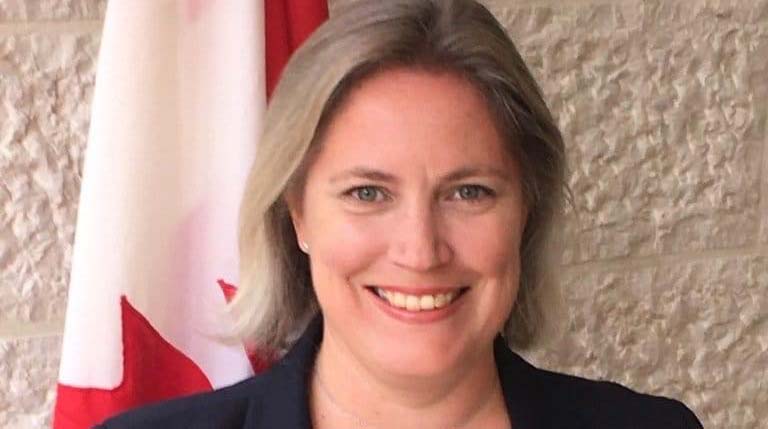
CANADIAN Ambassador to Zimbabwe, Christina Buchan, was recently in Norton to hand over grocery hampers to children whose parents are serving prison sentences. The donation was part of an initiative being funded by the Embassy of Canada working with local civil society organisations. The Sunday Mail Gender and Community Editor, Fatima Bulla Musakwa (FBM), spoke to Ambassador Buchan (CB), who outlined some of the work being undertaken by her embassy.
****************
FBM: Could you highlight some of the projects being funded by the Canadian Embassy in Zimbabwe?
CB: Canada supports the people of Zimbabwe. Canada’s projects in Zimbabwe are mostly channelled through multilateral organisations such as the United Nations or international and local non-governmental organisations. Canada’s international assistance to Zimbabwe includes initiatives in areas such as gender equality, access to education, health and humanitarian assistance.
Canada adopted the Feminist International Assistance Policy, a policy that seeks to eradicate poverty and build a more peaceful, inclusive and prosperous world.
We firmly believe that promoting gender equality and empowering women and girls is the most effective approach to achieving this goal. The policy is based on the belief that when women and girls are equal, they can be powerful agents of change — driving stronger economic growth, fostering peace and co-operation, and improving the quality of life for their families, communities and countries.
Since I arrived, Canada contributed to the Covid-19 pandemic fight in Zimbabwe by providing US$1,2 million to the World Bank Zimbabwe Multi-Donor Trust Fund.
Canada is one of the seven countries that made vaccine donations through the COVAX (Covid-19 Vaccines Global Access) facility, to which Zimbabwe received almost one million Covid-19 vaccine doses last year, to complement ongoing national vaccine deployment.
Canada commends Zimbabwe for their proactive Covid-19 response and sees great importance in equitable access to Covid-19 vaccines for all countries.
Canada supports Zimbabwe through the World Food Programme, both in the wake of Cyclone Idai, and ongoing programming to support urban food needs.
Through Care Zimbabwe, Canada is funding a WASH and Social Protection project to support and encourage adolescent girls to return to school in Buhera District.
Having identified that economic hardship/negative coping mechanisms and menstrual hygiene/wash, are key barriers affecting adolescent girls’ education, the project will aim to address these at the household and school levels in Buhera District.
The Canada Fund for Local Initiatives provides support to local organisations to promote good governance, human rights and the empowerment of women and girls.
This fiscal year, we worked with 10 organisations countrywide that focused on raising awareness on gender-based violence, economic empowerment and improving women and youth participation in local and national governance.
For example, female artists in Bulawayo did public murals about gender-based violence.
FBM: How do you measure the success of these projects?
CB: Canada monitors its own programmes to ensure they benefit the people of Zimbabwe.
Our partners have robust monitoring and evaluation systems, which allow them to measure the impact that the projects have in the communities where they are implemented.
Canada also measures impact through mechanisms such as site visits to project areas.
FBM: Can you outline the areas you will focus on this year with particular regard to women and children?
CB: Canada is committed to promoting the empowerment of women and girls, in all their diversity.
Canada aims to inform, inspire and involve everyone in efforts to achieve the UN Sustainable Development Goals, which envision a secure world, free of poverty and hunger with full productive employment, access to quality education and universal health coverage.
The SDGs also envision a world in which gender equality is achieved where women and girls are empowered.
While the SDGs are ambitious, Canada believes we can achieve this by working together with partners in Government and civil society.
This remains our area of focus in 2022 and even beyond.
We are collaborating with local and international organisations for a series of projects to address gender-based violence and encourage women’s rights and gender equality.
FBM: Your predecessor, Ambassador Rene Cremonese, had a passion for engaging Parliamentarians to facilitate legal reforms leading to the outlawing of child marriages. Do you share a similar passion?
CB: Gender equality, human rights, and respect for diversity and inclusion are at the core of Canada’s feminist foreign policy.
Canada continues to engage relevant offices, authorities and Parliamentarians to align any laws that hinder the girl child human rights to the Constitution.
Child marriage has far-reaching consequences — it denies girls their childhood, disrupts their access to education, jeopardises their health and makes them vulnerable to violence.
Child marriages mean that girls are not able to reach their full potential and fully contribute to the social and economic growth of their families, communities and countries.
FBM: What are your thoughts on the proposed Marriages Bills in relation to helping curb GBV in Zimbabwe?
CB: We are concerned about the situation of women in Zimbabwe, where, according to UN statistics, one in three girls is married before the age of 18, and almost seven out of 10 women report experiencing some form of violence in their lifetime.
Canada is also concerned that gender-based violence cases in Zimbabwe increased under the Covid-19 lockdown.
Canada was encouraged by the court ruling banning child marriage in Zimbabwe in 2016; it shows that there is a commitment to end GBV and child marriages.
There have also been positive developments in coming up with measures meant to curb gender-based violence and child marriages.
As in all countries, promoting gender equality is an ongoing process that requires consistent efforts and meaningful action at all levels of society and in all spheres from the household to the church, from the courts to the Parliament.
FBM: Do you think your efforts in helping Zimbabwe end GBV are bearing fruit?
CB: International momentum towards eliminating gender-based violence, address child, early and forced marriage is building.
Through the 2030 Agenda for Sustainable Development, governments have identified ending child marriage as a global target.
This agreement on the issue presents a clear opportunity to advance the issue – including through the development and implementation of national strategies to end child marriage.
Canada is committed to working in partnership to turn these global goals into real action and put an end to this harmful practice.


 Online Reporter