Chronicle Editor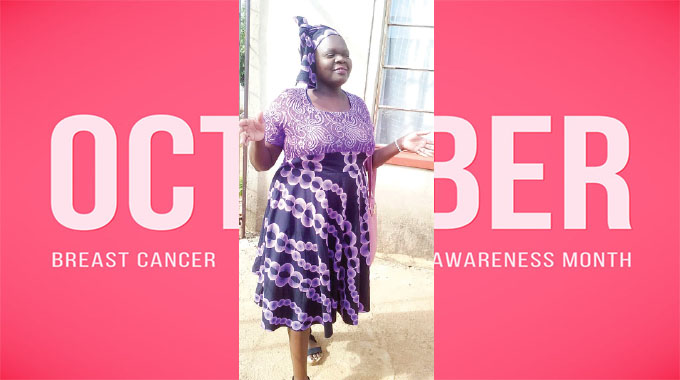
Natasha Mutsiba, [email protected]
SURVIVING cancer can seem like an unreachable dream to someone who’s just been diagnosed, or who’s in the middle of treatment.
When Mrs Patricia Manyatwa (43), a primary school teacher in Bulawayo discovered a lump in her left breast in October 2015, she immediately consulted her doctor.
A few days later, she went back to the doctor who told her something she never thought she would hear – she had breast cancer.
The news came as a shock to her and she was devastated. Being diagnosed with cancer seemed like a death sentence.
Mrs Manyatwa, a mother of two, underwent a surgical mastectomy and she was referred to Mpilo Central Hospital for radiotherapy and further treatment.
After having the cancerous lump removed, Mrs Manyatwa needed additional treatment since the cancer had spread to her lymph nodes.
She received chemotherapy, and radiation, and continued to take medication for five and a half years after her diagnosis.
With October being marked as Breast Cancer Awareness Month across the globe, Mrs Manyatwa, a cancer survivor offered to share her story, one filled with fear, hope, and courage.
As she reflects on her cancer journey, Mrs Manyatwa emphasises the importance of early detection and emotional support for those battling with the disease.
“At first, when doctors told me that l had breast cancer, the news was unbearable and l cried uncontrollably. To me, it was like a death sentence and the thought of dying and leaving behind my two daughters really stressed me,” she said.
“I went through a surgical mastectomy in November 2015. I was also referred to Mpilo Central Hospital for radiotherapy where l did six cycles of chemotherapy. I also took tablets for 5 and a half years.”
Radiotherapy is a cancer treatment that uses high doses of radiation to kill cancer cells and shrink tumors.
“The colour of my skin turned dark, and I started losing my hair. I lost my appetite for food and also became moody sometimes even without noticing it. I could not perform house chores as a married woman, and my work output was also affected as l had to do light duties,” said Mrs Manyatwa.
She expressed gratitude to her family members and colleagues at work for giving her emotional support throughout her journey.
“I would like to thank my husband because he was there for me. He would bathe me, take me to the toilet, and would literally do everything for me,” said Mrs Manyatwa.
“My children were also there for me as l couldn’t do anything on my own. Even my colleagues at work, including my mother were there for me even today. My siblings and the staff at Sigombe Primary contributed to my treatment through financial and psychosocial support.”
Mrs Manyatwa said it is important for women to go for breast cancer screen for detection. She said sharing her story would raise awareness about breast cancer, especially in young people.
Screening tests can help detect breast cancer before any symptoms develop. When breast cancer is found and treated early, the chances of successful treatment are better.
For Mrs Manyatwa she knows just how important breast cancer screening can be as it saved her life.
“You can live with cancer and grow old with it. If you find anything in your breast, I urge you to immediately go to the hospital and doctors know how to treat the disease and they will walk with you on this path,” she said.
“As many survivors will tell you, hearing someone else’s story can often ease the burden of this disease, and even inspire the passion to keep fighting. While being diagnosed with breast cancer is not easy, I believe it is better to know your status early and get treated.”
Mrs Manyatwa said while the causes of cancer are not yet known, it is important for women to have self-examination after their periods every month.
“If you find any lump in your breast, please go to the doctor. No one can diagnose you with breast cancer if you have not yet tested. However, not all lumps are cancerous” she said. – @TashaMutsiba.


 Online Reporter