admin
admin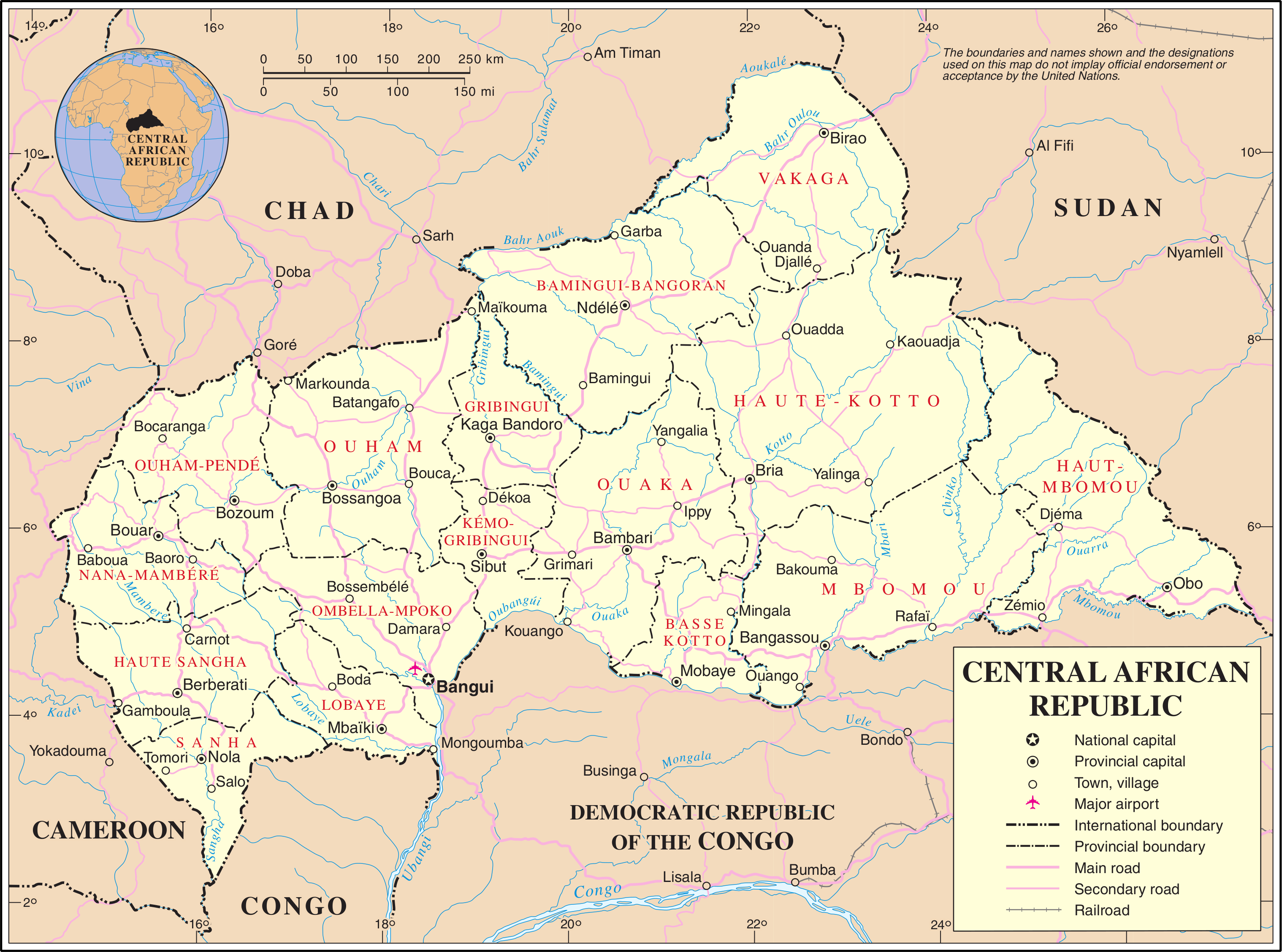
Opinion By Saul Gwakuba Ndlovu
The murderous bloody upheaval currently occurring in the Central African Republic (CAR) is really not a new development in that part of the African continent.
It is a resumption of a historical confrontation between Islam and Christianity after a period of Moslem-led slave hunters and traders in the region which ended in about 1899-1900 AD when French colonialists began to consolidate their hold on that area of Africa.
The CAR was at one time called Oubangui-Chari, a name given it after the country’s main two rivers. It later became a part of what was called French Equatorial Africa whose other territories were Chad, Gabon and Congo (Brazzaville.)
The country’s approximately three million people comprise the M’baka, the Mondjombo, the Kaka, the Pande, the Lissongo, the Banda, the Baya, the Zande, and the Sango whose language is the most widely spoken in that country.
The Zande and the Baya are the latest arrivals in historical terms. The Baya had been living in the northern region of Nigeria with the Hausa as more or less their neighbours.
When the Baya moved into what we now call the Central African Republic (CAR), they clashed with the Banda who had arrived much earlier after travellling a very long distance from the north to get away from Moslem slave raiders.
The Baya and the Banda sooner than later entered into a truce, the main factor being their shared fear and hatred of the slave traders who had right through several centuries caused many communities of black people to flee southwards from the Mediterranean shores. The raiders had a gun in one hand and the Koran in the other.
The slave trade had a very frightening historical record in the CAR, with the vastly Christian black communities fearfully associating it with the predominantly Islamic north.
That fear was obviously worsened by the now reversed Moslem-led coup which was to all intents and purposes the cause of the present inter-religious conflict.
The coup was undoubtedly associated with Boko Haram of northern Nigeria and the foiled Moslem uprising in Mali as well as the instability that has obtained in Chad for decades,
Africa is experiencing very disturbing security problems for quite some time now. Most of those problems seem to be more religio-political than socio-economic.
A look at Somalia indicates that religious radicalism is the motivating factor of that country’s tragedy, and so is the Nigerian reign of terror in some regions of that densely populated state.
The Egyptian situation has not yet been stabilised, let alone pacified. It also has fundamental religious dimensions.
There are of course, cases where naked avarice and greed fuel brigandage; primitive tribalism precipitates lawlessness; uncontrolled personal ambition causes terrorism, and heavily externally financed interference leads to uprisings.
There are also instances where maltreatment of particular ethnic or linguistic groups or region by a national government has generated civil wars as was the case in the Sudan, leading to the ultimate secession of South Sudan.
Africa has as yet not had a case where a nation has been created on the basis of its people’s alleged religious belief. The trend has always been to highlight the freedom of worship, that is to say, the constitutional and inalienable right of each individual to believe or not to believe in the existence of a deity, and to let that individual to adore or worship that deity as he or she wishes without any hindrance or interference provided the mode of worship does not interfere with anyone’s right to privacy and/or good health.
In short, we are talking about tolerance of one another’s cultural beliefs. The only case in which a former British colony was split into two on the basis of religion was the Indian sub-continent when in 1947 Pakistan was separated from India just before both were granted independence.
In today’s Africa, one wonders why anybody would fight, kill and die for the right to secede to establish a purely religious state.
If one feels so uncontrollably deeply to live in a uni-religious country, one can and should simply emigrate. That is what the black Jews of Ethiopia (the Falashas) did in the mid-1960s.
Difficult as it may sound, that is most probably the last solution the Central African Republic (CAR) may resort to in order to re-establish some sanity and stability throughout its 600 000 sq km territory.
Incidentally, the CAR is predominately Christian, especially the southern and central regions. The northern area, bordering Chad is mainly Islamic. It is quite in keeping with Chad’s socio-cultural environment that most of the CAR’s Moslems have now sought refuge in Chad.
With an area of 1,284,000sqkm and only about five million people, Chad can, if it so wishes, absorb those CAR refuges.
A fundamental issue that African Union heads of state need to debate quite frankly and take a decision is: to what extent should religion play a part, if any, in the political, legislative, judicial and administrative processes of African Union countries?
We should, meanwhile bear in mind that the world at one time had some territory known as “The Holy Roman Empire.” Are some of the current world’s politico-religious cultures trying to revive that ancient practice?
Saul Gwakuba Ndlovu is a Bulawayo-based retired journalist. He can be contacted on cell 0734328136 or through email [email protected] <mailto:[email protected]>



 Online Reporter