Online Reporter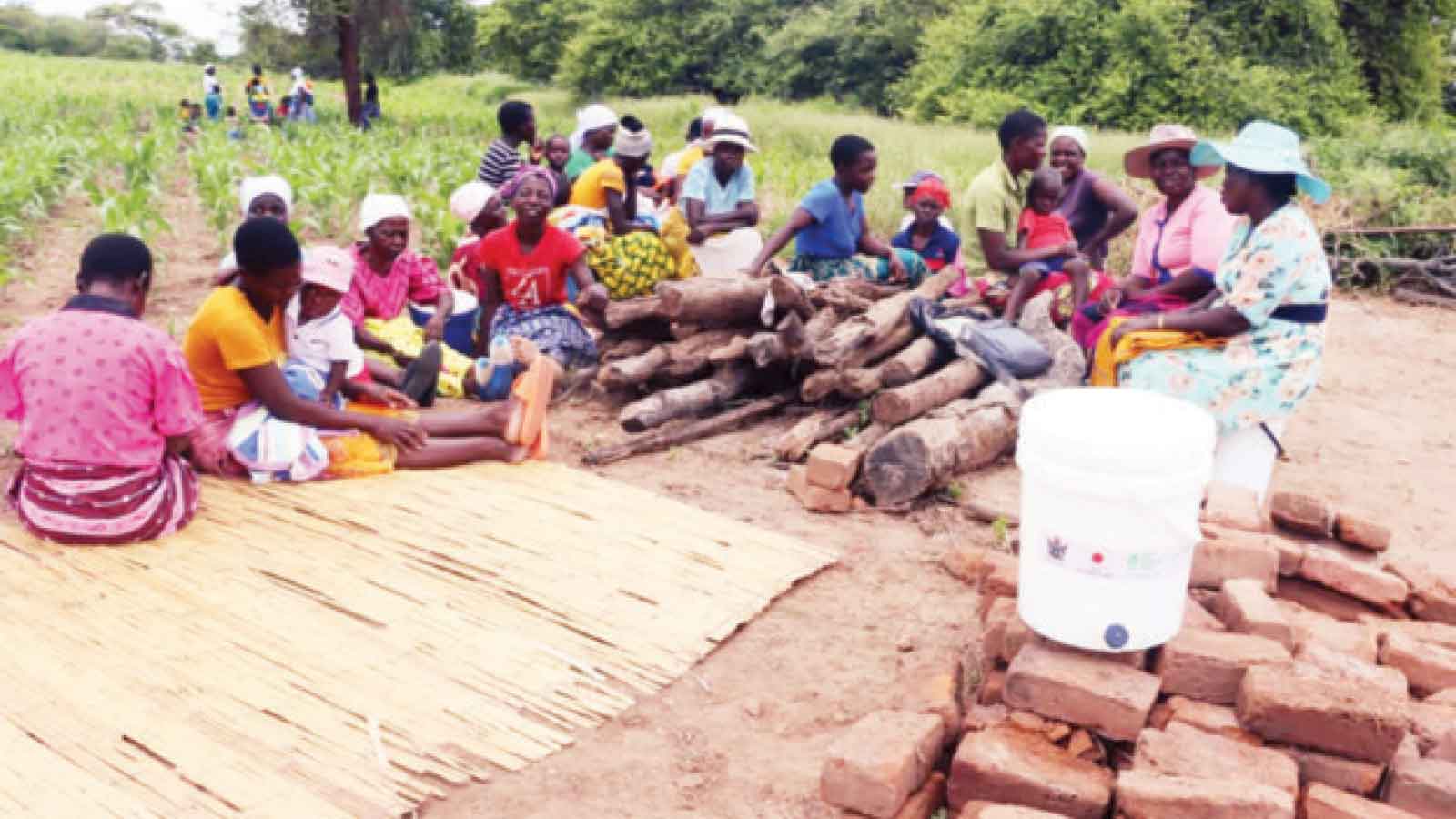
Fungai Lupande-Mashonaland Central Bureau
At a borehole in Matsiwo Village, Ward 14 of Mbire District, a simple act illustrates a powerful public health transformation.
As a care group meeting continues under the scorching sun, Ms Jane Chawasarira gently rises from the circle, her baby whimpering softly in her arms.
She walks to the nearby borehole, carefully washes her hands, returns to her seat and begins breastfeeding.
For Ms Chawasarira, the routine is more than good hygiene — it is a lesson learned through community-led health education that is helping reshape lives in one of Zimbabwe’s most climate-vulnerable districts.
“I was taught about the five critical moments of handwashing,” she says.
“Before breastfeeding, after changing nappies, before preparing food, before eating and after using the toilet.”
The mother of four says the knowledge came after years of hardship.
“During my earlier pregnancies, I was malnourished, and it affected my children,” she recalls.
“My second child developed kwashiorkor and was only saved through Plumpy’Nut. At that time, we had no safe source of water and depended on shallow wells along the Utete River.”
Today, Ms Chawasarira confidently speaks about exclusive breastfeeding, continued breastfeeding up to two years and the importance of a balanced four-star diet — concepts she only learned after joining a local care group.
As donor funding continues to decline, the care group model has become a vital link between health institutions and remote communities in Mbire.
Supported by the Government of Japan through UNICEF and implemented in partnership with the Ministry of Health and Child Care, the programme is built on community ownership and peer-to-peer learning.
Each care group comprises a coordinator, supervisor, promoter and lead mothers. Every lead mother shares key health, nutrition, water, sanitation and hygiene (WASH) messages with 10 neighbouring households.
Field officer Mr Maccyrillo Mugonhi says the approach has significantly eased the workload of Environmental Health Technicians (EHTs), commonly known as Tsanana.
“Previously, EHTs had to move from household to household delivering messages on sanitation, nutrition and immunisation,” he says.
“Now we train the care group promoter, who then passes the information to lead mothers for dissemination within the community.”
Regular follow-ups are conducted to ensure information is accurately shared, while demonstrations and drama performances help simplify complex health messages.
Mbire remains one of Zimbabwe’s most food-insecure districts and is among the country’s top five districts with high levels of malnutrition among pregnant women and children under five.
Recurring droughts, erratic rainfall patterns and periodic flooding have severely affected agricultural production, leaving many households vulnerable.
District Development Coordinator Mr Richard Maruta says all 17 wards in Mbire are affected annually by either droughts or floods.
“The situation has worsened food insecurity, particularly among children,” he says.
“Our WASH coverage currently ranges between 40 and 47 percent.”
Limited access to safe water and sanitation has further compounded malnutrition, creating a cycle of disease and poor nutrition.
To address these challenges, the Government and its partners have intensified interventions through programmes such as the Presidential Borehole Drilling Programme and Village Business Units (VBUs).
“Last year, 35 Village Business Units were established in Mbire, with an additional 15 planned,” says Mr Maruta.
The VBUs integrate nutrition gardens, fish farming and commercial crop production, all supported by improved access to clean water.
Welthungerhilfe (WHH), UNICEF’s implementing partner, has adopted a nutrition-sensitive WASH approach that combines health education, sanitation and climate resilience.
WHH field manager Mr Tamuka Betserai says nutrition interventions alone are not enough.
“The programme, introduced in April last year, had to be holistic,” he says.
“Nutrition outcomes improve much faster when combined with WASH interventions and social behaviour change programmes.”
The initiative is also helping communities challenge harmful cultural practices, including the early introduction of solid foods to infants and the administration of traditional herbs known as kutsengera.
In addition, the programme supports immunisation outreach in hard-to-reach areas by providing fuel and allowances for health workers.
To improve access to safe water, UNICEF rehabilitated five boreholes in Wards 13 and 14 while training communities to maintain the infrastructure themselves.
“In the past, people used wooden poles to protect boreholes,” says Mr Betserai.
“Now communities are pooling resources to build permanent brick structures around them. That demonstrates ownership, sustainability and climate resilience.”
Agricultural extension officer for Ward 14, Mr Tonderai Karimazondo, says improved farming practices are also contributing to better nutrition outcomes.
“We are promoting traditional grains such as sorghum and finger millet because they are better suited to this district’s conditions,” he says.
“Production has doubled, and demand for cowpea seed, which forms part of a four-star diet, continues to grow.”
Plans are also underway to introduce iron-rich orange maize to further improve maternal and child nutrition.
“Through care groups, community members are teaching and supporting one another,” says Mr Karimazondo.
“We are witnessing real and lasting change.”
Back in Matsiwo Village, mothers continue exchanging lessons and experiences beneath the shade of a tree.
The simple act of washing hands before feeding a child has become a symbol of something much larger — a community finding solutions from within, building healthier futures through knowledge, ownership and resilience rather than dependence on aid.