Online Reporter
Bruce Ndlovu, Sunday Life Reporter
WHEN Saimon Mambazo Phiri received his first-ever airline ticket at the age of 20, his father immediately marched him to the nearest police station.
The year was 1995 and Phiri, the founder of perennial globetrotters Siyaya, believed he had finally made a breakthrough. For years, he had worked on the fringes of a cultural landscape dominated by groups like Amakhosi and Black Umfolosi, both firmly established on the touring circuit.
Then came a chance encounter that would change everything — a meeting at the railway station with a trio of Scottish performers visiting Bulawayo as part of its centenary celebrations at a time the city had a twinning arrangement with Aberdeen. The group was looking for Cont Mhlanga and the famed Amakhosi.
Instead, they found Phiri.
“My breakthrough came through Amakhosi,” Phiri recalled.
“I had just dropped off my sister at the station. Amakhosi was then operating out of 14th Avenue and Herbert Chitepo, just nearby.
These three performers from Aberdeen had come for the city’s 100th birthday. Cont always said one in three people in Bulawayo knew about Amakhosi and I guess it was true — I was the second person they asked.”
While Amakhosi was beginning to build a global reputation, they were often too busy to accommodate unknown artistes. The trio had to wait two hours to be seen and when they returned two days later, Amakhosi was empty. Phiri, however, stayed close — eager and determined.
“Cont had just taken Nans’ Lendoda to London and he had met Queen Elizabeth. They had gone to the Commonwealth Games and so to Amakhosi, these Scottish performers were small fry. But for those of us on the outside, every tourist was a potential saviour,” he said.
The performers took a liking to Phiri and he became their guide in Zimbabwe. After some time, the relationship blossomed and they arranged for him to travel to Aberdeen — a first for the young artiste.
A Scottish Flag, a Plane Ticket, and “House Arrest”
In his family’s living room in Nguboyenja, a Scottish flag with a diagonal cross had always hung on the wall. As a child, Phiri had never understood its significance. That changed the day he brought home a British Airways ticket to Aberdeen.
“My father was from Malawi and had worked for a Scottish family. That flag meant a lot to him, but I didn’t know why,” Phiri said.
“When I showed him my plane ticket, he couldn’t believe it. He thought I was lying. He dragged me to the police station. He wanted me locked up for fraud!”
Because it was a weekend, the British Council could not immediately confirm Phiri’s story. The officer in charge, however, took the time to understand the situation. He escorted Phiri home and in a show of compromise, placed him under “house arrest” until the ticket’s authenticity could be confirmed.
“There were no cellphones back then. My father even took a day off from work to verify the ticket in person. When he got the confirmation from the British Council, he was stunned.”
A Rough start — And a family feud with Cont
Growing up in the 1980s, Phiri, like many was heavily influenced by Cont Mhlanga. Cont lived just a few houses away in Nguboyenja and had been close to Phiri’s elder brother during the karate craze that later birthed Amakhosi.
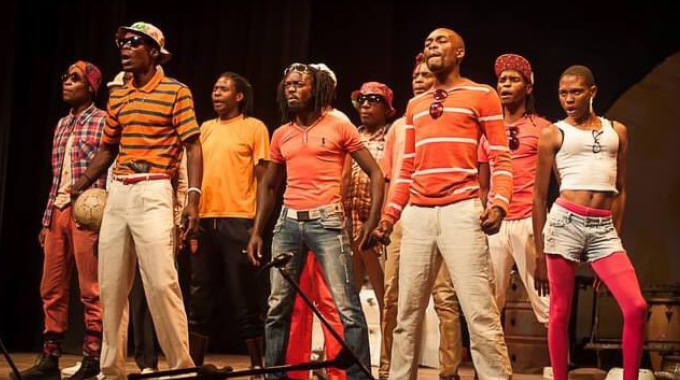
“Cont was both an inspiration and a myth,” Phiri said.
“He was that eccentric guy with bell-bottoms and big books. Our parents would whisper about him whenever they saw him walking around with white people.”
But despite the admiration, tension lingered.
“My brother once fought Cont and left the karate club they were in. He told me, ‘Whatever you do, never join anything Cont is in charge of.’ That stuck with me for years. It wasn’t until later that I realised I was hurting my own progress.”
Despite being a top student — the first in his family to get straight A’s at O-Level — Phiri turned down university. His parents didn’t understand his passion for the arts. He often felt unloved and misunderstood.
“My parents were struggling financially, but they tried to act like everything was fine. I chose night school to ease their burden, but even that was hard. Sometimes, I had to walk long distances through unsafe areas just to get to class. There were days I didn’t go at all.”
At his lowest, Phiri was pressured into becoming a temporary teacher — a job he loathed.
“They were so proud of my grades, but I just wanted to play drums. My mother even ordered that I shouldn’t be fed until I changed my ways. My sister, bless her, would sneak me food under the hedge outside the house.”
Eventually, Phiri relented. His father arranged for him to be hired by the Ministry of Education, and he taught at several rural schools — Nhlambabaloyi, Maxim Hill and Ntshamathe. But his heart remained in the arts.
“I never brought books home. I marked them at school and rushed to Stanley Square for rehearsals.”
Going global — And finding Khaya
The tour to Aberdeen sparked something in Phiri. While in Scotland, he enrolled in a course to become a Microsoft installer — a decision that changed his life.
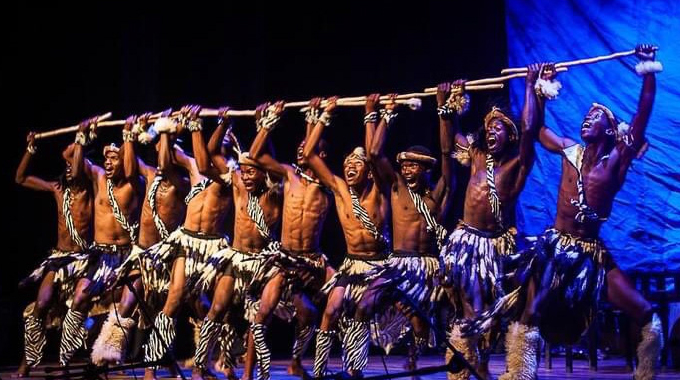
“One of our hosts encouraged me to invest in myself. I became the only Microsoft-certified installer in the city. I worked for major banks and councils, reported to headquarters in Johannesburg and made good money — which I poured back into the arts.”
With newfound financial independence, Phiri began self-funding tours. In 2000, Siyaya launched an eight-month European tour — the start of a new era.
“Things changed from this point on. I was now using my own money to take us abroad. I believe everything changed for us when we said to the world, we are ready to come to you. We aren’t waiting to be invited anymore. Our first breakthrough tour was when we went on tour for eight months in Europe. From 2000 until 2012, we spent every summer. We were unstoppable because this was now our product.
Every cent we made was ours. That was why, between 2000 and 2007, we all got married, because we would take money from our piggy bank and pay for whoever wanted to get married. We were in control,” he said.
After over 16 years touring regularly overseas, Phiri said he had enough. He needed to find the way back home not for his sake but for his family as well. His children had been born overseas and he felt that his last child was the light to guide them all back home.
“In 2012, I reached a point of self-actualisation. I didn’t know where I lived anymore. I didn’t know where home was. My children were born on the road. When we would go on tour with them, we world take pillows from home and replace the ones we found at the hotel. We did this just to give them a feeling of home but we weren’t home. I decided that my son, would be born at home. So my wife returned home, and I also did and when my son was born we called him Khaya. I started looking at things differently. I asked myself why I was travelling so much when I had earned money to live differently. I asked myself why I was still living in Ngubonyenja. All that made me realise that I need to change my life. I started to detach from the ensemble,” he said.
A businessman at home
Today, Phiri has little interest in the suitcase lifestyle. He’s become one of Bulawayo’s most respected cultural entrepreneurs.
Last week, he celebrated his 50th birthday with the announcement of 50 Dates at the Theatre — a 50-show showcase at the Bulawayo
Theatre chronicling his life and work.
“I always told myself I wanted to reach 50 and be fully in control. I own the equipment, the stories, the time — and the vision. Now, it’s time to let people celebrate this journey.”