Chronicle Editor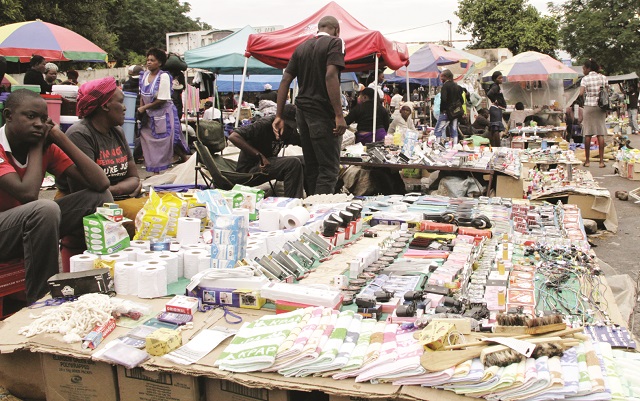
Sisasenkosi Ncube
A NUMBER of flea-market vendors in Bulawayo are shutting down their stands, while others are contemplating closing as cash shortages continue to negatively affect business.
Lizzie Moyo, a flea-market vendor at Unity Village, said she would shut down her stand once her stock ran out, citing a decline in customers because of severe cash shortages.
“I last sold one of my items on the 6th of this month,” she told Business Chronicle. “We no longer have business because people have no cash. The bond-notes have suddenly disappeared and this has also hit us. It has become pointless coming here as we spend hours talking rather than selling.”
She added: “I had borrowed money to order my goods before this cash problem happened, but now I can’t even sell a $4 hat. If I fail to service the debt, I might lose my property.”
Recently, the Bankers’ Association of Zimbabwe (BAZ) issued a statement indicating that banks were currently prioritising exporters for cash withdrawals and foreign currency allocation over individual account holders due to prevailing cash shortages.
In response to the cash crisis, the Government is encouraging individuals to use Point of Sale (POS) machines and mobile money transfers to make payments. However, this use of plastic money has benefited retailers rather than vendors and other informal sector operators, many of whom do not have the infrastructure to take advantage of electronic payments.
A vendor who identified herself as Mrs Mutara, who operates from a place popularly known as EmaSabatheni flea market, said informal sector entrepreneurs had in the past taken advantage of mobile payment platforms such as EcoCash, which have also been negatively affected by the cash crisis.
“I can’t access cash when I want to go and order outside the country,” Mrs Mutara said. “You have to pay extra cash for foreign currency if you have bond-notes. I have since closed one of my stands. I am now sharing a small stand with someone and if these problems continue, I might close my shop.”
She added that EmaSabatheni flea-market used to have around 82 functioning stands, but due to cash-shortages, the number of vendors had dropped to around 40.
The Bulawayo City Council (BCC), which leases out flea-market venues, acknowledged that a number of informal traders had not renewed their licenses for 2017 and had abandoned their bays, but efforts were being made to get those without licenses to come on board.
“Bulawayo is currently carrying out a blitz on illegal vending activities,” BCC senior public relations officer Nesisa Mpofu said. “The operation is aimed at bringing sanity to the sector and ensuring that all vendors with bays regularise their activities.”
Customers who rely on flea-markets for clothes and other commodities said they would be negatively affected if flea-market vendors abandoned their stands.
Amicable Malisa, a Mzilikazi customer, said: “They (flea-market vendors) offer their products at an affordable price for some of us with low incomes. It will be a struggle if they close because we cannot afford Edgars.”
Vendors said it would be easier for them to remain in business if the country adopted the South African rand as the official currency, instead of continuing to use several foreign currencies. The country adopted a multiple currency regime in 2009, abandoning the Zimbabwe dollar due to hyperinflation.
“The situation can be better if customers use rands as most of our stock is ordered from that country,” explained Mrs Mpofu from Fort 11 flea-market.
-Sisasenkosi Ncube is a fourth year journalism student at the National University of Science and Technology


 Online Reporter