Vusumuzi Dube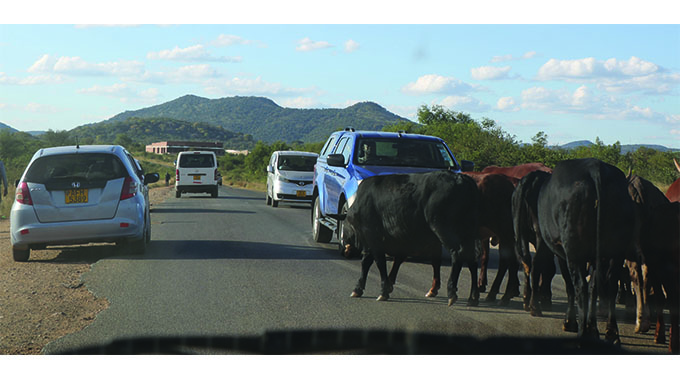
PLUMTREE Town Council recently introduced a cattle impound system to try and control livestock left by owners to stray into town.
This was introduced following protracted lobbying by aggrieved residents who had to put up with nuisance caused by livestock grazing in and around town. The irritation to the residents include endless noise from gongs especially at night as well as loss of vegetables for those with unfenced homes. The impound system was introduced against profuse protestation from livestock owners who argue that the town is not adequately protected as it should, because it does not have perimeter fences and grids which deter animals from straying into the urban area.

They allege that it is the town dwellers and those close to town who stole the perimeter fence and hence making the town exposed. Impounded animals accrue about US$10 per day at the impound pens. However, the thrust of my submission is on precautions that the town council need to ensure so that it does not open itself to possible litigation.
Stock theft is one issue that the impounding authority should guard against. Impounded animals should be released to the owners after production of irrefutable proof of ownership and after all due diligence such as clearance of the animal(s) has been done by police. Otherwise, thieves will walk away with farmers’ livestock after paying a mere US$10 for each animal!
A stock card and one’s national ID cannot be enough to take out the animal from the impound pens.
Even a brand certificate should be checked for correspondence with the brand on the animal. Herein lies the challenge. Most farmers do not apply the brand properly on the animal such that one can hardly see what the actual brand mark on the animal is. In most cases the brand mark becomes a mere scar on the animal.
How then does one conclude that the brand mark on the certificate is the same as the one on the animal? The other issue is that of unbranded animals, and these are in the majority. Most of our communal farmers do not apply personal brands on their animals, but they prefer to use the age old method of personalised ear notching (uphawu).
This has serious limitations because uphawu is not in itself a conclusive identification of ownership, for two reasons. The ear notching patterns get common across different families and areas as a result one needs to have witnesses who will attest to your ownership of the animal in question. This means the town council will find itself with a lot of unclaimed animals because of failure to conclusively prove ownership. These will then be sold as stray after three months in detention.
This will put the local authority at unenviable task of being a driver of wealth loss by our livestock farmers. This cannot be the intention of the impound, to make our farmers poor on the simple account of livestock foraging on vegetables from unprotected homesteads! People’s animals cost way more than vegetables. But they have no business grazing in town!

The other challenge around the impound process, is how the information is communicated to the affected farmers, as most animals do not have ear tags with phone numbers. Your animal could be impounded, accruing a huge debt every day while you are busy transect walking the entire rangeland looking for it. It may eventually get sold without you knowing that it is impounded.
A lesson to the farmers especially in the neighbouring farms, is to put ear tags with phone numbers on your animals so that you can be informed immediately of the impounded animals. Again, as livestock farmers let us brand our livestock with personalised brands and make sure the brand mark is clearly applied so that you can conclusively prove that its your animals by merely producing a brand certificate which matches with the brand mark on your animal. Impound pens mix animals from different areas and this can easily become a driver of communicable diseases.
I appreciate that the local authority is working with the department of veterinary services to ensure that animals inspected, but this could be a time bomb.

Another issue, which is tied to the duration of stay of animals in the impound, is that of the body condition score of the animals. The impounded animals are penned and fed on hay bales and which may not be in adequate quantities.
The hay bales are generally of very low nutritive content by their nature and such impounded animals fastly deteriorate in condition. Therefore, if your animal(s) stays for a long time, you are likely to find it in skeletal condition because the local authority can not incur costs of buying commercial feed for your impounded animal. Having said all this, I would say, you are safer keeping your animals out of town.
Uyabonga umntaka MaKhumalo. Mhlupheki Dube is a livestock specialist and farmer. He writes in his own capacity. Feedback [email protected]/cell 0772851275.



 Online Reporter