

 daniel chigunwe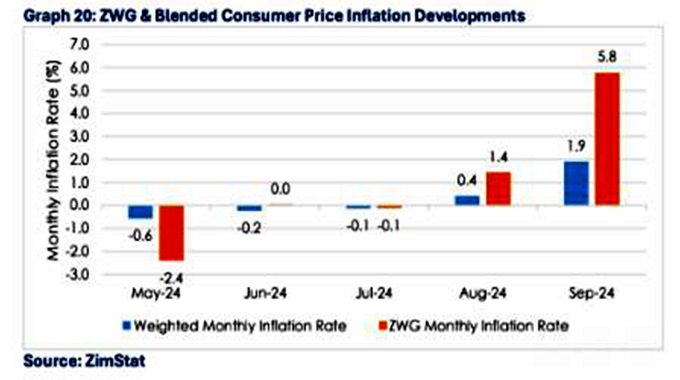
Business Writer
The country’s sustained currency weakness and inflationary pressures will continue to inhibit consumer demand, while persistent shortages and high costs of key enablers such as energy will result in reduced activity in the real sectors, reads part of a third-quarter report prepared by CBZ Holdings Limited.
This comes as the Zimbabwean dollar weakened from approximately ZWL14 per US$1 in April to the current ZWL25,48 per greenback.
At the same time, month-on-month inflation ballooned to 37,5 percent in October, in line with currency depreciation witnessed during the period under review.
In terms of shortages and high costs of key enablers such as energy, the country is currently grappling with massive power cuts largely as a result of low water levels at Kariba Dam.
The power utility is also now charging cost-effective tariffs, which are, however, considered expensive by some businesses, including mining houses.
Despite the above being a threat to consumer demand, CBZ believes that “elevated diaspora remittances, averaging US$5.6 million a day, will continue supporting private consumption”.
Between January and September 2024, diaspora remittances amounted to US$1,566 billion, having grown by 18 percent from the prior year.
CBZ also says that going forward, inflationary pressures are expected to remain elevated in the near term, due to pricing distortions emanating from the widening premium between the official and parallel exchange rates.
The official exchange rate is at ZiG25,48 per US$1, while parallel market rates are between ZiG35 and ZiG40 per greenback.
“Furthermore, drought-induced food shortages will continue to drive food inflation upwards,” according to the CBZ research report in question.
Zimbabwe was hit by an El Niño-induced drought, which saw crop output drop by as much as 70 percent.
However, tight monetary policy measures will moderately control inflationary pressures and may somewhat keep the inflation numbers within the one-digit level by year-end, concedes CBZ.
Monetary authorities are currently pursuing a tight monetary policy stance, which saw interest rates go up to 35 percent.


 Online Reporter