Online Reporter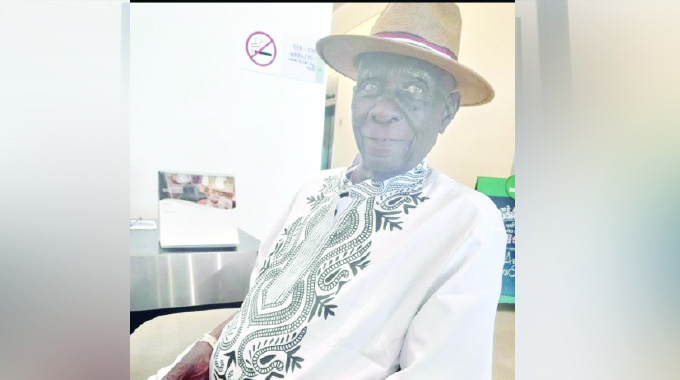
Ashley Phiri
PRESIDENT Mnangagwa has conferred a liberation hero status to the late liberation struggle war icon, Cde Elias Sikholiwe Njani Moyo who was sentenced to life imprisonment by the brutal Rhodesian regime in 1976 for allegedly helping “terrorists”(freedom fighters).
He died last week at Mater Dei Hospital after a long illness.
He was 100.
Cde Moyo’s great grandson and family spokesperson Mr Mkhululi Chimoio said he will be buried at Terelyne Village under Chief Gwebu in Umzingwane District tomorrow.
“Mr Moyo dedicated his life selflessly to the liberation of Zimbabwe and the empowerment of its people. His unwavering commitment to the struggle for freedom resulted in his imprisonment for life by the Smith regime, a sacrifice emblematic of his deep love for the nation.
“His contributions remain a proud part of Zimbabwe’s history,” he said.
Mr Chimoio said his great-grandfather was a local businessman in Mawabeni who was passionate about uplifting the lives of local community members.
“Beyond his role in the liberation movement, Mr Moyo was a pillar of the business sector, playing a significant role in uplifting communities through economic empowerment and business development, with many families benefiting from his wisdom, leadership, and foresight,” he said.
At the time of his arrest in 1976, Cde Moyo was a branch treasurer for the Zimbabwe African People’s Union (Zapu).
He was accused of harbouring three freedom fighters who, according to Rhodesian media reports, later shot and killed a white storekeeper, Mr Leonard Ashly, near Mbalabala on July 7, 1976.
Rhodesian propaganda sought to vilify him, portraying him as reckless for “losing everything” by supporting liberation fighters.
A story published by the Rhodesian media had the following headline: “This man lost all through helping the terrorists”.
Cde Moyo was accused of sacrificing his business, his $50-a-week job and even selling cattle to pay $700 for legal fees.
The article’s opening line starkly read: “Elias Njani Moyo, who is 50 years old, has recently lost everything he has striven for in life because he gave help to some terrorists.”
Such stories were part of a larger campaign aimed at intimidating black Zimbabweans from supporting the liberation struggle.
Cde Moyo was released after independence in 1980.
Many nationalists like Cde Moyo endured harsh prison conditions under the Rhodesian regime, which sought to entrench white minority rule.