Chronicle Editor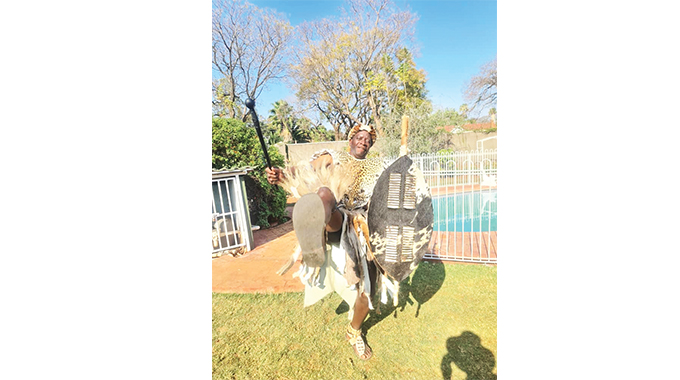
Nqobile Tshili, [email protected]
EVERY year in the month of August, the Ngwenya family, led by the esteemed medical doctor and scholar Professor Solwayo Ngwenya, comes together to partake in a special event that pays homage to their ancestors. This ritual serves as a profound connection to their spiritual roots and the divine.
Two weeks ago, the Ngwenya family continued this timeless tradition, observing a sacred day dedicated to celebrating the existence of their forebears and their divine link to the Almighty.
However, before Prof Ngwenya and his family engage in this meaningful commemoration, extensive preparations take place, infused with rich cultural significance.
One of the key preparations involves the brewing of traditional opaque beer, a process that draws the family closer to their ancestral heritage. What makes this undertaking even more special is the active involvement of Prof Ngwenya’s young children in the brewing process.
For Professor Ngwenya, including his minor children in this age-old practice mirrors the very teachings passed down by his parents. It is a tradition that has woven itself into the fabric of African culture for countless centuries. It is a testament to the enduring bond between generations and the unbroken thread of tradition that binds the Ngwenya family to their ancestors and, ultimately, to the divine.
“Our traditions pre-date Christianity when our ancestors revered God from the start. Our people spoke to him via our ancestors, forming a formidable and unbreakable bond. Everything they asked for God provided them with. Being born to parents who were themselves born in the early 1900s, making me a grandchild of people who lived before the arrival of Western culture (grandfather witnessed the burning down of Bulawayo as per King Lobengula’s instructions), I was well placed to be brought up, groomed, and ready to receive with open hands such a wonderful culture,” he said.
Professor Ngwenya said, importantly the traditional culture that he was initiated to teaches Ubuntu which denounces all societal vices while encouraging the public to live upright. A well-known polygamist, he said, he remained grounded to the ethos of his forefathers despite receiving western education.
It takes a month to prepare for the celebratory traditional event. Professor Ngwenya said it is also a day of prayer for the family as they seek divine protection and blessings using ancestors to connect to God.
“The day is hugely significant and sacred for our family in that it is a day of great celebrations, remembrance, and for the family to talk directly to Mvelinqangi (God), via our ancestors,” said Professor Ngwenya.
“We feast, dance, and have mqombothi the way it has been since time immemorial. We ask for rains from God so that we have good crops for our food and brewing the next mqombothi. We also ask for protection from diseases and enemies. And for good health and prosperity. The day is the most important day of the year. No other day is greater than this one.”
It takes months to prepare for the event. This includes getting the right pots (amaqhaga) and the grain that is harvested within the family’s residence.
“The grain is from maize, millet, and uphoko, which we will treat and get imithombo. We have to organise the goats and ox. A week before the big day, we start making the umqombothi (African brew). I learnt how to brew it from my parents in Solobela Village, Lupane. We talk to our ancestors and God in the morning before we start the big feast and dance,” he said.
Professor Ngwenya said while religious groups have tried to politicise the importance of their religions, there is only one God, who the Ndebele community in Zimbabwe describe as Mvelinqangi (God).
“Christian convictions are almost similar in the teaching of Ubuntu and say, “The Father, The Son, and the Holy Spirit” we say “Mvelinqangi, Okhokho labo Khulu/Gogo”. Some use a rosary, and we have ubuhlalu, some burnt impepha in a tin, we also burn impepho in an udiwo,” he said.
“They are going to heaven we are also headed there. So we are similar. Where we differ greatly is that they teach that ancestors are demons, we say we cannot call our parents demons. Otherwise, we will also be demons. A demon produces a demon. We revere our ancestors with animated pride.”
Prof Ngwenya said it is thus critical that younger generations are taught about God’s existence through the African lenses. He said the colonial teachings that demonise Africa traditions should not be left unchallenged.
“We are the same to everyone on Earth. We are descendants of great people who lived and revered God for centuries before being colonised, told to discard their way of talking to God, severing a vital link to Him,” he said.
“So many people have lots and lots of problems because they have lost their culture; no culture, no identity, and having other people’s cultures imposed on them. I would like to teach all my children this great culture and let them be free to choose which one to follow when I am gone; proudly African or westernised descendants of Professor Solwayo Ngwenya.”
He said beyond himself, it is the nation’s responsibility to teach younger generations about their origins and cultural identity.


 Online Reporter