peter
peter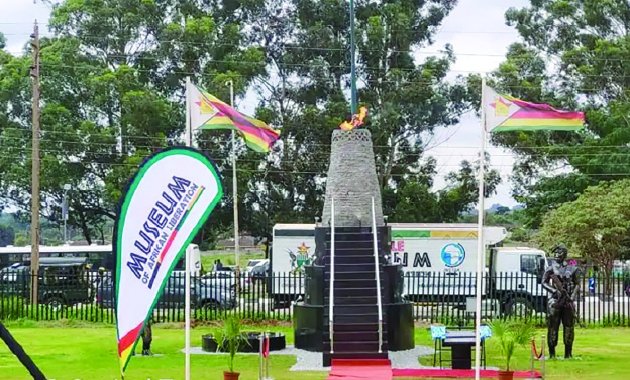
Gibson Nyikadzino
COLONIALISM, like a vice, only releases its grip when confronted head-on. Those who laid down their lives for the freedoms we enjoy today deserve our gratitude, whether they were individuals, groups, or freedom-loving states.
With the conviction of an Old Testament prophet, I assert that defeating colonialism required nothing less than military confrontation and unyielding struggle. Zimbabwe, once Southern Rhodesia, bore witness to fierce ideological battles during its war of liberation from 1966 to 1980 — battles waged both militarily and ideologically.
The violence that accompanied our fight for independence was not gratuitous; it was the crucible in which our freedoms were forged. Without it, the aspirations of countless Zimbabweans would remain mere illusions, disconnected from the harsh realities of our history.
Colonial powers justified their violent conquests ,by invoking legal and religious obligations to control indigenous lands and cultures. Consequently, their defeat, too, was destined to be rooted in violence.
Revolutionary thinker Frantz Fanon posited that the potential for violence arises from the very context it seeks to dismantle.
Thus, our armed struggle for independence fundamentally altered the colonial landscape, proving that colonialism could indeed be overcome.
Zimbabwe’s nationalists, liberation fighters, peasants, collaborators and intellectuals grappled with the vision of independence.
They understood that anti-colonial forces and pro-freedom allies were indispensable.
The 1917 Bolshevik Revolution in Russia marked a seismic shift. Peasants and workers united, altering the course of global history for decades to come. Crucially, the Bolsheviks diverged from the colonial West’s exploitative mindset, championing freedom for colonised peoples.
The communist ideology stemming from the Bolshevik victory, propelled the Soviet Union into a superpower rivalry with the West, post-World War II. Meanwhile, in 1949, China witnessed another pivotal moment: the communists, led by Chairman Mao Zedong, demonstrated that guerilla organisations, in collaboration with peasants, could topple oppression.
These victories resonated across Africa’s colonised territories. They signalled that the capitalist system, prioritising profit over freedom, was not invincible. Communism transcended borders, evolving into a global movement.
For Zimbabwe, Russia and China played crucial roles. They provided political and military training to our liberation fighters, along with financial and logistical support. Critical literature fuelled our resolve, keeping the flame of liberty alive.
Notably, no freedom fighter trained in the West. Instead, committees raised funds to sustain our struggle. When Zimbabweans engage with Russians and Chinese today, we remember that they were our first allies — helping crush the colonial system and capitalist ideology on our hemisphere.
The contributions of all countries that aided Zimbabwe during its struggle for independence must not be overlooked. Rewriting this history of sacrifices would be a disservice. Algeria, Botswana, Cuba, Guinea-Bissau, Egypt, Mozambique, Tanzania and Zambia, among others, actively participated in Zimbabwe’s fight for freedom.
Since the 1960s, these nations were committed to ending white minority rule in Africa and dismantling the apartheid system in South Africa. They acted as midwives to Zimbabwe’s independence.
We must never forget that the Frontline States and the African bloc played a crucial role in dismantling the white settler state in Zimbabwe. This state had effectively rallied support from various segments of society, including the working class, petit bourgeoisie, bourgeoisie and so-called “poor whites,” using the racial ideology of white supremacy.
Racism was the linchpin that sustained the colonial regime. Moreover, many white individuals supported the white settler state’s objectives, which eventually crumbled.
Historically, whenever Western countries faced embarrassment during wars, they sought negotiation. This pattern is evident in recent conflicts: the USA and the Taliban in Afghanistan, Israel and the Hamas resistance in Gaza, Palestine, and soon, Ukraine and Nato negotiating a peace deal with Russia. The West seeks to avoid battlefield humiliation.
In Zimbabwe’s case, the Ian Smith settler establishment pushed for negotiations through Tanzania, Zambia and Mozambique.
The embarrassment of a fully equipped conventional army being defeated by guerrillas forced their hand. The Lancaster House talks, supported by the Frontline States began as the Smith regime’s stranglehold on Zimbabwe weakened.
While the Frontline States played a pivotal role in ending the war, they also bolstered Ian Smith’s resolve through diplomatic influence over nationalist leaders.
The refusal of the colonial army to surrender, exposes the racist aspects of imperialist plans. Even today, the humiliation and embarrassment faced by the colonial settler government serves as a reminder that upholding the masses’ freedoms cannot be halted.
Post-independence, many African nations lack Zimbabwe’s courage to reclaim their land. They now grapple with new forms of colonialism. Globalisation steals their wealth while Western values threaten their cultural fabric.
Political independence without economic independence is hollow. Zimbabwe is transitioning, engaging in a social struggle to dismantle imperial narratives while honouring its history. Cooperation with other states is essential to overcoming neo-colonialism.
Remembering those who contributed to Zimbabwe’s independence is vital. Initiatives like the Museum of African Liberation, express gratitude to all states that made this journey possible.
The interdependence of progressive states serves as a crucial binding factor. When single-minded idealists engage in the fight against colonialism and neo-colonialism, their unity becomes paramount for achieving victory. As Zimbabweans, let us always remember that we are one, bound by our shared homeland.


 Online Reporter