Vusumuzi Dube
Rutendo Nyeve, Features Correspondent
“WHEN someone you love becomes a memory, the memory becomes a treasure,” is a common phrase used by people when mourning their loved ones as they reminisce and cherish the moments they had with them.
Around Zimbabwe, Joshua Mqabuko Nkomo’s memory seems to be an immortal treasure particularly for Highlanders football club supporters.
This has seen them cultivating a culture of frequenting his statue before and after football matches, celebrating victories especially after winning a silverware or getting the better part of the common battle of Zimbabwe.
The Joshua Nkomo statue was erected by Zimbabweans to celebrate and immortalise the life and works of the late Vice President of Zimbabwe.
The statue, was (re)erected on the spot where that of Cecil John Rhodes used to be, facing the same direction (North).

Dr Joshua Mqabuko Nyongolo Nkomo’s statue pedestalised on a prominent site at the inter section of 8th Avenue and Joshua Mqabuko Nkomo Street as a standalone statue, this is what one might notice: Facing North, the statue stands on an elegant pedestal approximately three metres tall.
The pedestal has three tiers and all of them feature red sandstone which blends beautifully with the buildings near the statue, such as the Post Office and First Capital (Barclays) Bank which are built of the same stone.
The statue itself, because of its bronze colour, blends in similar fashion.
It is situated at a traffic circle popularly known as a roundabout in Bulawayo.
Black and white kerbing forms the outer boundary between the road and the statue.
In keeping with the general strategy of erecting monuments, it is at a busy intersection where it can be seen by a large number of people passing through.
Slightly inwards towards the statue is another boundary of granite columns about half a metre tall, joined by a chain that runs round the inner edge except at the entrance’ to the statue.
The four granite columns to the east were knocked down by cars and have not been replaced.
Otherwise, all else is impressive.
For example, from the four general compass directions, there are lights close to the feet of the statue that shine on the statue at night.
There is also, on the Northern side, about two metres high, a glass encasing for an eternal flame although the eternal flame is not on all the time.
Nkomo is captured standing straight, arms by his sides and on one hand carrying induku (knobkerrie) as was his wont.
Induku or rungs in Swahili, has symbolic value in African society given that it can be used as weapon to defend oneself but most importantly, it can be carried ceremonially to denote an African elder or leader. Another African leader famous for carrying induku was Jomo Kenyatta.
Dressed in a suit and tie, the pose of Nkomo’s statue is very demure and he has on his face, what looks like a faint smile.
Now for Bulawayo football fans and particularly Highlanders supporters, the year has been good for them as odds in the battle of Zimbabwe favoured them twice.
It has and will probably remain one of the best Sundays every year for football fanatics in Bulawayo and the rest of the country.
It’s the day when the biggest teams in the country, Highlanders and Dynamos play at Barbourfields stadium.
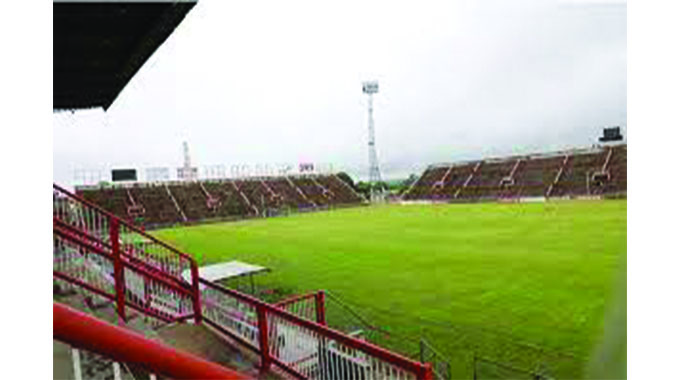
While pundits will call it a rivalry like no other, one commentator described it as a game that stretches way beyond the white lines of the football pitch and starts way before the 3pm kick off and end way after the 90 minutes timeframe.
The match has over the years found a second pitch in what has seemed like the third half of the game.
This is none other than the Joshua Nkomo statue.
Statues have been observed to be serious signs of a people’s thought.
Statues are part of a community or nation’s cultural narratives.
The Joshua Mqabuko Nkomo statue has over the years proven not to be an exception as it has been observed to be significant for Highlanders football club supporters.
The country recently celebrated the life of the late Joshua Nkomo, a day that has seen a number of facets about the late icon taking centre stage.
One such facet is ‘culture’.
Culture has been widely described as a phenomenon that consists of patterns, explicit and implicit, of and for behaviour acquired and transmitted by symbols, constituting the distinctive achievement of human groups, including their embodiments in artifacts.
The essential core of culture consists of traditional ideas and especially their attached values. Culture systems may, on the one hand, be considered as products of action, on the other hand, as conditioning influences upon further action.
Renowned cultural scholar Wendy Griswold went on to single out cultural objects as key in understanding culture.
She defined a cultural object as shared significance embodied in form.
This simply means that a cultural object can be anything tangible or intangible that is important to a particular audience due to the meanings attached to it.
She further observed that all cultural objects must have individuals who get them, individuals who hear, read, comprehend, consider, authorise, partake in, and recall them.
It is against this background coupled by past observations that this reporter embarked on an investigation to understand the significance of the Joshua Mqabuko Nkomo statue for the Highlanders Football Club supporters.
In an effort to explore the historical and cultural meanings derived from the statue, the identity attached to the statue prevailed in every level of engagement with my sources.
Material culture studies would affirm to the notion that cultural objects like statues play a huge role in examining individual lives, with particular reference to gender, ethnicity, class, age with recent exploration of nationalism and regional identities.
“The late Joshua Nkomo is a father whom we have a shared identity with as people from Matabeleland.
As such, identity is one of the major links between the statue and supporters.
The culture of going to the statue shows how proud we are to be identified with the late Joshua Nkomo as he originated from our region,” said on Mr Lungile Khumalo.
He further said that the context of the liberation struggle and post-independence contributions earned the late Vice President the respect that Zimbabwe render to him even way after his death.
Former Highlanders FC executive member who spoke on condition of anonymity observed that there were actually positive developments brought by the culture of going to the statue.
This was its ability to bring peace.
“You will notice that there has been a decline in violence since 2013 as people would come and peacefully celebrate at the statue without starting fights with opponents like what used to happen.
Furthermore, there has never been any case of vandalism and violence at the statue by the Highlanders supporters clearly showing a shift from the rowdy behaviour we would see in the yester years,” he said.
However, it must be noted that not only Highlanders’ supporters have cultivated this culture, but other teams who include Dynamos.
In most games that they would have won against Highlanders, the team’s supporters have also proceeded to the statue after the game to celebrate.
–@nyeve14


 Online Reporter