

 Online Reporter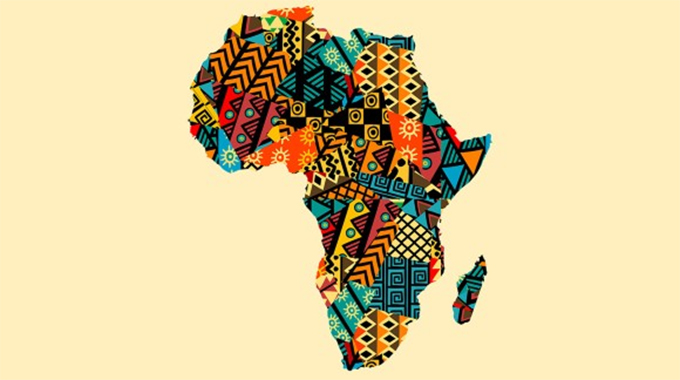
Fadzayi Maposah-Correspondent
I have seen people use fork and knife to have their sadza and whatever relish. I look and actually admire them as they do that.
At times I get carried away and enter a “stare mood” and turn away in embarrassment! It is not that I haven’t tried having my sadza using the cutlery,
I have and I have concluded that it is not for me. Where ever I am and sadza is served and on that particular day, I would like sadza, I will ask for a generous portion of sadza and the relish that appeals to me.
Then if not already provided make an additional request for a water jug and a dish/bowl so that I wash my hands. Most facilities now have handwashing points.
Now when I talk about sadza I am talking about it in a broader sense. Broad sense speaks to the different types of sadza (please forgive me for a wrong plural, but I am sure that most of you can relate!) What about masadza?
So, I am referring to the different meal that can be used to prepare the thick porridge that we love so much. One can have millet sadza, wheat sadza, maize meal sadza or even ground rice sadza.
Now there are experts who know what types of relish work best with the different sadzas. There are some people who consider themselves not to have eaten until they have had sadza.
You can serve them generous and delicious meals that have no sadza and they will confidently said they are yet to eat. I know of some people, men and women included, who say that they will (they do not use the word, might) not be able to sleep or if they sleep they are so sure that they will faint in their sleep!
So, like me the one who believes that there is only one proper way to have sadza, using my hand, they too believe that in normal circumstances, sadza should be eaten before a day ends. I will not judge.
There are also different ways to eat the sadza. Others like me will simply break the sadza and attach some of the relish to the sadza before putting it in the mouth. Others will break the sadza, convert the piece to a ball and then attach the relish. Now the size of the piece that is broken varies from individual to the other.
So many traditional food outlets are all over the country. They are catering for those who love their sadza. You will not come across any pizza at these food outlets. If rice is there, it is either the traditional brown rice or the white rice with lots of peanut butter.
These places are always full of people who want a traditional meal that they may not get at home because the ones who are in charge of the meal planning have moved away from traditional dishes.
Rather than in engage in long discussions that may result in unnecessary fights, some people have resorted to going to places where this food is served and pay and then go home for the ones that are on the approved menu. It is sad. There are some people who are not free at home.
When we were small, communal eating was encouraged. There would be one plate of sadza and another with the relish. I have shared before that those who ate together would be peers.
The challenge was that despite being peers, some were faster than others and so others would be outpaced. The adults then saw the communal eating as a way to create a bond, they were so sure that hands that had eaten from the same plates could hold each other through the journey of life. One had to be resilient too.
That has changed for many reasons, while others do this when they go out for braais, sadza in one plate and the braai meat in another.
Tomorrow is Africa Day. Since tomorrow is a Sunday, Monday too is a holiday. In 1963, 32 heads of State came together in Addis Ababa, Ethiopia and established the Organisation of African Unity which is now the African Union with the aim of a unified continent.
Africa Day is a time when many different people from all African backgrounds come together to celebrate the diversity of Africa.
I was talking about sadza earlier. Some have called sadza a thick porridge while others have called it a dough.
Now all across Africa it is possible to find something that resembles sadza and a variety of grains are used. In some parts of Africa they pound yams while others use cassava tubers such as for eba or garri or fufu. There is a dish called asida, that is a lump of cooked wheat flour.
Our sadza has different names that include nsima in countries such as Zambia, Malawi and some parts of the Democratic Republic of Congo, pap in South Africa and ugali in East Africa. The people in the different parts of Africa, like me (wink), also love eating with their hands!
Next week too is National Culture Week running under the theme “Celebrating indigenous voices”.
Just as we are united as Africans by the nature of our food that speaks volumes of our cultures, it is important that we make use of the indigenous voices to speak to issues that relate to our health.
Our culture as Africans is never too explicit, it is rooted in deep idioms that if one does not pay attention, they may lose track of what is said. Our indigenous voices can make many inroads regarding research.
Just as I began by saying that there is something about eating sadza with the hands, so too is there meaning in explaining even reproductive health issues in the mother tongue without being vulgar. Happy Africa Day my fellow Africans! Celebrate being African!


