Online Reporter
THE football ecosystem is vast and varied, filled with legends of all kinds. Among them are the unsung heroes, men who have dedicated their entire lives to the game and their clubs, often sacrificing family budgets, risking injury, and devoting their energy behind the scenes.
While coaches, executives and players bask in the limelight, these loyal individuals form the backbone of club operations, often working quietly and without recognition.
Such men have always been a vital part of the footballing structure, even as far back as the 1950s when the game was beginning to gain structure through a thriving amateur scene.
The Osborne Trophy, contested by Area Zones and culminating in a national final, was one of the major highlights of the era. Many of these committed individuals volunteered tirelessly to keep football alive.
Among them was Dan Moyo, who from 1966 became a steadfast figure around the Highlanders first team. He was ever-present, alongside the likes of Phineas Ndlovu, Canaan “Mdara wehembe tsuku” Ncube, and Mkhalalelwa Ndlovu, better known as Bhibhiza.
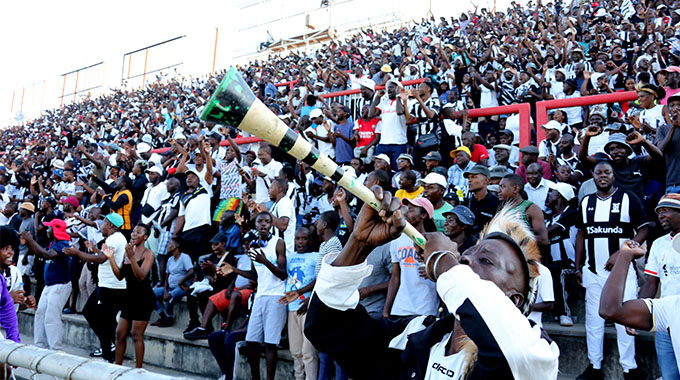
Tall and unassuming, with a wry smile, Moyo’s imposing figure was a familiar sight as Highlanders took to the pitch from 1966 through to around 2000. A devoted servant of the club, Moyo passed away last Tuesday and was laid to rest at Luveve Cemetery on Friday morning.
He leaves behind a rich legacy tied to a trophy-laden Highlanders history and Matabeleland High City, Bosso’s franchise in the Bulawayo Amateur (African) Football Association.
Born in Nkayi on 15 May 1947, Moyo moved to Bulawayo after completing Standard Six in search of employment. Kainot Luphahla, a founding player in the Highlanders juniors from 1966, remembers Moyo vividly, describing him as a tireless and committed figure, who was willing to take on any role for the good of the club.
“He was there from the beginning, not as a player, but as a supporter and volunteer. He will attend training, help out at matches, and do any chore assigned to him. Eventually, he became part of the team’s match day and travel auxiliary staff, known as osikwamula,” said Luphahla, himself a former striker from a family with deep Highlanders roots.
Moyo witnessed and contributed to the club’s pivotal moments including Highlanders’ entry into the Rhodesia National Football League in 1968, after initially declining in 1963 when semi-professional football was introduced.
He was active in both Matabeleland High City and Highlanders as they rose through the ranks, gaining promotion to the First Division in 1970.
He experienced the turbulent splits of 1963 and 1977, which led to the creation of Cobras and Olympics, respectively. His younger brother, the dazzling dribbler Willie “Matholwane” Luphahla, also donned the Highlanders jersey.
Moyo’s connection to Highlanders spanned generations of players from Edward “Sales House” Dzowa and Edward “Magungubala” Dlamini, to the Chibuku Trophy-winning side of 1973 and beyond.
He saw the rise of greats like Lawrence Phiri, Tymon Mabaleka, Peter Bepe, Josiah Nxumalo and Cavin Duberley. He was there during the difficult departures of stars such as Itai Chieza, Isaac Mafaro, Barry Daka, and Sebastian Sibanda.
In the 1980s, Moyo travelled with the team to two cup finals, witnessing a 4-0 Chibuku Trophy win over Rio Tinto and an 8-3 aggregate loss to a formidable Caps United side in the Rothmans Shield final. The team featured legends such as David Mhlanga, Peter Nkomo, Douglas Mloyi, Tymon Mabaleka, and Lawrence Phiri.
He was part of the support team behind the iconic sides of the mid to late 1980s, including Madinda Ndlovu, Willard Khumalo, Mercedes Sibanda, Tito Paketh, and Dumisani Ngulube. These players benefited from the unseen work of people like Moyo, who formed part of the club’s discreet tactics and security team.
When new talent emerged, Peter and Adam Ndlovu, Makwinji Soma-Phiri, Gift Lunga Jnr, and others who helped secure the 1990 League and Cup double, Moyo remained a constant presence. His dedication extended to the Class of 1998, a youthful side built by Madinda Ndlovu and Rahman Gumbo, which went on to win championships in 1998-99 and 2000.
Phineas Ndlovu, another Highlanders stalwart, recalled first meeting Moyo in 1977.
“We were part of the auxiliary staff with Ali Dube, Nicholas Ndebele, Canaan Ncube, Bhibhiza, Kainot Luphahla and Chananda. Later, we were joined by the Masuku twins, Ngqayingqayi and Mjombo,” he said.
“He served with unmatched distinction, driven by pure love for the club. Sometimes, we had to risk a lot for the team because tensions could rise before or during matches. Sadly, the club wasn’t represented at his funeral as the arrangements were abruptly changed from Sunday to Friday and the club wasn’t informed,” Ndlovu added.
Ndlovu fondly recalled their regular Monday gatherings at a petrol station on 15th Avenue, where they would debrief before heading to work. Moyo, who battled prostate cancer for two years, was deeply missed.
His wife of nearly 50 years, Daisy (née Ndlovu), said football, and Highlanders in particular, was central to her husband’s life. “When we got married, he was already heavily involved with Highlanders. He’d go missing for days, only to return and tell us he had travelled with the team. Eventually, I stopped worrying. He loved the club that much.”
She, too, came to embrace the club, attending matches at Barbourfields Stadium and growing to love Highlanders as deeply as her husband did. “He had so many Highlanders membership cards and made sure to renew them every time,” she said. Dan worked at Downings Bakery and later Royal Pharmacy, but his true passion remained Highlanders.
With the recent loss of Moyo, Bhibhiza, and Ndodana Mguquka, Highlanders are undoubtedly poorer without these dedicated sons of the game.