Chronicle Editor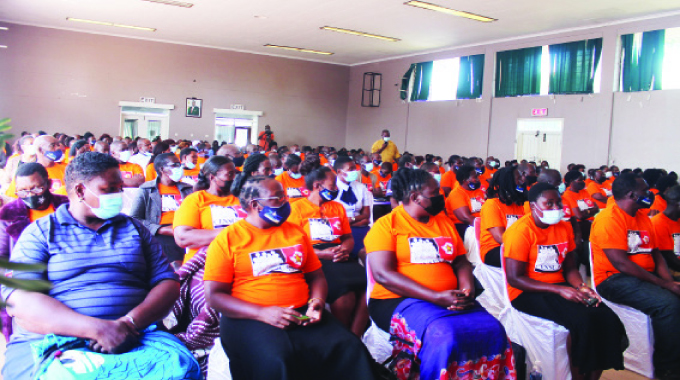
Chronicle Reporters
THE Zimbabwe National Statistics Agency (ZimStat) yesterday began its 2022 Population and Housing Census Level Two training workshops for enumerators with provincial ministers demanding credible data that will guide national resource distribution.
Participants from this training will be responsible for training enumerators who will collect data during the national population and housing census scheduled for next month.
The Population and Housing Census exercise will be held from April 21 to April 30, with April 20 being the reference date.
ZimStat will this year deploy a high-tech data collection system, the Computer-Assisted Personal Interviewing (CAPI), which transmits data collected by enumerators over the internet to a central mainframe in real-time. As a result, the census exercise will be completed within six months.
Previously, it took the national statistics agency up to two years to collect and process data before producing the final Census Report.
In Bulawayo the training is being conducted at Hillside Teachers’ College while in the Midlands province it is at Midlands State University and in Matabeleland South is at Gwanda State University.
Bulawayo has 181 enumeration area supervisors who will train 1 923 enumerators in the province next month. Bulawayo Minister of State for Provincial Affairs and Devolution, Judith Ncube, officially opened the workshop where she urged enumerators to work diligently and give a true reflection of the city’s population.
“In 1992 there was a census in Bulawayo and in 1994 it was challenged. The figures of Bulawayo were lower than expected. I think there were around 600 000 or something.
Then the next census was held and the figure went down and the last one the same happened. You then ask yourself if family planning is a success in Bulawayo alone,” said Minister Ncube. She said the size of the population determines the size of the national cake that the province gets.
“When figures say for example the hospitals are visited by 400 000 people when in fact the figure is 800 000 it means the allocation of medicines and other essentials to the hospitals is for half of the patients, so there will be a shortage,” said Minister Ncube.
ZimStat director statistical services Mrs Fadzai Ndlovu warned the supervisors not to cheat during the enumeration process but give accurate data.
She urged those involved in the whole process to be disciplined, show respect and good work ethics. In Gweru, the Minister of State for Provincial Affairs and Devolution, Larry Mavima, said it was important to understand population census as a total process, which requires a holistic approach.
“It’s the key information of our vision as a country towards a prosperous and empowered upper middle-income society by 2030,” he said.
“As a province and nation as a whole, census results are key in our devolution agenda because the results inform the equitable sharing of resources guided by population profiles, poverty and infrastructure development. Devolution funds are disbursed to local authorities by a formula, which takes into account the population as provided by ZimStat.
“Accordingly, our 14 local authorities in Midlands can only be able to assess their capacities after knowing the population of their areas of jurisdiction,” he said.
In Matabeleland South, Zimstat director for demography and social statistics, Mr Alusiya Mukavhi, said the success of the census hinged on the Level Two group who are responsible for cascading training to level three. He said Matabeleland South province had 1 996 enumeration areas.
“The quality of cascading will determine quality of output hence enumeration area supervisors must be knowledgeable with the content, procedures and etiquette issues of the census,” he said.
“Level Two supervisors are expected to solve problems in the field and to foster discipline.”
Minister of State for Matabeleland South Provincial Affairs and Devolution, Abedinico Ncube also said the census informs
Government’s decision-making processes as it provides information on size, distribution and age structure of the population. — -@DubeMatutu



 Online Reporter