admin
admin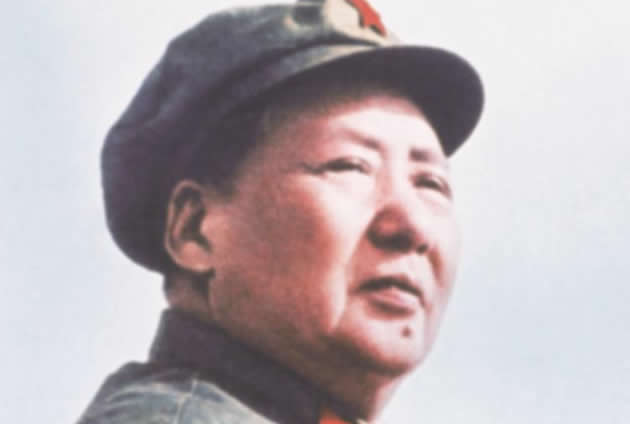
The Rhodesia Herald, September 23, 1971
CHINA-WATCHERS in Washington doubt that Chairman Mao is on his deathbed or even seriously ill, but they suspect Peking may have run into a lower-level political problem, Iana-AP reports.
Mao Tse-tung (77) was described as vigorously healthy when last viewed by outsiders at his August 7 meeting with Burma’s Prime Minister, Ne Win. Nothing to contradict this has been reported here since.
However, some French news stories, in part embroidering on reports from French correspondents in China, indicated that the Red leader might be dead or gravely ill.
One apparent development is that for the first time since the Communists took power 22 years ago, they may not stage their traditional October 1 National Day parade at Tienanmen Square.
The regime’s leaders normally appear in public to review the parade. So, cancellation of the big event, according to some speculation means a leadership change might be under way.
The guess here is that neither Mao nor Chou En-lai, solidly emplaced as prime minister and also is seeming in good health, is about to lose his pre-eminence.
But further down the line, China specialists say, there could be an illness or other successorship problem which is still not settled, and which has forced Peking to put off a public showing of its leadership line-up.
One unexplained event fitted into this thesis on China’s halt to air flights. Civilian planes were reported to be grounded for three days starting on September 12. Military craft are said to be still restricted.
Barring flights is one way of preventing one’s political opponents from moving about the country fast, to pick up support in a leadership struggle. The Central Peking Government has done this before.
Another reported item is the circulation inside China of some directives for war preparations. Since these have not been accompanied by military movements, Western watchers consider the directives are designed mainly for home front political purposes.
The Chinese puzzle has always intrigued Washington. This time it is getting special attention because of the impact of political upheaval would have on President Nixon’s planned trip to Peking.
The Communist Chinese Embassy in Paris confirmed yesterday that Chairman Mao Tse-Tung was “in excellent health”.
A spokesperson said that cancellation of the October 1 national day parade was part of a decision to change the way of celebrating the national holiday.
Chairman Mao is “very well and healthy”, a spokesperson for the Chinese Embassy in Lusaka assured telephone callers after the government-owned Zambia Daily Mail carried his picture with reports that he might be dead.
LESSONS FOR TODAY
Mao Tse-tung (Mao Zedong or Chairman Mao: 1893 to 1976), was the architect of the cultural revolution and China’s founding father.
On July 1, 2021, China held the centenary celebrations of the founding of the Chinese Communist Party in the capital Beijing (formerly Peking).
A continuously rising China — economically and militarily, is a major threat to the West that then uses its media outlets to resort to peddling falsehoods and/or fake news in order to create alarm and despondency within China.
Even fake news about the death of their assumed enemies does not bother them. The creation of fact checkers is a welcome development in this age of ICTs and citizen journalism. But the fact checkers should also not be trusted.
By attacking the Communist Party of China, the West will be seeking to drive a wedge between the Chinese government and its people, but one of them James Palmer, senior editor of Foreign Policy said: “The CPC is deeply woven into the fabric of ordinary Chinese life. It is a common belief that without the party, there would be no new China.”
Western media also tries to impose its own form of democracy on China’s 1,4 billion people, but China practices socialism with Chinese characteristics. The West is not the beacon of freedom and democracy.
Peddling falsehoods is a foreign policy strategy that has not succeeded because China’s intel systems are also well oiled.
On October 1, China celebrates its National Day — the founding of the People’s Republic of China —under the leadership of President Xi Jinping, the third most powerful and influential leader of modern day China after Mao Zedong and Deng Xiaoping.



 Online Reporter