Online Reporter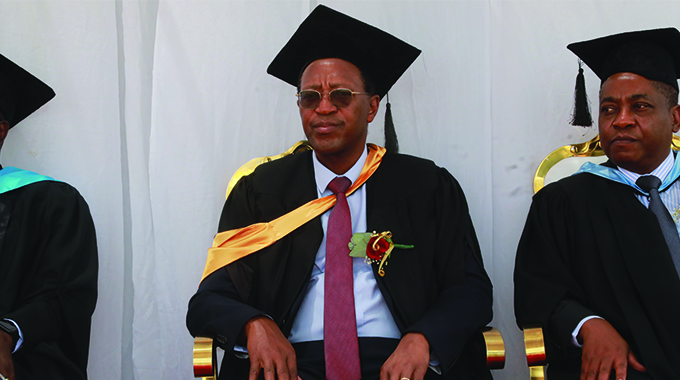
Sikhulekelani Moyo, [email protected]
THE Chamber of Mines Zimbabwe has urged institutions such as the Zimbabwe School of Mines (ZSM) to take a leading role in training artisanal and small-scale miners, saying this will help transform the informal sector into a more efficient and competitive force within the country’s mining landscape.
Speaking at the ZSM’s 31st graduation ceremony in Bulawayo yesterday, Chamber of Mines president Mr John Musekiwa, who was the guest of honour, said the small-scale mining sector has become a vital pillar of Zimbabwe’s economy.
“We are all aware of the importance of small-scale mining for the economy. We are told that the artisanal and small-scale mining (ASM) sector contributes over 60 percent to total gold production” he said.

“They have a significant footprint in chrome ore, semi-precious stones, and tantalite production.”
Mr Musekiwa said despite its immense contribution, the sector still faces major challenges.
“There is a lack of technical skills, capital, financial literacy, and poor record keeping, which are some of the factors inhibiting the growth of the ASM sector,” he said.
Mr Musekiwa noted that ZSM is uniquely positioned to address these gaps.
“Graduates from the school can play a critical role in transforming the ASM sector into an efficient and competitive force in the Zimbabwean mining space,” he said.
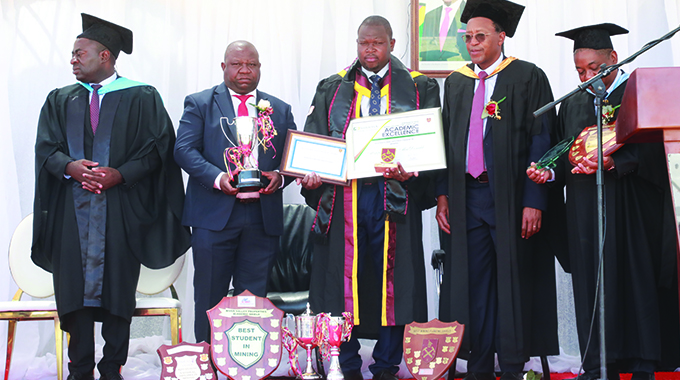
Running under the theme “Unlocking the Future: Embracing Mining Technologies,” the graduation ceremony celebrated 405 students completing various mining-related courses, including small-scale mining. About 20 students graduated with a Certificate in Small Scale Mining, among them four females and 16 males.
Mr Musekiwa encouraged graduates to consider opportunities beyond traditional large-scale mining companies.
“I therefore urge you to consider careers in the small-scale mining sector. This can be rewarding and fulfilling, seeing the growth of a mine from a small entity into a well-run, medium to large-scale business and knowing you played a key role in its transformation,” he said.
Small-scale mining continues to be a cornerstone of Zimbabwe’s economy, employing over 300 000 people and playing a critical role in poverty reduction.
Turning to global trends, Mr Musekiwa said the mining industry is rapidly evolving through technological innovation driven by artificial intelligence (AI), automation, and the Internet of Things (IoT). He called on institutions like ZSM to anticipate future skills needs.
“Such strategic thinking will ensure that products of the school will be relevant and useful for some time to come after graduating,” said Mr Musekiwa.
He added that the school could also help bridge the digital divide within the mining workforce.
“We live in a world of rapid changes to all facets of life. There is therefore scope for the school to consider offering bridging courses to old timers to upgrade their skills and offer them relevant qualifications for jobs of the future,” said Mr Musekiwa.
While commending the school’s strong attachment record, Mr Musekiwa acknowledged the challenge of accommodating all students in the field.
“With increased enrolment, new strategies are required to absorb all students from the school and from other training institutions that offer mining-related courses on attachment,” he said.
Mr Musekiwa noted that attachment placements had improved significantly — from 64 percent in 2020 to 93 percent in 2024 — and commended ZSM for producing well-rounded graduates.
“The graduation trends show a steady increase in the number of graduates, peaking at 428 in 2024. This event sees 405 graduands receive their honours, of which 32 percent are female,” he said.
Mr Musekiwa commended the increase in the participation of women in mining studies, saying it reflected a positive shift in gender inclusion. He also applauded the school’s efforts to align its training programmes with the Government’s Vision 2030.
“New courses include Diploma in Jewellery Manufacturing and Design, Diploma in Foundry Technology, Diploma in Iron and Steel Making, among others,” he said.
Presenting his report, ZSM principal Mr Edwin Gwaze said the school’s sustained growth and relevance were reflected in strong enrolment and graduation figures.
He said that between 2020 and 2025, ZSM maintained an annual enrolment of over 1 000 students, with graduation numbers rising from 188 in 2020 to 405 in 2025.

“The ZSM board of management extends its sincere appreciation to the Chamber of Mines Zimbabwe and its member companies for their unwavering commitment to our training mandate by providing industrial attachment opportunities,” said Mr Gwaze.
“From 2020 to 2025, ZSM maintained consistently high student attachment rates, averaging above 75 percent and peaking at 93 percent in 2024. This remarkable achievement highlights the strong partnership between the school and the mining industry, as well as the willingness of mines to mentor the next generation of professionals.”
Mr Gwaze added that such collaborations enrich student learning and ensure graduates are industry-ready and aligned with sector expectations.