admin
admin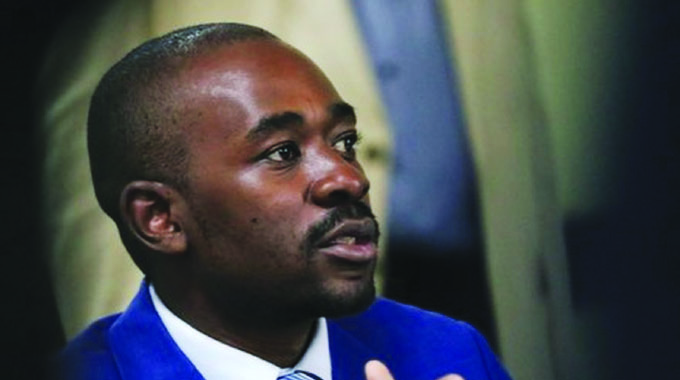
Fungi Kwaramba Zimpapers Election Desk
THE land is as contentious as it is finite. In Africa, liberation movements drew fervour from it and carried the struggle for independence fired by the conviction that freedom would mean eternal reconciliation with the land where indigenous people had been forcefully ejected by colonial masters.
Thus land, the primary means of production, became the principal grievance during the struggle for independence and its restoration to the black majority, the ultimatum objectivity.
It is on that basis that the country’s Constitution makes it clear that the land reform undertaken at the turn of the millennium is irreversible, and it is a message that President Mnangagwa has time without number told the nation.
“We are a Government of the rule of law, of fairness, of law and order. Above all, we are a Government with a strong sense of history and of our just heritage as erstwhile victims of settler colonialism.
“Let me state here that our land has been permanently reunited with the people and the people with their land. The Land Reform Programme is thus irreversible and land is an inalienable, God-given heritage to all the people of Zimbabwe”.
Because Zimbabwe’s culture and economy are fundamentally rooted in land there is no need for politicking around that emotive issue as is the wont of some politicians who seek to reverse history and hand the land back to former colonial masters.
This is because in Africa, Zimbabwe in particular, independence was achieved after a protracted liberation struggle which was watered by the blood of the sons and daughters of the land, some of whom perished fighting for the land.
While the history of the country’s land has been extensively covered over the years – especially because of the land reform programme it is common knowledge that the whites felt aggrieved and vowed to take corrective measures that would reverse the gains of the Third Chimurenga.
This they sought to achieve primarily by sponsoring a puppet opposition party in Zimbabwe. To give that opposition form and currency they imposed illegal economic sanctions that persist to the present day.
Thus the conception of the country’s present opposition can be found as a result of the land reform programme – whose other effects are the illegal economic sanctions that the Western world, aggrieved that their kith and kin had lost that which they had stolen in the first place – imposed on sovereign Zimbabwe.
Chamisa Western Trojan horse
It is clear the West seeks to reverse history, they seek to undo the land reform through their Trojan Mr Chamisa whose Freudian Slip at the launch of his party’s campaign ahead of the August 23 elections in Gweru, that he would give land to whites who were removed needs to be condemned as it is a brazen attempt to reverse gains made on the land, notably by the Second Republic which places emphasis on productivity and production on the land with resultant food security.
“The issue of land is very important. Everyone who was removed from the land must be returned. We should start there”, Chamisa said.
Indeed, this is indefensible and a desecration of the country’s constitution, an aberration in a country whose daily subsistence is anchored on land, not only for agricultural purposes, but also for the exploitation of the country’s abundant mineral resources.
For Zimbabwe, it surely had to get worse before it got better, the country’s currency began to tumble, triggering runaway inflation, and an economic implosion that was characterised by job losses.
The country’s agriculture sector, for ages, the mainstay of the country’s economy was in shambles, lagging behind in terms of mechanisation and modernisation, as the West, historically the source of Zimbabwe’s agrarian equipment and machinery literally put all stops to ensure that the country’s major contributor to the GDP collapsed.
Not that the West was really discreet about its evil intentions, in June 2000, while preparing for a debate in the US Senate on the misnamed Zimbabwe Democracy and Economic Former United States assistant secretary of State for African Affairs Chester Crocker made it clear that the purposes of the sanctions were to squeeze Zimbabwe and make the people turn against the ZANU PF Government.
“To separate the Zimbabwean people from ZANU PF, we are going to have to make their economy scream, and I hope you, senators, have the stomach for what you have to do.”
But that did not make the people turn against Government, instead, it emboldened their resolve and in 2013 in the Bill of Rights Section 72 unequivocally states that “in regard to the compulsory acquisition of agricultural land for the resettlement of people in accordance with a programme of land reform, the following factors must be regarded as of ultimate and overriding importance;
- Under colonial domination the people of Zimbabwe were unjustifiably dispossessed of their land and other resources without compensation;
- The people consequently took up arms in order to regain their land and political sovereignty, and this ultimately resulted in the Independence of Zimbabwe in 1980;
- The people of Zimbabwe must be enabled to re-assert their rights and regain ownership of their land;
This is constitutionally guaranteed, to safeguard the land from willing tools of White Monopoly Capital, who dream like Mr Chamisa to return the land to everyone (whites) who was removed by the Land Reform programme.
In his politicking Chamisa seeks to appeal both to his masters (the whites) and to his potential voters (the blacks) by promising both that which he cannot deliver or undo.
This is why the framers of the country’s Constitution, ever alive to the threat of a reversal of the land reform made it patently clear that only a referendum could result in the amendment of the statutes on land reform.
Lessons from Guatemala
Drawing parallels between Zimbabwe’s current status and the case of Guatemala Dr Edward Mitole from Ghana chronicled how the US sanctions that were imposed in the 1950s, as punishment for the land reform have ultimately led Guatemalans to be squatters in their own country after puppets backed by Uncle Sam restored the land back to the minority capitalists.
“In 1951, the indigenous people of Guatemala took a brave stand and took their land, which had been shared among a few white families and US and Anglo-American Conglomerates.
“This move by the Guatemalans did not go down well with the Americans and their allies and hatched a propaganda blitz demonising President Juan Jacobo Arbenz Guzman.
“This was followed by the imposition of economic sanctions. After 10 long years of sanctions and suffering the Guatemalan army ousted their president under the instigation of the US and their conglomerates.
“The Guatemalan army thought that only their president was the problem and after eliminating him they believed that sanctions would be removed, but US told them that the embargo could not be removed since, they, the army was part and parcel of the old regime (the same old Taxi with a new driver).
“They were then told to hold so-called free and fair elections in which they could contest with an opposition party, which was being sponsored by the US. This opposition party was recruited from the indigenous people, but directed by the CIA under Dulles and George Bush senior. The elections came and the opposition won them, but still, sanctions were not removed.
“The reason given by the US was that this party was a Red Indian party and it was, they, the indigenous people, who had robbed the whites and the US conglomerates of their land.”
That tale was to continue until the land was restored back to the US companies who up to the present day occupy 75 percent of Guatemala’s land while the indigenous people live squashed on 25 percent in the country of their ancestors.
“Our situation in Zimbabwe is not so different from the one Guatemala experienced. The US and its allies made it clear that no sanctions will be removed as long as the land ownership rights in this country have not been (reversed) and returned to the minority white Rhodies.
“What colleagues who oppose the removal of sanctions miss is that sanctions are not likely to be removed even if the opposition gets into power as long as they do not reverse the land reform programme. It is thus imperative for our Zimbabwean brothers and sisters to remain united in their steadfast opposition of sanctions. We do not want Zimbabwe to be another Guatemala where citizens have literally become squatters in the land of their birth,” said Dr Mitole.
It is clear that ZANU PF stands for black empowerment while the opposition, particularly Mr Chamisa seeks to reverse those gains, little wonder he got so much cheer from his Western handlers like Kate Hoey when he was launching his campaign, a puppeteer cheering its puppet.
But Zimbabweans are all the wiser now and they have been consistent in rejecting puppets through polls.


 Online Reporter