peter
peter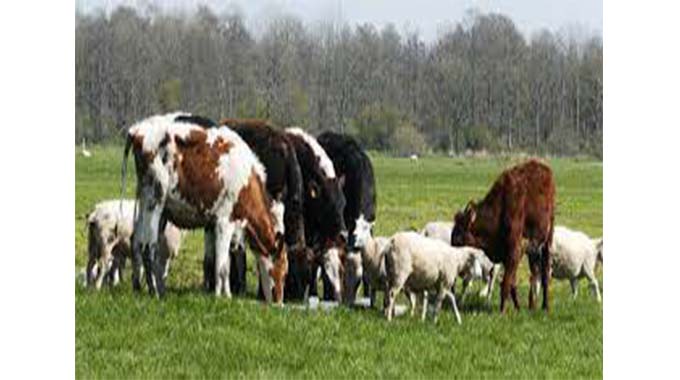
THE farming world has been changing gradually over the years due to a number of factors chief among them, the global climate change phenomenon.
This phenomenon manifests itself in either positive or negative climatic changes. One such change especially in sub-Saharan region is that rains have become more erratic and unpredictable while temperatures have become warmer.
We now have rainfall seasons which farmers cannot tell when they begin or end. The rains may come earlier and end earlier or come late and last for a short period. All this means farming especially the one that relies on rain fed agriculture has become very unpredictable and difficult.
The climatic changes also come with changes on the environment where some plant species tend to disappear while others emerge.
We will begin to see wide disappearance of palatable grass species and these being replaced by a proliferation of unpalatable ones.
It is a natural agricultural or environmental phenomenon that as the environment becomes harsh, the palatable grasses tend to disappear.
In fact, this is one of the ways we see that your rangeland is becoming degraded and less productive, if there is more of unpalatable grass species. Now, what this means to the livestock farmer is that one has to breed animals that have the efficiency of utilising the less palatable grasses in the rangeland and convert them into valuable protein.
In other words, you need to keep animals that have the ability to survive in an environment that is predominated by unpalatable less nutritive grasses. In the absence of such animals, it means raising animals will become more and more costly as one has to find expensive commercial feeds to supplement their animals.
Any livestock farmer will tell you that it is not viable to feed your animals from the bag. You can only do that for animals that you need to fatten for the market and even then, the gross margins are very slim to warrant the headache.
The age-old recipe of raising animals purely from the veld still holds true to this date in so far as cost effectiveness is concerned.
The important question therefore becomes, which breed can I raise from a harsh environment with poor grass species but still attain good frame sizes and weights in reasonable time? I know various breed societies will go on over drive to vouch for their breed performances but my point is as livestock farmers we need to start looking at what emerging breeds or existing breeds are showing traits of being able to efficiently utilise forage from poor rangelands and converting such into useful protein mass.
I am aware that our own indigenous breeds have this intrinsic hardy trait, but they tend to lack a lot on packing meat and the frame size.
This natural translates to poor returns on the market. You find that one livestock farmer with these local breeds will need to dispose at least four animals to match the value of a young heifer from a good breed.
This in my view is retrogressive notwithstanding the positive traits that the local breeds bring along such as disease resistance and high fertility.
In my books therefore, a livestock breed for the future is the one that the farmer in Skhobokhobo, Dongamuzi and Jimila will produce under the climate change induced harsh environment, and still get good returns when its time to sell.
Do we have such a breed in the market? Which breed is this? As farmers we need to adapt to the changing environment or we will perish and become as extinct as a dodo, whatever that is! I therefore invite our researchers and breeders to guide us and give us a breed for the future, with the merits that we desire for conditions that we now find ourselves in.
Uyabonga umntaka MaKhumalo.
n Mhlupheki Dube is a Livestock specialist and farmer. He writes in his own capacity. Feedback [email protected] cell 0772851275



 Online Reporter