admin
admin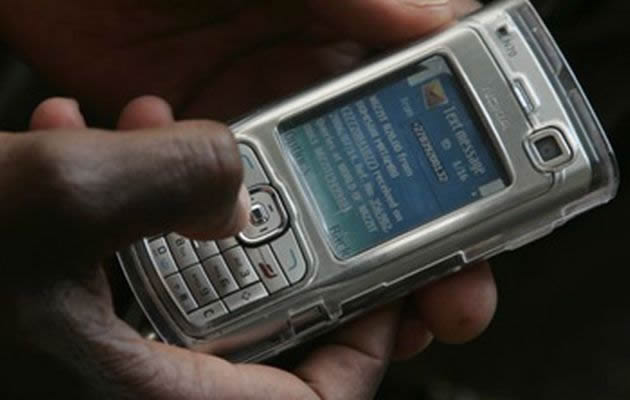
Richard Nyamanhindi Our Children, Our Future
CAN a text message amplify the voices of young people in Zimbabwe?
With an increasing number of youth grappling with a myriad of challenges such as unemployment and HIV/Aids, it seems no quick solution is in sight. Rather than rely on external solutions, a new notion is emerging that if the right technology gets to the most vulnerable people, they can lead their own development.
Innovations are coming fast and furious: a power-generating soccer ball, smart boreholes and high-profile projects which arm villages with laptops and smartphones. To date, however, these splashy technologies that delight TED-conference attendees have yet to catch fire with the people they have been designed to help. What if these innovations were designed around a technology that young Zimbabweans already have? Mobile phones – chiefly the cheap, unsmart variety – that are used by a majority in the rural areas. Could the most transformational technology also be the least sexy?
This is the proposition that the Zimbabwe Youth Council (ZYC) and Unicef are testing with the U-Report that went live in May this year. The U-Report is a free SMS service with outgoing poll questions and a computer algorithm that distills incoming information – and let development partners figure out how best to use it to promote participation.
Three months later, in a country with a mobile penetration of 110 percent, nearly 12 000 young Zimbabweans have already signed up for the U-Report. Why?
“Stigma in schools, communities and health institutions remains a major challenge for adherence to ARV therapy in HIV-infected children and adolescents,” said one U-Reporter in an HIV testing and counselling poll sent out in July.
Considering the text message above. Increased HIV infection rates among young people thrive on information delays. Even in emergencies, responses are determined by how quickly information moves. Thus, U-Report helps to move from a “what happened” to a “what is happening” system of responding to issues affecting communities.
However, no matter how engaging the U-Report is, the challenges facing young people defy a quick fix. According to the 2014 Multiple Indicator Cluster Survey (MICS), less than 40 percent of young people have been tested for HIV. More challenging still are the cultural barriers to progress for young people. Thirty-three percent of Zimbabwean girls are married before the age of 18, 37 percent of women aged 15 to 49 according to the MICS thought it acceptable for a husband to beat his wife (24 percent of men agreed).
Early marriages are also on the increase.
These daunting figures notwithstanding, the U-Report model of peer-to-peer education has potential to change attitudes and policies. In changing social mobilisation, the U-Report is therefore simple but revolutionary. With the platform as the conduit, the U-Reporters drive debate, exchange ideas and change minds.
On August 18, the U-Report team texted out, “Dear U-Reporter are you aware of the prepaid water meters issue? As thousands of replies rushed in, the U-Report server categorised responses by province and key words, while the U-Report team sifted for representative responses that could be shared with the whole network. Conscious of its role as objective facilitator, the team highlighted the strong opinions held on both sides.
Paddington Johannes, one of the first U-Reporters, says: “For me, as a young man in Zimbabwe, our culture trains us to be quiet. U-Report lets us speak out. We need policymakers to know about the things that are happening in our community.”
For Paddington and his fellow Scouts striving to change their communities for the better, he carries a powerful message: “Let everyone know: yes we can make a change. We can stand for what we believe in. We can make a difference.”
The open-source attitude driving debates on the U-Report platform is emblematic of the ZYC and Unicef’s approach to the adoption of technology. What happens when U-Reporters seek greater control over the messages sent to the network, or divide into groups on sensitive issues?
The U-Report team does not claim to have the answer, but insists that if the tool is accessible and available, someone or a group of someones will figure it out.



 leeroy