admin
admin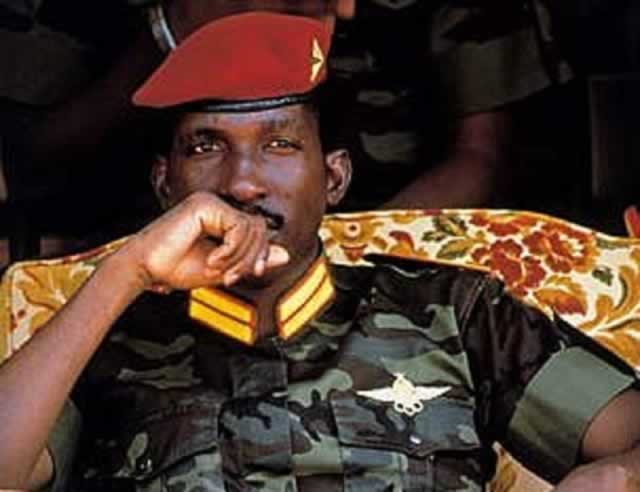
THE month of October to the conscious, those with a political memory, is one that serves as a reminder of how brutal and murderous the capitalist and neo-liberal proponents are.
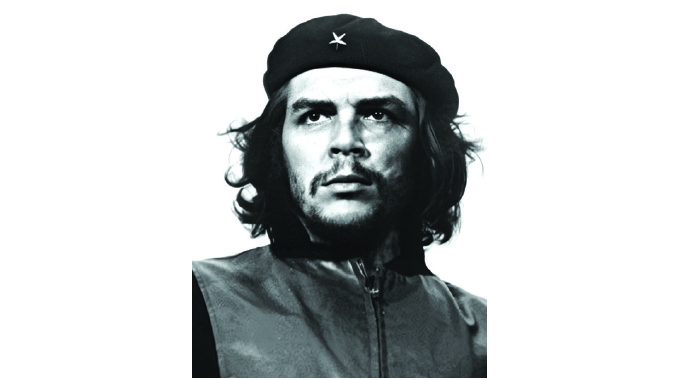
The execution on October 9, 1967 of Argentinian revolutionary Ernesto “Che” Guevara by Bolivian forces that had been sent by the administration of then United States President Lyndon Johnson exhibits the anger the west has against liberators of the people.
After completing their ‘mission’, then president of Bolivia, Rene Barrientos Ortuno, decreed that every trace of Che must be obliterated.
But over five decades since his assassination, Bolivia is following in the footsteps of Che Guevara. The Latin American country has been successful under the constitutionally elected presidents Evo Morales and Luis Arce.
Before his execution, Che was asked what he was thinking, he replied: “I am thinking about the immortality of revolution,” epitomising the spirit of resistance against tyranny and injustice.
On April 1 1965, he had left Cuba, went for a liberation excursion to the Congo, Argentina, Bolivia and Guatemala to further ignite the armed struggle against western dominance.
The immortality of the revolution was also the essence that birthed Burkina Faso’s Thomas Sankara, also known as “Africa’s Che Guevara.”
Sankara was visited by the same fate as Che exactly 20 years later on October 15, 1987. He was executed at the instigation of the French, fronting his best friend, Blaise Compaoré.
The next day after killing Sankara, Compaoré declared himself president.
In his 27-year rule until October 2014, Compaoré attempted to co-opt and distort Sankara’s memory and his liberation hero status.
As history does not forget, this week, the trial of those behind Sankara’s execution started in Burkina Faso, with Compaoré (though in Ivory Coast), set to face justice.
Both Che and Sankara took education as a key priority.
Under Sankara, the literacy rate in Burkina Faso increased from 13 percent in 1983 to 73 percent in 1987. He further redistributed land from feudal landlords and gave it directly to poor farmers, which led to a huge increase in wheat production.
This threatened to eradicate the financial and economic interests of the French.
Sankara shrugged and shunned dependence on foreign aid, famously saying: “He who feeds you controls you.”
The US and France, in connivance with Ortuno and Compaoré, intended to send a bloody message to the people opposed to imperialism, neo-colonialism and its subjects all around the world.
It was meant to rule by fear.
These two deaths are a glaring example of the role western agents play in the brutal repression of humanity’s highest aspirations and freedom.
Historically, US’ Time magazine has always selected Che Guevara as one of the hundred heroes and icons of the twentieth century. “Though communism may have lost the fire, Che remains the potent symbol of rebellion and the alluring zeal of revolution,” says the magazine.
Evidence exists that Guevara and Sankara were not just revolutionaries, but also intellectual politicians and philosophers deeply immersed in the political, social and economic liberation of people of the south.
They both conceptually put alternatives for the renaissance of the south.
They were prophets and preacher-men of resource allocation and addressed the political economy of resource allocation and made a distinctive mode that examines how political power and resources are distributed and contested.
Their boldness in sowing the socialist ideology and the liberation theology in the face of capitalism made those keen on monopolising the world resources kill them.
Their desire was to bridge the gap between civil and political rights, and have resources shared and distributed equitably.
For Africa and Latin America, the two ‘Ches’ were highly romantic martyrs of the people’s cause and revolutionary leaders and thinkers in a complex times.
Lessons for Africa
When truth overcomes, those who connive with the West will be left exposed, embarrassed and shamed on what the West represents: using people for dirty ends!
There are only two infinities in the world, time and ideas.
At one point, those working with the West denied ever calling for sanctions against Zimbabwe.
With time, their colours were exposed. People have become more conscious of the machinations of the West and are already sharpening their ideological wits.
Che and Sankara are strong symbols indicative that revolutionary ideas cannot die, even when suppressed for a long time.
Their thoughts are a gospel to the tenderness of how it feels to be emancipated from colonial bondage. The young lions of decoloniality and liberation were slaughtered by the corrupt accomplices of colonial masters.
From beyond the grave, their lives are a watchmen’s call that betrayal of a kindred is not ideal to the growth of a people’s culture and identity.
Their lives are a reminder of the dangers on our national doorsteps.
Africa today needs people like Che and Sankara. People whose strength and integrity commanded leadership that youths of today can emulate.
Resisting the system of oppression and dependency ultimately breaks the yoke of bondage.
Wherever true revolutions are, they claim that even to the point of death, the liberation of the masses has to be the focal point socially, economically and politically.
The histories of these two leaders, if well laid down, will produce patterns that engage an open mind to an interesting dialogue about decoloniality.
That is the history that African leaders should pass to their younger citizens who happen to be the future leaders of Africa.
Ideologically, to maintain national purity that is not contaminated by the filthiness of colonial remnants, citizens should be placed on guard to become “ubuntu warriors” who are able to defend the country through the ‘war of the whole people’ against neo-imperialism.
Zimbabweans today carry a non-negotiable willingness to defend their sovereignty. Remember we are one.



 Online Reporter