Andrew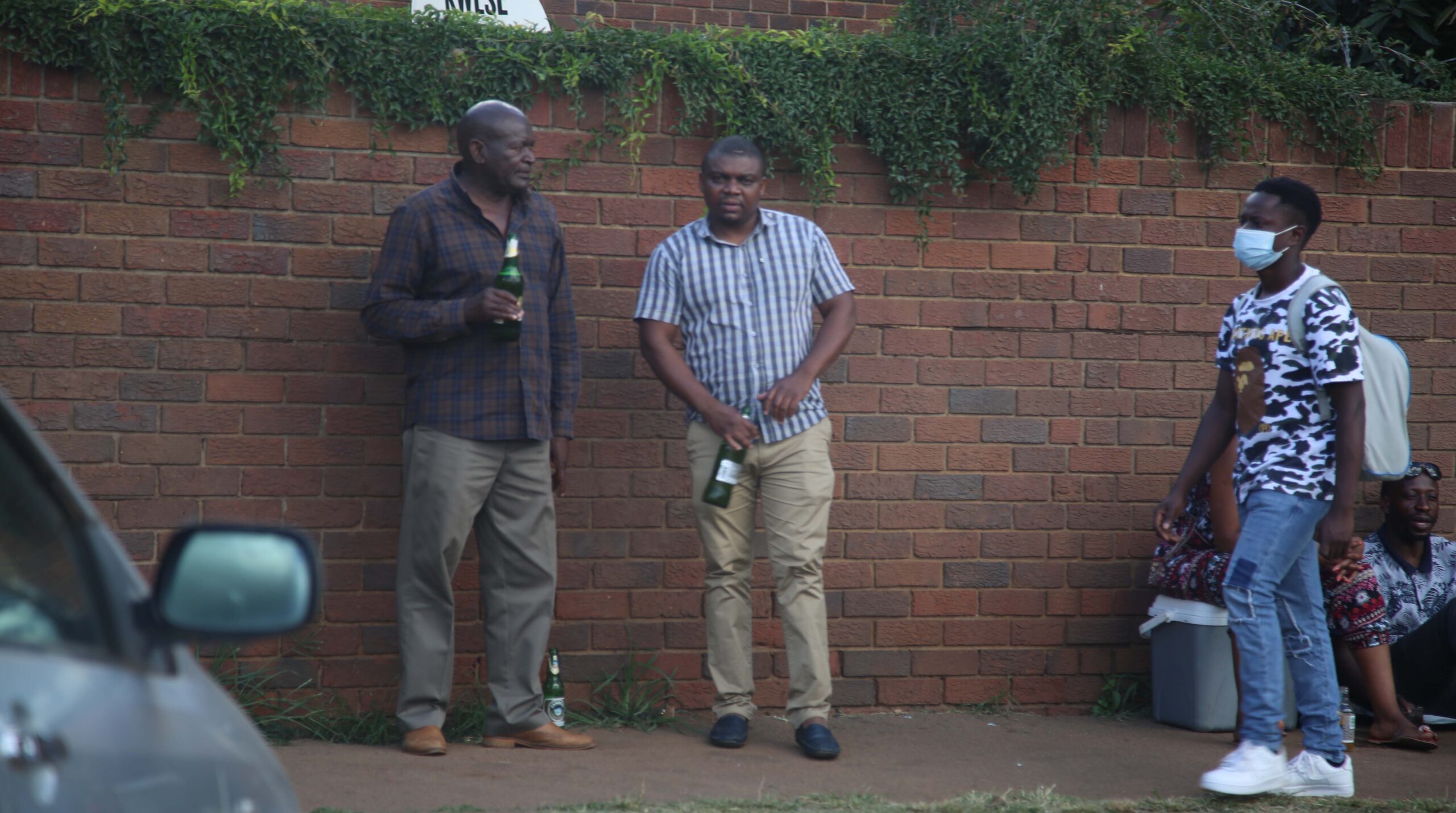
Tendai Chara
Cases of public drinking are rising and have reached unprecedented levels across the country.
Public drinking has become commonplace in the CBD and in most high and medium density suburbs in disregard of the law that prohibits it.
Imbibers often play cat and mouse games with the police, but this has not deterred them.
In 2015, a woman was stripped naked by overzealous and drunk touts at Fourth Street Bus Terminus.
The perpetrators, who were openly drinking in public, were subsequently caged for eight months.
Last week, a group of visibly intoxicated youth gave women a torrid time along Rezende Street in Harare.
The rowdy gang passed nasty and unprintable comments to passers-by.
“I have since changed route when going home from work because those guys have set base there. They jeer and whistle to any women that they deem sexy or improperly dressed,” lamented Rosemary Mutuvi.
“Their approach and comments are so unnerving.”
Innocent and defenceless women are often at the receiving end of the relentless volley of obscenities.
Moleen Muwadze recounted the forgettable experience she had at the hands of seemingly drunk men in Harare.
“I was standing in a queue when three men who were visibly drunk approached me and started yelling. They were saying that I was too fat and must lose weight. The other day, I also witnessed them mocking another woman, saying that she was scantily dressed yet too thin,” Muwadze said.
While the term ‘‘public drinking’’ varies significantly around the world, in Zimbabwe it usually applies to outdoor spaces such as roads, walkways or parks, or in a moving vehicle.
It is considered a criminal offence that currently attracts a $2 000 fine.
In South Africa, cases of public drinking are also on the rise and authorities have since introduced an admission of guilt fine of up to R500.
Of late, it has become common to see people consuming alcoholic beverages in public, even in the Central Business District, though most of them do so in disguise.
Other cheeky boozers are putting alcoholic beverages into various kinds of soft drink containers to avoid easy detection by police.
Energy drink containers are the most commonly used.
Aware
Zimbabwe Republic Police (ZRP) Harare spokesperson Inspector Tendai Mwanza said they are aware of the development.
“We are aware of these tricks by some members of the public who are putting beer into various kinds of containers disguised as soft drinks. We are receiving overwhelming support from members of the public who are supplying us with information indicating where such people would be drinking from,” he said.
Several people have been arrested for such misdemeanours.
Statistics of the number of people that have been arrested so far were not readily available by the time of going to print.
“Those arrested will be fined accordingly. This includes those drinking beer at public places while seated in their vehicles or using car boots to hide their beer. Public drinking is prohibited, hence members of the public should abide by the law,” added Inspector Mwanza.
Investigations carried by this paper in the CBD revealed that most public drinkers hang out at such crowded places as Copacabana, Charge Office and Fourth Street Bus Terminus.
Others frequent bottle stores that do not allow on-premise consumption of alcohol, and, in turn, use pavements as drinking spots.
There are some who use their cars.
Vendors, touts, street kids and illegal money-changers make up the majority of culprits.
Public drinking often causes great distress or annoyance. When drunk, some people become rowdy.
In some instances, they get involved in public fights. In bars, rowdy elements can
be flushed out by security teams and bouncers.
Besides being a nuisance, the drunkards are also litterbugs that have to penchant to leave empty containers scattered in the streets.
When the public toilets are closed, they relieve themselves in alleys.
Some urinate in empty drink containers, which they will then throw away.
Some people believe there is need for stiffer penalties to fight the growing habit.
For instance, in most parts of Canada, being intoxicated in the public and creating a disturbance can result in six months imprisonment and up to US$5 000 in fines.
This is because drunk people are considered a potential danger to themselves and to other people and property.
Defence
But Tendai Murape, who has the habit of drinking in public, argues it is not by choice.
“We also want to go into nightclubs or bars. However, most of these guys now charge an admission fee, which we cannot afford. For instance, for US$2, I can buy myself a bottle of whiskey and get drunk while I go about my business. Besides, their beverage prices are beyond our reach,” he said.
His colleague, Phineas Choto, a vendor who sells second-hand clothes at a flea market in downtown Harare, weighed in.
“I need to be a bit high for me to be able to sell my stuff. When I am a bit drunk, I get the energy and zeal to shout on top of my voice as I market my products. I just don’t drink while I am at work just for the sake of it,” Choto said.
An illegal forex dealer, who identified himself as Amos, finds nothing wrong in public drinking.
“Every Friday, we converge at our usual street corner where we will be discussing business as we share drinks. We will be seated in our cars and I don’t see anything wrong with that since we do not harass anyone,” Amos said.
But, this is not only happening in the CBD, as public drinking is equally prevalent in residential areas.
Ignorance
Ivan Zhakata, president of the Drinkers Association of Zimbabwe (DAZ), is not amused by public drinkers.
“As an association, we do not encourage public drinking. We are a law-abiding association that encourages people to drink responsibly at designated places. We also encourage drinkers to observe Covid-19 protocols,” he said.
According to Zhakata, some people are not even aware that public drinking is a criminal offence.
“Ignorance is the major challenge. Some people are not even aware that drinking in public is actually a crime. As an association which advocates for responsible drinking, we are going to hold awareness campaigns in which we are going to teach drinkers about the dangers of drinking in public.”


 Online Reporter