Online Reporter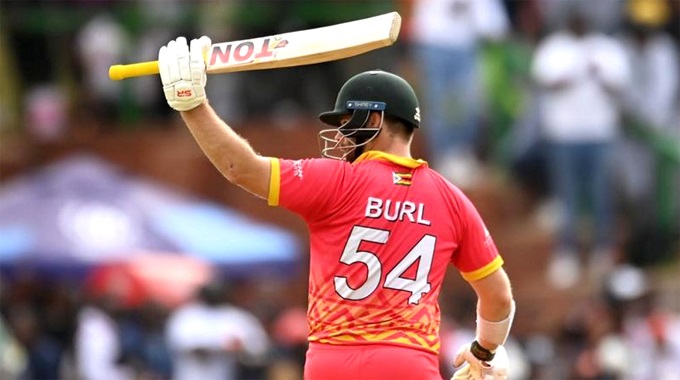
ZIMBABWE find themselves in all too familiar territory as the Chevrons prepare to face Australia in the third and final One-Day-International at Harare Sports Club this morning.
The match starts at 9.30am.
Four years ago, when they toured Australia, they were comfortably beaten in the first two matches of the ODI series before conjuring victory in the final outing.
It was a massive day at the Riverway Stadium in Townsville, as the Chevrons secured one of their most memorable victories over the almighty Australia, stunning them by three wickets on their home turf.
Zimbabwe won the toss and bundled the hosts out for a paltry 141 runs inside 31 overs.
Despite a defiant 95 runs off 96 balls from the now-retired David Warner, the Chevrons’ bowlers put on a masterclass to bowl out the hosts for their lowest total against Zimbabwe.
Ryan Burl was the hero of that match, finishing with figures of five for 10 in just three overs.
Zimbabwe finished on 142 for seven, recovering from a slump of 77 for five as Regis Chakabva and Tony Munyonga (17) put up a sixth-wicket partnership of 38 runs off 77 balls to rescue the day for the Chevrons.
Chakabva finished unbeaten on 37 runs off 72 as Brad Evans drove Mitchell Starc through the covers for a single to claim the all-important victory, arms up before he even finished the run.
It was only Zimbabwe’s third win against Australia in 33 ODIs at the time and their first since Harare in 2014.
And boy, would the Chevrons love a repeat today.
Granted, a lot has changed since that match, with only six players surviving from that game across both sides. However, much like in 2022, Australia have dominated the opening two ODIs and the Chevrons now face the threat of a series whitewash.
Going for them is the fact that Zimbabwe have not completely wilted under the Aussie onslaught, and for a time their spinners threatened to take the air out of the visitors’ innings during the second match on Friday, especially when Alex Carey was labouring.
The Chevrons’ batters had few problems making starts, but much greater ones converting them, as seven of the top eight reached 23, but Sikandar Raza’s 45 was the top score.
Zimbabwe’s 272 was the fourth-highest ODI total not to include a half-century.
Heading into today’s match, all eyes will be on opener Brian Bennett. Since Bennett made 169 against Ireland in February 2025, he has gone nine ODI innings without passing 48.
He has twice made starts in this series with scores of 25 and 23 — falling to a poorly executed reverse sweep against Matt Renshaw in the second match — but his strike rate is sitting only a nudge above 70, and with fellow opener Ben Curran’s at 62.50, there is a tempo problem at the top of the order.
Chevrons’ coach, Justin Sammons, may be tempted to mix things up with the series decided.
It could be an opportunity to give Tadiwanashe Marumani an outing. Although the current top order is probably the strongest available from the squad, Marumani has proved his versatility lower down the order, doing so during the Namibia T20 Tri-series.
They also have leg-spinners Ryan Burl and Graeme Cremer if they opt for a different bowling balance.
Burl also gives the Chevrons an extra batting option.
Australia appear to be cruising. After a slight stumble with the bat in the opening game of the series, it was difficult to pick holes in Australia’s performance on Friday as they dominated throughout on their way to a match-winning 356 for six.
The visitors took the match by 84 runs after Zimbabwe’s 272.
Australia did not even appear fazed by losing Billy Stanlake to injury, which left Mitchell Marsh juggling his collection of spinners.
Without taking away from the relevance of these matches — next year’s ODI World Cup is a major focus — there were also good signs with Travis Head emerging from a relatively lean run with a destructive 75-ball hundred and Josh Hazlewood continuing the good rhythm he showed against Bangladesh last month.
“You’re not going to get runs every game,” Head said. “My role in the team is to be aggressive at the top. I’m not always going to go out and be as consistent as I would love to be, but I want to put bowlers under pressure. That’s going to come with some risk every now and then.”
There have also been encouraging signs for the future, with Cooper Connolly making his third fifty-plus score in a row — becoming the youngest Australia men’s player to do so in ODIs — and Ollie Peake producing a spectacular flourish at the death to further highlight his immense talent in a difficult role.
Australia’s management sees Josh Inglis as a key part of their batting plans for next year’s World Cup.
He came into the 2023 edition after one match when he leapfrogged Carey in a major selection call.
However, he hasn’t got going in this series, falling to a tremendous catch by Brendan Taylor in the first game and then popping the ball back to Wellington Masakadza in the second.
There won’t be concerns yet — it’s only five games ago that he was coming off back-to-back fifties against Pakistan — but a career ODI average of 29.23 doesn’t reflect his ability.
Cameron Green has missed the opening two matches with a shoulder niggle, but there was confidence he would be able to return on today.
He could squeeze Carey out of the middle order, given how well Peake has played.
There has been no official confirmation, but Stanlake’s tour would appear to be over after he walked off two balls into his fifth over.
The selectors could opt for another look at Spencer Johnson.
Going into the match, a couple of milestones will be up for grabs.
Inglis needs six runs to reach 1,000 in ODIs, while Brendan Taylor needs 40 runs to overtake Andy Flower as Zimbabwe’s leading scorer in ODIs.
Hazlewood’s two wickets took him one ahead of Pat Cummins (144 to 143). — Zimpapers Sports Hub/Cricinfo.