Chronicle Editor
Brandon Moyo, [email protected]
AFTER a two-decade hiatus, next year the Zimbabwe senior men’s national cricket team will make the long-awaited trip to England for a one-off four-day Test match. The two teams, Zimbabwe and England, will face off in a four-day Test match scheduled for May 22 to 25, marking the Chevrons’ first visit to England since 2003.
The two nations, however, last played bilateral cricket against each other in 2004.
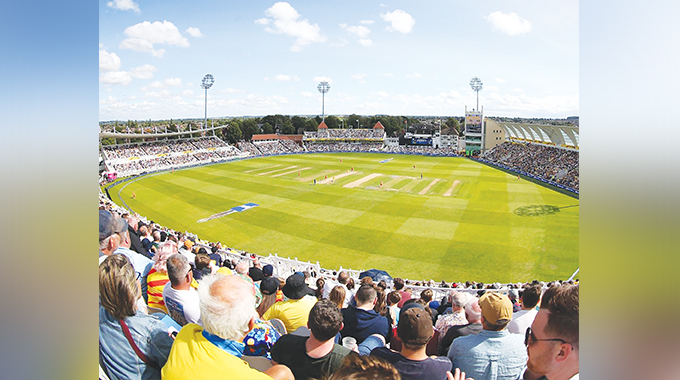
On Thursday, the England and Wales Cricket Board (ECB) released their 2025 international fixtures, announcing the historic Test match’s venue. The history-making Test match between the Chevrons and England will be played at the iconic Trent Bridge in Nottingham. This will be Zimbabwe’s second visit to West Bridgford, having last played there in June 2000 in a match that ended in a stalemate.
In their last visit to Trent Bridge, the Chevrons — featuring players like Andy and Grant Flower, Heath Streak, Mpumelelo Mbangwa, Guy Whittall, and Alistair Campbell — ran the Three Lions close at the iconic venue. Zimbabwe found themselves on the brink of a famous win, needing 211 runs to win with nine wickets in hand before the match was called off due to rain disruptions.
Twenty-five years later, a new-look Chevrons team will return to the iconic ground, considered one of the best Test venues in the world.
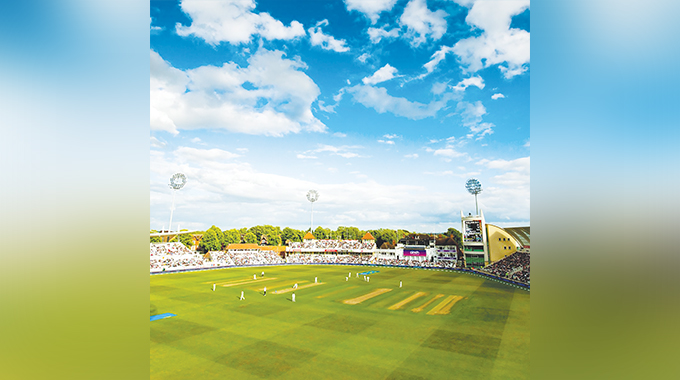
In a statement, Nottinghamshire’s Commercial Director Michael Temple said they are looking forward to hosting Zimbabwe in the long-awaited Test match. He said it’s a step in the right direction to rekindle the love for the game’s longest and oldest version.
“Trent Bridge is at its best when we welcome England to town, and each of our international fixtures next summer promises to be special. Test cricket can only thrive in the long term if as many countries as possible retain the ambition to compete, so we look forward to welcoming Zimbabwe back to this country for the first time in over 20 years,” said Temple.
ECB’s chief executive officer, Richard Gould, said they are also looking forward to welcoming Zimbabwe to a historic Test match. He believes it is crucial for his board to support smaller Test-playing nations like Zimbabwe to ensure that Test cricket remains alive amid the growth and popularity of shorter version games.
“To be welcoming Zimbabwe back for a Men’s Test Match will be a historic moment, more than 20 years since their last visit. Test cricket is so beloved in this country, and we know that we have an important role to play in supporting developing Test cricketing nations so that this format of the game thrives long into the future,” said Gould.
Last month, Gould said that they will pay Zimbabwe “touring fees” when they arrive for the Trent Bridge Test. This will be the first time in modern-day cricket that a team is paid “touring fees” by the host nation.
“For example, next year Zimbabwe is coming to tour. Normally the way things happen is that the touring team gets itself into the country and then it’s looked after in terms of accommodation, all the rest of it. But there’s no fee for that team that’s touring. Next year, when we play against Zimbabwe, there will be a fee for that team that’s touring,” he said.
Zimbabwe and England have played six Test matches against each other since the Chevrons gained Test status in 1992. From the six games, England has won three while the other three ended as draws. The Chevrons are yet to taste Test victory over the Three Lions.
The first Test series between the two nations was played in Zimbabwe during the 1996/97 season. The two-match Test series, which had one match in Harare and one in Bulawayo, ended 0-0 after both games ended as draws. Three years later, in 2000, Zimbabwe played their first Test in England and lost the two-match series 1-0. The first match was played at Lord’s Cricket Ground, and the hosts won by an innings and 209 runs before the Chevrons came back a better side at Trent Bridge in a game that ended as a draw and turned out to be their last at the venue.
The last Test series between the two countries was played three years later in 2003, and England completed a whitewash, winning 2-0. England dominated the two matches, winning the Lord’s Test by an innings and 92 runs before going on to Chester-Le-Street to win by an innings and 69 runs.
Excitement for next year’s Test has already been building up. The fact that the two teams have not faced each other in bilateral cricket since 2004 adds to the excitement. The two-decade gap stands as the longest period without a bilateral series between any two ICC full members.
@brandon_malvn



 derick.khumalo