Online Reporter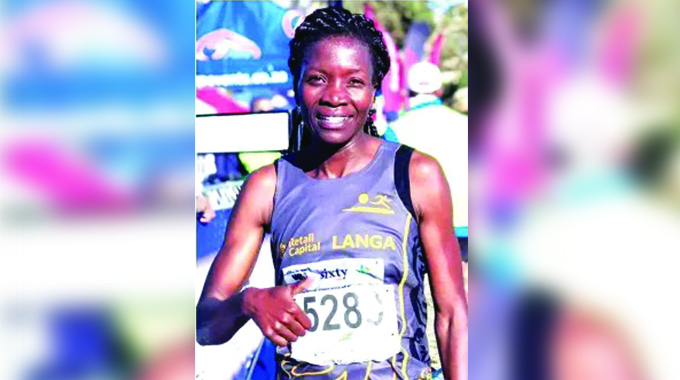
Ellina Mhlanga
Zimpapers Sports Hub
BY the time most people in Chitungwiza begin their day, Fortunate Chidzivo would have already been running for hours.
The roads are still quiet at that time of the morning, a few commuter omnibuses warming their engines and vendors preparing their stalls.
Long before the town settles into its usual rhythm, Chidzivo is already deep into the routine that has shaped her life for years. Train, eat, rest. Then wake up and do it all again.
It is the life of a marathon runner. It is demanding, repetitive and often lonely.
For Chidzivo, that routine has carried her further than most Zimbabwean female athletes have travelled in long-distance running. She is part of a small group of women who have represented Zimbabwe in the marathon at the World Championships, one of athletics’ toughest disciplines where patience, discipline and endurance often decide who survives the 42-kilometre test.
Over the past decade, the country’s presence in the women’s marathon at global events has largely rested on two runners — Chidzivo and Rutendo Nyahora. Before them, veteran runner Tabitha Tsatsa had also taken Zimbabwe’s colours to the world stage and became the first Zimbabwean woman to compete in the Olympic marathon when she represented the country at the 2008 Games.
For Chidzivo, being part of that small circle means something.
“I have raced elite labelled races in the Netherlands, Spain and China. I have been to the World Championships three times,” she said.
“Being one of the few female athletes who have represented Zimbabwe at the world stage makes me feel proud. It makes me feel good and want more. I want to go again and again.”
Her first appearance at the World Championships came in London in 2017, a moment that marked her arrival among the country’s leading distance runners.
She returned to the global stage again in Budapest in 2023 and in Tokyo in 2025.
Reaching those races demands far more than talent.
Qualifying standards continue to improve across the world as elite marathon runners push the limits of endurance.
For many Zimbabwean athletes, another obstacle appears long before the qualifying times even come into view.
Resources
Preparing for international marathons requires structured training programmes, access to sports science and financial support that allows athletes to focus on preparation.Without those systems in place, some runners choose another path. Instead of chasing demanding qualifying times for championships, they target races that offer prize money and a chance to earn a living.
Even under ideal conditions, the marathon remains one of the most punishing events in sport.
“The marathon is not just a race; it’s torture,” said Chidzivo.
“It requires a lot from you as an individual. There is a lot of sacrifice. You stay away from parties, you stay away from friends, you stay away from family gatherings.
“You have a routine to follow. Train, eat, sleep. Train, eat, sleep. It needs patience and you have to sacrifice a lot. You invest financially and you use your time wisely. It takes a lot from you and sometimes it does not even pay back what you have given for the training.”
The physical demands begin long before race day. Training sessions stretch over hours and the body absorbs punishment week after week.
“You train in pain, you race in pain,” she said.
“You need patience with your training and patience with your race. You must be a hard-headed person and if you do not have that, everything goes wrong.”
That stubborn resilience may have been shaped in a different sport. Before athletics, Chidzivo was a boxer. Her introduction to distance running happened almost by accident at Harare Kopje, where she used to complete endurance sessions as part of boxing training. During one of those runs, she met Tavapo Bhiri, who watched her finish her laps and asked about the distance she had covered.
“My athletics journey started at Harare Kopje, where I used to do my endurance training for boxing,” she said.
“She waited for me until I finished running my laps and asked me what distance I had run.
“My boxing coach laughed and said she is not a runner; she is a boxer. But she advised me to switch to athletics and said it would be a waste of time and talent if I stayed in boxing.”
The advice changed the direction of her sporting life.
She began competing in shorter road races, starting with 10-kilometre events and half marathons, before gradually moving up to the marathon distance.
The transition demanded patience and stubborn determination, qualities that remain essential for anyone hoping to survive the marathon.
Beyond the discipline and sacrifice, there is also something that continues to draw her back to the road — love for the sport.
“I love athletics. I do not just run for money, but for sportsmanship,” she said.
Support from family has also helped her navigate the difficult moments that come with the demands of long-distance running.
“I have full support from my husband and my mom. That is what drives me,” she said.
“I love interacting with different people, I love travelling and I love sport. I do not think I will be going anywhere anytime soon.”
While she remains committed to competing, Chidzivo believes Zimbabwe must strengthen its support systems if more athletes are to reach the global stage.
In her view, the integration of sports science and stronger resources will play an important role if the country hopes to narrow the gap with the world’s leading marathon nations.
Without that support, the journey to international success remains far more difficult than it should be.
For Chidzivo, the routine continues.
Another early morning run. Another long stretch of road ahead.
Long before the city wakes, she is already moving, chasing the same demanding distance that has taken her from boxing sessions at Harare Kopje to the start lines of the World Championships.