

 Chronicle Editor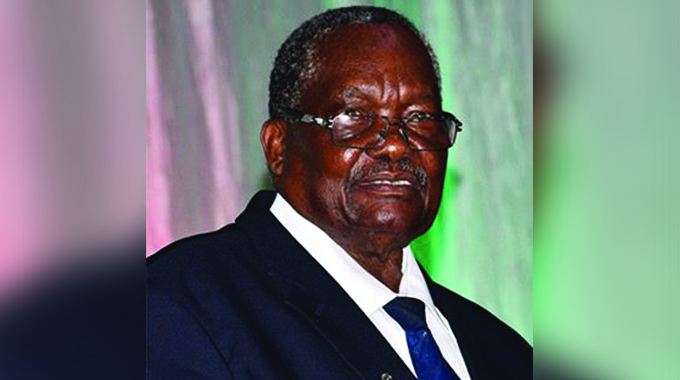
Nqobile Tshili, [email protected]
ZIMBABWE’S Chief Justice Luke Malaba and the judicial sector has mourned former National Peace and Reconciliation Commission chairperson Retired Justice Selo Masole Nare saying he left an indelible mark in the legal fraternity as he protected human rights.
Rtd Justice Nare died on Saturday in South Africa where he was receiving medical treatment.
President Mnangagwa has already mourned him describing Rtd Justice as a peace builder.

In a condolence statement on Tuesday, Judiciary Service Commission, said Justice Nare dedicated his career to the pursuit of justice and the protection of fundamental human rights leaving an indelible mark on the legal landscape of our nation.
“The Chief Justice of Zimbabwe Hon. Justice Luke Malaba, the Judicial Service Commissioners; Judges, and Magistrates; the Secretary of the Judicial Service Commission; and all members of the Judicial Service would like to express their heartfelt condolences to the Nare family on the passing of Retired judge, Honourable Justice Selo Masole Nare in South Africa on Saturday 28 September 2024,” reads the statement.
“Justice Nare dedicated his esteemed career to the pursuit of justice and the protection of fundamental human rights leaving an indelible mark on the legal landscape of our nation.”
JSC said Justice Nare will be celebrated for his contribution to the protection of labour rights where he served as a Labour Judge.
“As we join his family in celebrating his life, we remember and honour his contribution to the development of our jurisprudence especially on workers’ rights, and the profound effect he had on countless lives,” JSC.

Justice Nare was born on 28 December 1943 in Gwanda, Matabeleland South.
He joined the Public Service on 1 January 1964 as a primary school teacher and served for nine years.
“He moved to the Ministry of Justice, Legal Parliamentary Affairs on 1 May 1973 where he served as a court interpreter. He was sworn in as a magistrate in 1981 after attaining a law degree from the University of South Africa. He rose through the ranks to become a regional magistrate. In 2001, he was appointed a judge of the Administrative Court, a position he held until 2006 when he was appointed judge of the Labour Court. He retired from the Labour Court bench in 2013,” reads JSC statement.



 Online Reporter