Chronicle Editor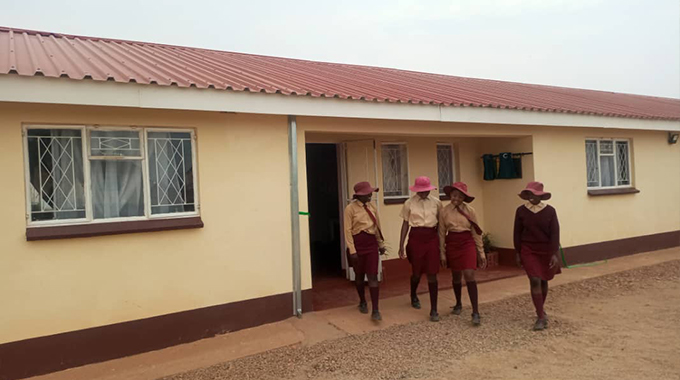
Sukulwenkosi Dube-Matutu , [email protected]
LEARNERS housed at the new Sihlengeni High and Bayethe Secondary schools’ sustainable and affordable boarding facilities in Umzingwane District are hopeful of improved Ordinary and Advanced Level performance as they have more time to study under comfortable conditions.
Minister of State for Matabeleland South Provincial Affairs and Devolution, Dr Evelyn Ndlovu, recently commissioned the two facilities, which have been established as part of an HIV response to protect adolescent girls.
The two boarding facilities have brought relief to the learners who were walking up to 17 kilometres from their homes to school.

Travelling long distances exposes young girls to several social ills, such as dropping out of school, rape, sexual abuse, and bullying. Distances also cause fatigue that reduces concentration in class.
Buyisile Ncube, a Form Six pupil at Sihlengeni High School said she moved to the new facility when she was in Lower Six, which enabled her to prepare adequately for her exams.
“I moved to the boarding facility in January last year and for me, it was a fresh start to prepare for this crucial stage in my education. My home is 15 kilometres away from the school and walking to and from school was torturous,” she said.
“I used to miss out on some lessons in the morning as I was losing a lot of time along the way and sometimes, I would fall asleep in class because of fatigue.
“I managed to pass my O-Level but I feel like I would have done even better. Moving to this facility has given me ample time to prepare for examinations.
“This is a crucial stage of my life as it will help shape my future. I’m confident that I will perform exceedingly well,” she said.

Nonhlanhla Ncube who is a Form Four pupil at the school said her attitude towards school has greatly changed as she used to view attending school as a burden due to the long distance. All this has changed and Nonhlanhla now says she is hopeful of sitting for examinations and passing.
Thabisile Maphosa who is a Form Four pupil at Bayethe Secondary School said she had to endure a 17km walking journey from her home in Malungwana Village.
“Sometimes the reason why we don’t do well in school as rural learners isn’t because we are less intelligent but our learning conditions disadvantage us,” she said.
“I’m grateful for the chance I got to stay in a boarding facility. We learnt a lot about etiquette, hygiene, and co-existing with others, among other valuable lessons.
“I have been preparing for my examinations since I got into this facility last year and I’m looking forward to performing well,” she said.
The low-cost boarding project was implemented by the Government working with development partners.
It is supported under the Global Fund through the United Nations Development Fund (UNDP) with the National Aids Council and Plan International being the implementing partners under the Determined and Resilient Empowered Aids Free Mentored and Safe (Dreams) programme.
The intervention is targeting adolescent girls and young women aged between 15 and 24. Each boarding facility accommodates 32 girls and pupils started staying at the facilities in January last year.
In a speech read on his behalf by monitoring and evaluation director, Mr Amen Mpofu, National Aids Council chief executive officer Mr Bernard Madzima said Sihlengeni and Bayethe Secondary schools were selected after noting that some girls who live far away from the schools were staying with distant relatives located close to community compounds. Additionally, the supported districts are characterised by a high presence of gold panners, long-distance truckers and pirate taxi operators who have all been identified as potential perpetrators of abuse to adolescent girls and young women.
Six other low-cost boarding facilities have been established in Kwekwe, Chimanimani, and Umguza Districts under the same programme.

“The major aim of this initiative is to address various challenges faced by adolescent girls and young women (AGYW) in their schools and communities.
“As you are aware, the girl child faces unequal power relations, and as a result is at higher risk of HIV infection than the boys. “It’s, therefore, imperative that deliberate efforts be made to reduce the risks faced by adolescent girls and young women in this regard.”
The project is funded by the National AIDS Council through a grant from UNDP and the Global Fund to address HIV vulnerabilities faced by adolescent girls and young women while promoting their retention in school. — @DubeMatutu


 Online Reporter