

 admin
admin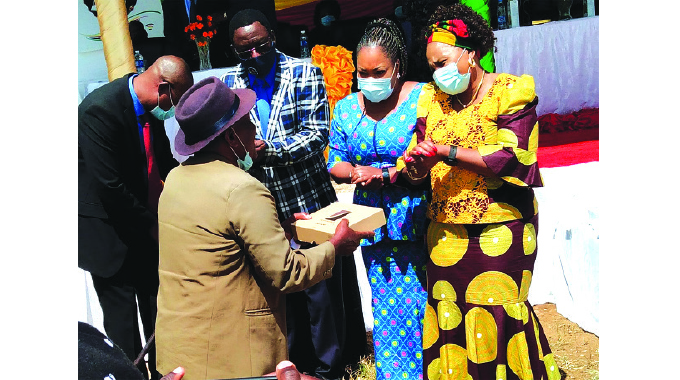
Conrad Mupesa
Mashonaland West Bureau
CHIEFS and villagers in Hurungwe district in Mashonaland West Province have lauded the Government for the successful and historic switch-over this week from the analogue signal to Digital Terrestrial Television (DTT), saying this will help in bridging the information gap between urban and rural areas.
Information, Publicity and Broadcasting Services Minister, Monica Mutsvangwa on Thursday commissioned the country’s digitisation programme under the Zimbabwe Digital Broadcasting Migration at a landmark ceremony in Magunje.
The Karoi transmitter will cover marginalised areas of Hurungwe district that have been unserviced by analogue television signals.
Areas under Chiefs Chundu, Chanetsa, Dandawa, Mujinga, Mudzimu, Kazangarare, Nyamhunga, Matau, Nematombo, Dendera will benefit from this development.
Digital terrestrial television (DTT or DTTV) is a technology for terrestrial television in which land-based television stations broadcast television content by radio waves to TV sets in homes in a digital format.
DTT is a major technological advance over the previous analogue television, and has largely replaced analogue which had been in common use since the middle of the 20th century.
The advantages of digital terrestrial television are similar to those obtained by digitising platforms such as cable TV, satellite, and telecommunications: more efficient use of limited radio spectrum bandwidth, provision of more television channels than analogue, better quality images and potentially lower operating costs for broadcasters.
Chief Chundu, Senator Abel Mbasera said: “We want to thank the Government for rolling this initiative and as chiefs, this will help to curb cases of moral decadence caused by international television infiltration.
“It is also going to buttress First Lady, Amai Auxillia Mnangagwa’s teachings through her Munhanga/Mugota projects. We as the chiefs, expect the media to visit us so that we share our culture and values.”
Chief Chundu, whose area has recorded high incidence of veld fires and deforestation, said the DTT would support environmental sustainability.
“Television in this area is going to improve dissemination of correct information hence reduction in the number of law violators.”
Chief Chanetsa, who received a set-top box together with the other six chiefs in the area during the launch, said the DTT project was a welcome move that was going to transform lives of people in his area.
Chief Nematombo said this was an historic development for his area which never received analogue signal.
“At least we will now have access to our own content and I am also told it is cheaper to access unlike other service providers. Our communities had resorted satellite television which usually show foreign content. We support this move as it also gives our children a chance to showcase their talent through art,” said Chief Nematombo.
A Magunje township resident and crossborder trader, Ms Dorcas Tom who uses a Zambian decoder to view television, said the launch would enable her to watch local stations and content.
Hurungwe Rural District Council acting chief executive officer, Luke Kalavina, said the digitisation programme dovetailed with the council’s development drive.
“We have a target of transforming the district which also provides the shortest gateway to Victoria Falls through the Karoi-Binga road.
“We envisage to use digitisation project to market the district which is endowed with scenic and natural wonders including Gandavaroyi Falls,” she said.
Commissioning the DTT project, Minister Mutsvangwa said: “As we celebrate our 41st independence, I would also like to applaud the project management team for taking a unique approach to stimulate local content productions that are in line with cultural preservation.
“As Government, we applaud this initiative as it lowers the barriers to entry for content creators. The launch demonstrates the Second Republic’s commitment to media reform for the benefit of our people.”
She added that the US$125 million project would play a pivotal role in supporting community developments, affording rural children a better education system and improving response preparedness in disaster prone areas.



 Online Reporter