admin
admin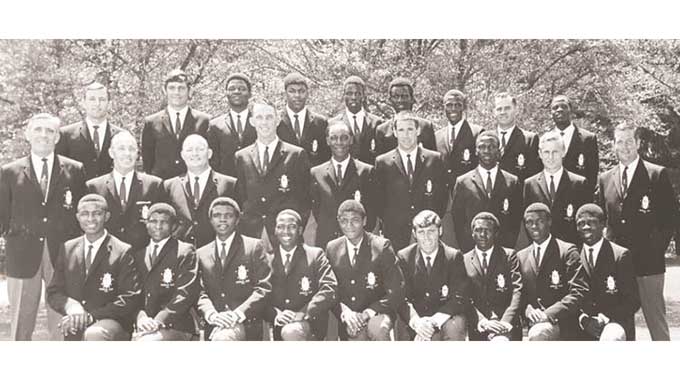
Eddie Chikamhi Senior Sports Reporter
THE death of former Dynamos and national team player, Isaac Chieza, has brought back memories of the time this country first played in a World Cup qualifier.
A member of the team that took on Australia, in the qualifiers of the 1970 Mexico World Cup, in 1969, Chieza died in Bulawayo last Friday.
He was buried at Umvutsha Park Cemetery in the City of Kings on Sunday.
He was 82.
The pioneering World Cup team played in the Asia and Oceania Zone qualifiers, since other African teams, had indicated they would have boycotted the fixtures.
This meant they had to play Australia on neutral ground in Mozambique.
With odds heavily weighing against them, two years of intensive coaching by Scotsman Danny Mclennan, produced a proud motivated team which twice held the fancied Aussies and forced the contest into a tie-breaker.
The first leg ended in a 1-1 draw and the second was a goalless stalemate.
A Mozambican journalist is said to have given the Aussie team a tip that they should use the magic of a witch doctor to help them win the deciding game.
The witch doctor buried some bones near the goal posts and, at the same time, told the men from Down Under he had placed a curse on their opponents.
The Aussies won 3-1 but didn’t pay the US$1 000 demanded for the services.
The witch doctor is then said to have placed the curse on the Aussies.
“From that moment that he put the curse on, everything went wrong for the team,” said Johnny Warren, who was the Australian skipper.
A succession of some heartbreaking World Cup losses followed, including a defeat to Iran in Melbourne, forcing an Aussie delegation to visit Mozambique where they met two witch doctors, Paulino and Miriam.
“On the very football pitch where Australia defeated Rhodesia in 1969, Paulino channelled the spirit of the long-dead nyunga, who had placed the original curse, and performed a ritual to lift the hex,’’ the Australian Broadcasting Corporation reported two years ago.
“Almost exactly a year after Warren’s death, the Socceroos qualified for their first World Cup in 32 years, defeating Uruguay in a penalty shoot-out at the Olympic stadium in front of 82 000 people.’’ Andrew Kadengu, who was also part of the training squad for the 1970 World Cup qualifier, yesterday described Chieza as one of the finest players to grace local football fields in the ‘60s and ‘70s.
“It was not easy for the black players to make it into the national team but, because there was so much talent in the townships and there were so many teams made up of blacks, it was no surprise most of the guys made it.
“If you look at that team for the 1970 World Cup qualifier, it’s made up of talented players.
“Isaac was also there and so was his brother Itayi. There was George Shaya, Peter Nyama, Gibson Homela. These were talented players,” said Kadengu.
He was part of the famous Chieza family that lit the domestic football scene before, and after Independence after rising to prominence at Mhangura. The Chieza football dynasty included brothers Tendai, George, Itai, Temba, Winston and ex-goalkeeper Hector.
Tendai is now based in the United Kingdom, Temba is in Chiredzi, George is in Kwekwe, Hector in Harare while Winston is in America.
Itai is late.
“It was a joy to play with the Chiezas,’’ said Kadengu. “All the brothers from the Chieza family were gifted.
“I played with them at Mhangura although I was more of a fringe player because I was still young and trying to break into the team.
“I was seconded to our other team, Alaska Mine, before moving to Umtali United.
“But, these are the guys who showed us the way. We also met in the national team and I was part of the preparations for that 1970 World Cup qualifier. “We were selected to train with the national team as youngsters, we were three junior players — myself, Itai Chieza and Mashonaland United goalkeeper Adam Maseko.
“But, they said they wanted only one from the juniors and Itayi was picked.’’
Isaac Chieza began his football career at Mhangura before moving to Dynamos and then Eagles in Bulawayo where he was both player and coach.
Chieza was part of the pioneering World Cup team alongside the likes of Shaya, Robin Jordan, William Sibanda, Peter Haddon, James Chibaya, Shepherd Murape, Topsy Robertson, Hylton Grainger, Nelson Mapara, Alex Mwanza, Gibson Homela, Philemon Tigere, Adolf Mutuma, Gilbert Stewart, Stewart Knowles and Bobby Chalmers.
But, after the 1970 World Cup, the country was suspended from FIFA and the national team to wait another 11 years to play a World Cup qualifier.’’ “I still have some vague memories of that team. We were still young but without looking much into the racial issues, those guys were good,” said 1980 Soccer Star of the Year David Mandigora.
“With better exposure they could have upstaged the Australians. It’s unfortunate that the country was under sanctions that time and not many teams wanted to play us.
“The Chiezas deserved their place in that side. There were six of them; I played against some of the guys and I tell you it was always terrifying coming up against them because these guys from the mines were very strong. We learnt a lot from these guys.”
Isaac Chieza left behind his wife Jane and two surviving sons, Godfrey Chieza and Tony Chieza. He had 10 grandchildren and great” You can see that he was blessed so much to live this long. Not many reach 82 years but he did,’’ said Godfrey. “So, we celebrate the life lived, the inspiration he gave to others and the accomplishments on the field of play.’’



 Online Reporter