Andrew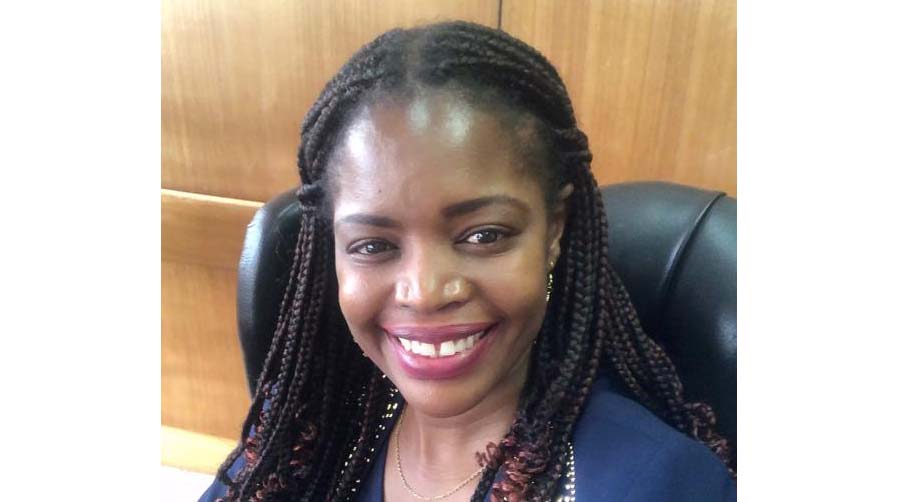
Joyce Jenje Makwenda
ADELAIDE Chikunguru, a multi-skilled woman has made history by becoming the first substantive female CEO of the Zimbabwe Broadcasting Corporation (ZBC), and has changed the narrative of women in leadership at ZBC and in the media.
Gender roles have played an important part in influencing leadership functions in the media, hence most of the powerful positions have been held by men for years.
I have been following the history of women in the media. My mother was the second print black female journalist in Zimbabwe, and she worked for the African Daily Newspaper in the late 50’s. She talked a lot about her experience as a woman journalist. How she wished to cover other stories, beyond just women’s issues, as it was the case then.
She was assigned to women’s issues and some of them were home craft club stories, and men were assigned to day-to-day breaking news stories, entertainment, investigative, opinion, and sports. Journalism/media operates the same way as the structures of society operate.
The private structures of society determine what women do in the public space, hence the distribution of gender biased duties in the media. My mother and other women journalists, and those who followed would have loved to see the day a woman would make major decisions in the media, for instance, which kind of stories women should write and let alone occupying the decision making posts.
While there is progress, a lot has to be done. Therefore it calls for celebrations to have Adelaide Chikunguru leading a more than 80 year-old media establishment, which is also the second in Africa to introduce television in 1960 after Nigeria, which introduced the first television station in Africa in 1959.
The ZBC has operated under different names and some of them are — The Central African Broadcasting Station (CABS) established in 1941, then the Federal Broadcasting Corporation (FBC) in 1958. In 1963 the Rhodesian Broadcasting Corporation (RBC) was introduced, following the end of the Federation of Rhodesia and Nyasaland government.
A television station had come on stream in 1960. At the attainment of independence in 1980, the ZBC was born. It is in this institution, which has been around for almost 80 years, that our history, heritage and legacies are kept and passed as information, education and entertainment. Adelaide is leading this institution, and amongst a number of duties she has to deal with are all the legacies in the different eras of our history.
Chikunguru has been entrusted as the custodian of our rich diverse history, our inheritance through the ZBC. This was long overdue, as it was women in endulo/pasichigare who were custodians of our history and heritage, women were also teachers, they also carried and passed on information to their families and communities, they were also public relations people for their families and their communities, they were also into crisis management, they also kept the family and community archives.
Adelaide is fulfilling what women did during the pre-colonial era, which had unfortunately been broken along the way. With what Adelaide has done and achieved she is in the right place, with her background in the media, the arts, corporate affairs, general management, crisis management and more. Adelaide Chikunguru has had vast experience in working in management in different organisations, starting off at ZBC as an intern, and then one of the biggest public relations companies led by Mike Hamilton, also as an intern.
Because of hard work, she graduated to having her own clients that she was writing for and some of them were the Reserve Bank of Zimbabwe, FINHOLD and NetOne. She later on joined Zarnet, which is a quasi-government organisation that was under the Research Council of Zimbabwe, and she was running their marketing. She left Zarnet-Research Council of Zimbabwe and joined NetOne as corporate affairs relationship executive. While she was there she got an offer, from Ogilvy, Marther & Touchline to head their operations in East Africa. At 26 in 2006, she became general manager at Ogilvy, Marther & Touchline for their East African territory based in Dar es Salaam in Tanzania, the youngest in the advertising stable to hold that post in Africa.
She started mainly on Coca Cola World Cup initiatives, and then went on to do other Coca Cola projects and other blue chip client projects, such as Vodacom. After four years she left Ogilvy, Marther & Touchline to join Tongaat Hullett Sugar, where she stayed for 11 years and left to take up her present post at ZBC. At Tongaat Hullett, she was in senior management, and was the only female executive and very young, about 30 when she joined. She was mainly working on stakeholder relationship management and looking at how the organisation sustained communities and government relationships.
“I was in soccer and I was president of Triangle United FC, and I took it into top flight football. I was given everything and anything to manage. I was given 22 schools to manage, that’s some 16 000 to 17 000 pupils to run with, so I headed schools and I have no education (management) background. I was given soccer to run, I was given projects, any projects, big-ticket agriculture projects, infrastructure development projects and I had to do it. I was given Buffalo Range airport to renovate, I had no background in construction whatsoever, hospitals to build, clinics to build, foot bridges to build, roads to build.”
Chikunguru belongs to the first group of the very first media class in Zimbabwe at Midlands State University (MSU), she was a pioneer of the media class. She had to finance her media degree with her own funds, which she got by holding different kinds of menial jobs.
“So I had to pay my way through college, I was working part-time in the library at the ZBC radio station in Gweru, I was also working at Chicken Inn cleaning the toilets and managing myself paying for my fees. Then at some point we then started getting grants from Government so I applied for the Government grants and paid myself through college. For me it became more of a labour of love.”
She worked for ZBC as production assistant, and then with the Kidznet Production. In these formative years, she also worked part-time with Walter Muparutsa and Davis Guzha in theatre. She is passionate about the arts. When she graduated in 2003 she then worked for a public relations company.
We would like to celebrate you Adelaide as we have done with women who have been in the media since the 1950’s – Angeline Makwavarara, Baphelile Hove, Canaan (Madube) Jenje, Mavis Moyo, Shieka Khumalo, Tsitsi Munyati, Abigail Dube, Jennifer Makunike Sibanda, Busi Chindove, Musi Khumalo, Ropafadzo Mapimhidze, Susan Njanji, Christine Taruvinga, Susan Makore, Halliet Rushwaya, Caroline Hungwe, Busi Dlodlo Dube, Elizabeth Karonga, Victoria Ruzvidzo, Tendai Manzvanzvike and more. They paved the way for you Adelaide. We celebrate you! We ululate and dance! Halala halala halala, Ririririririri !!!!!
I spoke to a number of people on how they feel with the new development at Pockets Hill, and they are happy and say it was long overdue. Here is what the founder of one of the biggest security companies, Securico Security Services, Ms Divine Ndlhukula, had to say:
“The world is increasingly becoming female. No doubt that the Zimbabwean business landscape is also recognising the important role women are playing and the invaluable contribution they bring to the boardroom.
“As I have often said ‘intellect knows no gender’, the appointment of youthful Adelaide Chikunguru as ZBC CEO has come at the opportune time to hopefully unlock the potential of the fourth industrial revolution synonymous with young leaders. It is my sincere hope that politics will not derail this progressive traction to changing fortunes at our national broadcaster. Kudos to ZBC!!”
Justice Dhliwayo, who was the head of production at ZBC when Adelaide was an intern, said he was happy that Adelaide had gone back to lead the organisation where she had started her career, and he has faith in her that she will deliver.
When Chikunguru was about to retire at age 41, and was to go into private ventures, she decided that she would first give back to her country. She started working at a young age, and more so in managerial positions, but she decided before retiring she would give back to her country through the national institution the Zimbabwe Broadcasting Corporation (ZBC).
“I said to myself I needed to give back to my country before retiring, more for me a legacy issue than anything else. I wanted to be one of the people, it’s a family thing, I wanted to be the way I talk about my parents, my mom, my dad having contributed, my grandmother having contributed to the nation the way they did. I also wanted to have contributed to the nation in a significant way. I saw the job description and the advert I was like I have all these things they need, and this is the only thing I can do before retiring because I have been working for a long time, I started when I was pretty young.”
“I thought this is the right time for me to give back to my country, that was the motivator, to say I need to do something, I need to change the narrative about women leadership and I need to change the narrative about ZBC, because that’s where I started. I am passionate about change, transformation, because what ZBC needs right now is transformation; it’s an organisation in transition and I believe I am in the right place at the right time and I believe I am of the right generation to do it. I have the exposure, I’ve been out there, I have worked for multinational companies, I have the correct training, but I have also worked inside Government itself in other parastatals. I felt that the experience that I have had over the years is enough for me to then come and give back.”
Adelaide’s main focus is to transform ZBC, and this is what she is looking at when she talks about transformation.
“I started to think about the legacy issues at ZBC, I started to think about the reputation that ZBC had, its reputation was battered and then I started thinking about where ZBC was and I remembered I have been solving issues for organisations for a very long time and ZBC had reputational issues, ZBC had legacy debts, ZBC had a lot of issues, but I thought to myself I want to hone in all those skills that I learnt to transform ZBC; stakeholder issues, employee relations, ensure that our employees are paid well, team work, bring back people to work as a team so that they achieve their goals. So I started to look at what is the vision of ZBC, do we remember what it is, do we even know what our vision is when we were formed many years ago and Sis Joyce I will tell you it hurts me to find out that ZBC is the second TV station in Africa. Imagine, it was the second after Nigeria in Africa and now it’s behind everybody,” charged Chikunguru, who feels very strongly about making a change at ZBC and one of her greatest goals is to rejuvenate the arts industry in Zimbabwe and to unplug the platforms.
While a number of factors including the Covid environment has affected the arts industry, which is the main driver of content creation, Adelaide also attributes the lack of content creation to ZBC going to sleep for a very long time. She is therefore looking at engaging content creators, which involve independent content producers, the arts industry, ZBC production teams, and different stakeholders, to rejuvenate the whole arts industry and unplug the platforms.
“Zimbabwe is so rich with culture, so when we unplug all that then we are going to awaken the artist who will awaken the musicians, who will awaken the dancers and the various artists and the presenters, everyone is going to become awake again. Our channels are mirrors of Zimbabweans’ lives, we are Zimbabwe, and we used to be the voice of Zimbabwe.”
“We need to develop new creative content, ZBC needs to be responsive to market demands, we have not been responsive for a very long time, but we are now taking advantage of the digital platforms, our Facebook, our social media and so forth to tell the story, we are a mirror of the Zimbabwean people’s lives. So we need to continuously mirror their lives, we need to tell our stories. We are increasing the platforms on which the Zimbabwean voices are being heard, and we are going on all the multi-digital platforms, we are improving our content, we are improving quality, and we are improving delivery of the content, so this is very important for us.”
With the short turnaround strategy that she and her team have put in place, some of the results have been achieved before six months.
“We are very transformational and we are transforming at the speed of light, the changes that are happening are happening at the speed of lightning, and they are good changes. By the end of the year, two new TV stations, the News 24, which is a 24-hour news channel and Jive TV are coming on stream. We are really concentrating on the SBU’s and there are other projects that are coming up.”
My interview would not have been complete if I had not asked Adelaide this question about the archives, as this is one of my main passions because when everything is said and done – documentation/archiving is very important
“Adelaide are you going to look after our archives well?”
She replied: “Don’t forget I started in the library in Gweru. Archiving is ongoing, we are digitising our archives.”
I was happy.
While projects that are in the pipeline need to be funded, Adelaide is worried about the funding structure of ZBC, and she would like to change that.
Her coming on board at the ZBC has seen its re-admission into the Southern African Broadcasters Association (SABA).
“In November 2021, after making presentations to the Southern African Broadcasters Association Convention in Cape Town, ZBC was elected onto the SABA Board, and given a sit on the Audit and Risk Committee for the first time in 41 years,” she said.
Adelaide has also won a Megafest Award, gold prize, outstanding Public Service Award and Special Recognition for Grounded Business Etiquette, as well as many other business awards in the past.
One would wonder how Chikunguru has achieved all this in such a short space of time, but it is because of how she has learnt to manage crisis starting from a young age when she was heading cattle, to when she led different organisations at managerial posts.
She told me a very interesting story of how she learnt to negotiate her way, at a tender age when she was a cow girl.
“I always say that I am a cow girl, that my first leadership skills were in the field herding cattle, where my grandmother would tell me to go and herd cattle as part of the chores so I would go and herd cattle. I was pretty young. I would go and herd cattle, and whilst there, there were incidents where the cow would eat in other people’s fields then you are forced to explain. My grandmother was such a disciplinarian, so to make sure my grandmother never found out I would go and negotiate with the people who owned the fields where my cows would have eaten their maize, and then I would say you can give me some of your cows so I can herd them for you. That way my grandmother could not find out,” said Adelaide, who was partly raised by her maternal grandmother, Maria Chikunguru.
Her grandmother instilled a certain work ethic in her.
“My work ethic started when I was pretty young. I wake up way before 5, I wake up at 4 am, all my life that’s when I wake up, and I am already working and putting things together. So leadership skills came pretty early. Also being a first born in my family, both maternal and paternal sides, I am the first grandchild.”
Adelaide also learnt a lot from her parents. Her mother, Margaret Chikunguru, has worked for Government in various capacities and retired recently as public relations manager for the Public Service Commission. Her father was in the army at very senior levels and retired to join politics, starting as District chairman ZANU PF, and becoming Provincial chairman ZANU PF Masvingo Province, a post he held until his death.
Besides her family she had other people who moulded her to be what she is today. She has had a beautiful clay pot of women and men mentors who contributed to her success. Some of her mentors are: Sydney Mtsambiwa – former CEO and chairman of Tongaat Hulett Zimbabwe Sugar, Peter Staude former CEO of Tongaat Hulett, Anne Ombura managing director of Ogilvy, Marther & Touchline, Aiden Mhere CEO Tongaat Hulett Zimbabwe, Mike Hamilton managing director MHPR, Munyaradzi Hwengwere former CEO ZBC, and last but not least Mukoma Charles Mabika.
“People like Mukoma Charles, I was in soccer and I was president of Triangle United FC, he advised me on how things are done in football. His advice took us to CAF.”
With all that Adelaide has planned for ZBC, one would wish she could stay for some time at the ‘Hill’, but when I mentioned this to her she said that she came to turn around ZBC and if it happens in months for her she would have achieved her goal.
“My term is five years. You said you wish I would be there for the longest time. My wish to be honest is for me to cover the purpose and achieve the purpose, if I can do that in 12 months, 24 months, that is my role at the moment to transform the organisation and meet the mandate as prescribed by the Government of Zimbabwe, and ensure that we are able to mirror Zimbabwean voices and that we are able to mirror Zimbabwean culture,” said a confident, determined Adelaide who is not wasting time in taking ZBC to another level.
Adelaide was born in January 1980 in Tete Province, Mozambique – her parents were in the liberation struggle. When the parents came back home after independence they continued with their education abroad, and they left Adelaide with her grandmother who had to look after the family alone as her husband – Adelaide’s grandfather – Sakureba Jairos Chikunguru – was killed in 1976.
“My childhood is a bit different from other people’s childhoods in that there has been a lot of patriotism and sacrifice. I lost my grandfather in 1976. He was assassinated by the RF as he helped liberation fighters to cross over into Mozambique. He was based in Makoni, Rusape”.
Adelaide Chikunguru is a mother of three children, and the first one is already taking after her creative side and work ethic. She is a painter who has built her studio and she sometimes works all night in the garage on her art work at just 14 years. The other two are still young.
As young as Adelaide is, she has lived more than twice her life. I will stop here before I write a book. Watch this space for more detail about ZBC and about Adelaide Chikunguru!
*Joyce Jenje Makwenda is a Researcher, Journalist, Archivist, Producer, Lecturer and more. She has conducted research on a number of topics including the History of Journalism in Zimbabwe from 1930’s to present and the History of Women in Journalism in Zimbabwe. She owns a Social History Collection/Archives/Museum. She can be contacted at [email protected]



 Online Reporter