admin
admin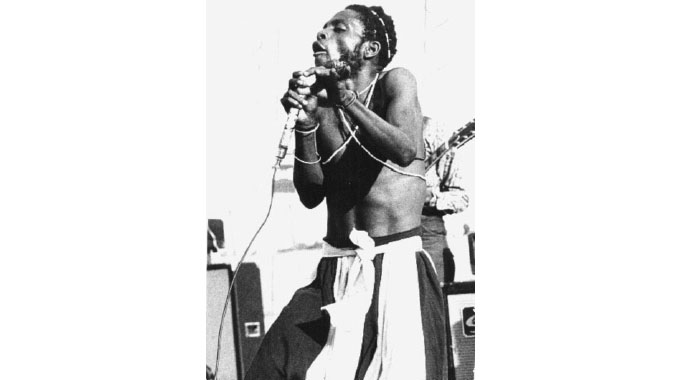
Lovemore Chikova-Assistant Editor
It will be Independence Day on Monday next week, and the nation waits in anticipation to mark the day when the country attained its freedom from colonial rule.
The main celebrations will be held in Bulawayo at Barbourfields Stadium.
The liberation war that brought independence was fought from many angles, although the main weapon was the gun which the liberation fighters used effectively to demolish white minority rule.
Alongside the gun, musicians played a noticeable role in helping oil the war by churning out songs that pointed injustices perpetrated on natives, at the same time encouraging people to join the liberation struggle.
In fact, the period during the liberation struggle produced local musicians that were extremely creative as they had to use their composing prowess to put across the message, but in a subtle way.
Music produced then had a direct and visible impact on people’s mood, especially against the oppressive system practiced by the white minority.
One of the musicians who stood out during the liberation struggle was the late Tineyi Chikupo, whose songs inspired many.
He played a big role with his songs in contribution to the liberation struggle in terms of providing the message and entertainment.
This article examines Chikupo’s early songs and the messages they put across in relation to the liberation struggle.
Chikupo came up with a discography full of songs about the liberation struggle at the height of the war in the 1970s.
In 1975, for example, Chikupo did a song he titled “Kapfumo Kandibaya” loosely translated to mean “I have been stabbed with a spear”.
The song was obviously referring to the bullets that were flying around during the war as the spear that was stabbing both liberation war fighters and the people in general.
The song was an encouraging tune for people to join the liberation struggle so that they could also get the “spear and stab” the whites who were oppressing them.
Chikupo’s other song that became popular was “Mhuka Ine Mavara”, in which he was mocking the Rhodesian soldiers as “the animals with spots”, mainly referring to their camouflage. On “Ngoma Dzamatipa” which some referred to as “Chamunorwa (Rega Kurova Amai), Chikupo took time to subtly thank countries that had contributed weapons to the liberation war fighters.
He sang: “Ngoma dzamatipa dzinoririsa”, meaning that the guns that had been availed to the liberation fighters were very effective.
By singing “Chamunorwa rega kurova mai” on the song, Chikupo was warning black people who had joined Rhodesian forces as soldiers to stop troubling the masses and leave the enemy’s army.
In the same song, he warned the whites to respect the black majority so that they would also earn respect from them.
To make his message effective, he used the idiom: “Gudo guru peta muswe kuti vaduku vakutye”. It was on “Siriviya Hande Kumagobo” that Chikupo made his intentions known without beating about the bush.
On this song, he openly encouraged young men and women to go to Mozambique, Tanzania and Zambia where liberation forces were being trained at the rear bases.
Chikupo also points out the troubles faced by the black majority in Rhodesia in the same song when he sang: “imi amai ndofa ndichitambura” (we are being troubled by the system).
Events that took place during the liberation struggle, especially the massacres that were perpetrated by the Rhodesians on innocent Zimbabweans in countries like Zambia, Tanzania and Mozambique did not escape Chikupo’s creativity.
He came up with the song “Hama Dzapera” to commemorate these massacres.
Chikupo also came up with the song “Vana Venyu” which chronicled the presence of liberation fighters in other countries where they were being trained.
He sang: “Vana venyu ndakavaona kuRussia” and goes on “…ndakavaona kuMozambique, …ndakavaona kuChina, …ndakavaona kuZambia”.
Kashiri was one of the most interesting songs from Chikupo that captured the tribulations faced by the liberation war fighters in the bush where they became used to life in the woods.
“Nyoka nemarize tongotsamhira mambo kani, nyoka nematahwa tongotsamhira mambo iwee, nyoka nemajuru tongokabira mambo kani” sang Chikupo on the song.
The song indicated that the liberation war fighters had become used to be bush where they slept on and ate snakes, owls and ants.
Chikupo chides the Ian Smith regime on the song for trying to seek support from the United Nations where it did not get any joy.
 “Vakambomhanyira kumuzinda mukuru wamambo, zvakaramba” he sang.
The other song that captured the spirit of the liberation war from Chikupo was “Kudzapasi” in which a sister is asking her brother where his children had gone.
The brother replies that he had chased away all his children from home, which can be interpreted to mean the children had left for the liberation war.
He sang about how the liberation struggle had spread throughout the country to different places on the same song when he went on:
“Vari kuChinhoyi, vachazongotichemawo iwe
Vari uko kuManyeni, huyai muzongotichemawo kani
Vari uku Nyakasikana, huyai muzongotichemawo mambo
Vari kuMavhuraadonha, huyai muzongotichemawo mambo”
Chikupo adds the words, “vana venyu vane ndagariro baba”, and then “kuraira vana hamugoni” on the song as a way of telling the whites that they were ill-treating people who were capable of making decisions on their own, hence the institution of the liberation war.
On the song “Rhodii” which others called “Road”, Chikupo sings about his friend who had gone elsewhere and was asking him to follow suit.
“Tozivepi shamwari yangu, shamwari yangu yepamwoyo, wandigumbura” he sang and then said: “Wati here nditevere road”.
This was a song about a friend who had gone to join the liberation struggle and left a message asking others to follow the same road he had used.
Another strategy used by Chikupo was to sing and record some of the songs that were being sang by the liberation war fighters like “Tipeiwo chimoto”.
The song went: “Tipeiwo chimoto, chimwanda cheuswa, huni tichazodziwanira ikoko kuZimbabwe”.
These were the liberation war fighters asking for guns (chimoto), ammunition (chimwanda cheuswa) and then they would fire at the Rhodesian forces in Zimbabwe.
Chikupo was born on March 19, 1952 and died on September 22, 1992 at the age of 40.
Those who knew him indicated that during his illustrious musical career, he played with different bands including Mawonera Stars, which was later called Mverechena Jazz Band, where combined forces with John Chibadura who came in as a vocalist.
Chikupo also formed his own New Mother Band, which was later called The Mother Band. The Mother Band eventually disbanded and Chikupo joined the Vhuka Boys where he played with sungura kingpin Nicholas Zakaria and another sungura music guru Shepherd Chinyani.
After Vhuka Boys, he joined Khiama Boys and then left to join the Muddy Face.
During his long musical career, Chikupo also played with the Mafia Connection and The Boogaloos that was led by Susan Mapfumo.
His contribution to the independence being celebrated on Monday cannot go unnoticed as he inspired a generation through his songs to fight the colonial injustices that existed then.


 Online Reporter