admin
admin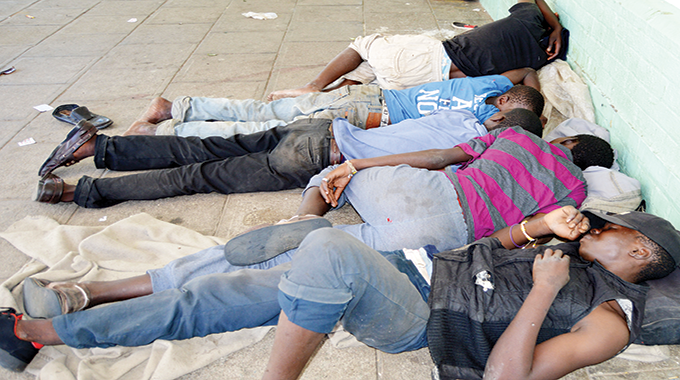
Cuthbert Mavheko
There is an ancient English adage, which says “Every dark cloud has a silver lining.” What this means is that there is always a comforting, or more hopeful side to a sad or difficult situation.
This saying rang true for legions of children living on the streets of Harare after the First Lady, Amai Auxillia Mnangagwa, last month took a step to change their lives.
After holding fruitful discussions with hundreds of children and adults, eking out a miserable existence on the streets of Harare, the First Lady pledged to bail them out of the morass of searing poverty and give them a normal life again.
According to a report from the Ministry of the Public Service, Labour and Social Welfare published in 2017, Zimbabwe has an estimated 4 701 children living and working on the streets of the country’s major cities- Harare, Bulawayo, Mutare and so on.
Another report estimates that 16 000 children are living on the streets countrywide, without decent shelter. Most of these hapless children are severely undernourished and fight pitched battles, on a daily basis, with dogs and cats over crumbs of food in dust bins and refuse dumps.
Indeed, it presents a painful paradox to note that almost 40 years after the whirlwinds of political metamorphosis swept colonial rule into oblivion, hordes of children in Zimbabwe are still living on a lonely island of poverty in the midst of a vast ocean of material prosperity.
During the First Lady’s constructive dialogue with scores of street children in Harare, it emerged that their needs and aspirations differed according to their backgrounds. Having taken due cognisance of this, the First Lady resolved to send some of them back to school, while for others, she said she would ensure that they acquired vocational training skills to enable them to fend for themselves and become productive members of the country.
The decision by the First Lady to lift some children living on the streets in Harare from the quicksands of poverty and destitution is a humane initiative, which has been commended by many people.
“The First Lady should be commended for taking time off from her busy schedule to address the plight of homeless children, roaming the streets of Harare. In so doing, she has demonstrated, to all and sundry, that she has the interests of the country’s under-privileged children at heart. May the Almighty God bless her with good health and a long life as she leads the way in championing the cause of the country’s poverty-stressed children, living in the streets,”said Father Alex Mukaro, a Catholic priest.
Mr Masuku, a human rights lawyer, expressed similar sentiments.
“Amai Mnangagwa’s philanthropic work among the less privileged members of our society must be hailed by everyone. The First Lady is a very generous, humble and unpretentious person. Through her organisation, The Angel of Hope, she has done much to improve the livelihoods of orphans, widows, the elderly as well as the disabled members of our society.
“Zimbabwe’s Constitution is a remarkable document, which recognises the rights of children and the obligation of the State, civil society and the generality of the people to protect children’s rights, and provides for their needs as children in a special condition of dependency.
“Sadly though, implementation of the child statutes in the country has often been hindered by bureaucracy in some government departments and the popular discourse on violence and delinquency, which defines street children as criminals, malefactors and prostitutes,”he said.
The late 1980s witnessed a worldwide concern for the rights of children, resulting in the adoption of The Convention on the Rights of the Child by the General Assembly of the United Nations in November 1989. This was followed by the adoption of the Organisation of African Unity (now the African Union’s) Charter on the Rights and Welfare of the Child by the Assembly of Heads of State and Government held in Ethiopia in 1990.
All this was done to pull a tight rein on the proliferation in the number of children living in the streets, mostly in urban areas of developing countries. It was noted then that legions of children were fleeing their homes and living in the streets, where they ended up being ensnared in the web of a vicious cycle of violence, drug abuse, prostitution, homosexuality and various other anti social activities.
Ignored by society in general, children living in the streets are the most exploited, marginalised and dehumanised members of our society. They live in a perpetual state of living hell. They are impoverished, deprived of decent shelter, education, access to health facilities, good nutrition and various other social services that children need to prepare them for the future.
It is the greatest sense of irony that children living in the streets are generally regarded as social misfits. These children know no other lifestyle other than that of poverty, violence, drug addiction and have no opportunity to realise their full potential and value in life.
According to some researchers, children end up in the streets for a myriad of reasons, which include poverty, sexual abuse or home conditions that are no longer supportive due to the death of, or loss of employment by a parent or guardian.
“When my father lost his job in 2015, he was given only three months’ pay, despite the fact that he had served his employers for more than 30 years. The situation at home quickly deteriorated; there was no food and most of the time we went to bed on empty stomachs.
“When schools opened for the third term in 2015, I stopped going to school because there was no money for school fees. The situation became so bad that my mother eloped to South Africa with another man and we never saw her again. To make matters worse, our landlord evicted us from our lodgings because we had no money to pay our rentals. I then decided to leave the family and I now live in the streets, where life is a matter of survival of the fittest,” said Tinashe Simango, a 14 year-old boy from Masvingo, who shed tears as he narrated his heart-rending story to this scribe.
It just cannot be over-emphasised that the street is an unbounded, impersonal and very dangerous place for children, most of who are often seen cavorting about the streets barefooted and shirtless, even in cold weather.
Children living in the streets represent the extreme of social marginalisation, anonymity and occupy a degraded position in society. It does need to be said, loudly and repeatedly, that the dispiriting spectre of homeless, abandoned children in our cities is a blemish on our urban landscape and a grim reminder that all is not well in our dear motherland.
Parting shot: The First Lady has set the ball rolling in terms of championing the cause of children living on the streets of Harare. The onus is now on us, ordinary Zimbabweans, civil society, the corporate world and non governmental organisations to support the First Lady’s noble initiatives by ensuring that children living in the streets in other urban areas like Bulawayo,Mutare, Masvingo etc. are also rehabilitated and given a new lease of life.
Cuthbert Mavheko is a freelance journalist based in Bulawayo and has contributed articles and short stories to the Chronicle, Sunday News and various other publications since 1995. Contact details-0773 963 448. e-mail [email protected]



 derick.khumalo