admin
admin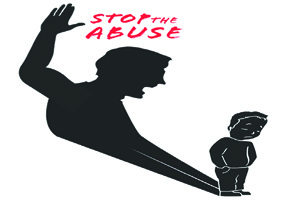
Girls are normally affected by such arrangements as they are expected to perform household chores as well as attend school, if they are still of school-going age, that is.
What is surprising with such arrangements is that the child in most cases is not consulted. He/she is just expected to move on to the new home. In Uganda, legislation has been put in place recognising de facto guardians and making them legally responsible for upbringing of young relatives in their care within the framework of the best interests of the child. This ensures that the child enjoys her full rights as a child, especially the right to health and education.
In Zimbabwe as well as in other southern African countries, the upbringing of children in social arrangements within the extended family is widespread. Numerous reasons are given for such arrangements, ranging from a barren aunt who might ask for a brother’s daughter to stay with, poverty, which might force parents to send their daughter or son to stay with an uncle who might have access to more resources. At times children are given to grandparents so that they have someone to look after their livestock as well as to look after them. The reasons are quite innumerable.
The major question that might arise is: “Do these de facto guardians treat these children the way they treat their own biological children?” It is also important to assess whether children in such settings get the care, food and medical treatment they need so that they grow up in a manner that does not compromise their moral fabric. Stories have been told of stepmothers who mistreat their stepchildren. Don’t these children fall into the same predicament? Do these social arrangements protect the rights of the child in general and those of the girl child in particular?
In Zimbabwe, the grandparent-and-grandchild model arrangements are quite common, especially in the rural areas. There is also a paradigm shift to urban areas due to migration. Usually the grandparents consider it a customary obligation to bring up grandchildren. At times the parents virtually leave everything like the provision of food, clothing, shelter, education, medical attention and even moral guidance to the de facto guardians. In the end the parents themselves cannot shape the behaviour of that child especially where a child assumes permanent residence at the de facto guardian’s residence.
According to the book Human Rights, Plural Legalities and Gendered Realities, today there is fluctuating custody though, whereby the child may change residence to another relative or back to the parents as the need arises.
In Zimbabwe, as earlier pointed out, some social arrangements are done out of the need to have the children attend school. Such de facto guardians who value education often assist in the fulfilment of the right of the child to education. Those de facto parents that are sometimes in need of domestic help usually seek young children so that they can send them to school but end up mistreating the children and abusing them. Depending on the age of the child, the cases at times are not reported or unearthed by the parents.
Research has also revealed that social arrangements have played a significant role to children born by teenage mothers as well as children from extra-marital unions. At times the issue of reciprocity takes precedence. In some cases, de facto guardians are expected to take custody and care of social children as a gesture of reciprocity for those guardians having grown in such arrangement themselves. It is common therefore for some social arrangements to be done in anticipation of future arrangements.
In the book cited above, it is pointed out that while such social arrangements might have their own advantages, it must be remembered that a parent’s love can never be substituted. The fact that most de facto guardians prefer to stay with girls is on its own gross discrimination between the boy and the girl child. The preference for girls on account of their ability to perform domestic chores is a reflection of the societal perception of the roles of boys and girls. It is unfortunate that in most cases the girl child is easily exploited.
This is a violation of Article 5 of the Convention on the Elimination of all forms of Discrimination Against Women (CEDAW) which states: “State parties shall take all appropriate measures to modify the social and cultural patterns of conduct of men and women with a view of eliminating all other practices which are based on the inferiority or the superiority of either of the sexes or any stereotyped roles for men and women.” Apart from that, the Convention on the Rights of the Child is the basic document regulating the position of children in international laws. It sets standards for the treatment of children in all aspects of their lives.
The Convention on the Rights of the Child has been widely ratified illustrating the universality of the values and norms it represents in terms of child protection and the acceptance of human rights standards as a strategy for transforming the lives of children. The last sentence of Article 3 states: “. . . the best interests of the child shall be a primary consideration”. Apart from that, Article 4 of the African Charter on the Rights and Welfare of the Child, also embraces the same normative basis for the rights of the child as in international law.
It must be noted that while children in social arrangements might be subjected to domestic labour, it should not be harmful or hazardous to the detriment of their health. Where a child has access to education, it is different from a child who is engaged in domestic work as a paid domestic worker.
Some of these children do not access education and others are exploited too.
However, it is also important to note that not all cases of social arrangements work out in the best interests of the child or promote the rights of the child. In a chilling story, a paternal uncle who had promised schooling to his brother’s daughter regularly assaulted her and asked her to perform household chores which included washing dishes and clothes as well as tending to the children at the age of eight years. It is therefore of paramount importance for parents to weigh all these risks before subjecting their children to such harsh environments.
*Vaidah Mashangwa is the provincial development officer in the Ministry of Women Affairs, Gender and Community Develop-ment. She can be contacted on 0772111592 or 09-889224


 Online Reporter