


 malvernmugadzikwa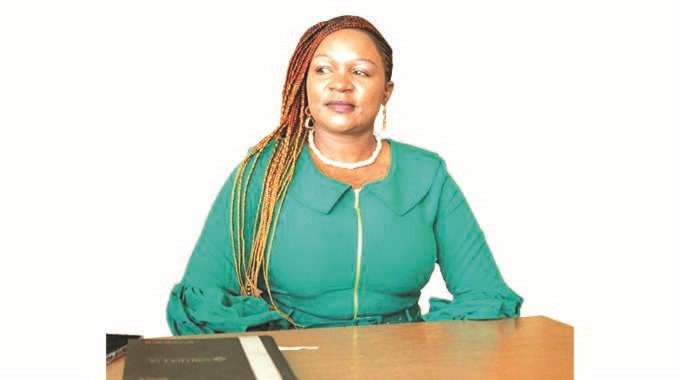
THE Children’s Amendment Act, which was gazetted a few months back, prohibits assault, ill-treatment and abandonment of children by their parents and guardians.
Under section 13 of the law, a parent who fails to prevent their children from committing a crime shall be punished as if they were the ones who committed it.
Below are excerpts from an interview The Sunday Mail Society (SM) had with Justice, Legal and Parliamentary Affairs Permanent Secretary Mrs Virginia Mabhiza (VM) to get clarification on some of the issues pertaining to the Children’s Amendment Act.
*************************
SM: What motivated the Children’s Amendment Act, 2023 (No. 8 of 2023)?
VM: The main reason for the enactment of the Children’s Amendment Act is to align the Children’s Act (2001) to the Constitution of Zimbabwe (2013), mainly sections 19 and 81.
The Act further affords children the needful protection and assistance so that they can fully assume their responsibilities within the community. The amendment was also meant to align the Act with international legal instruments such as the United Nations Convention on the Rights of the Child and the African Charter on the Rights and Welfare of the Child. Also, it is necessary that the child, for the full and harmonious development of his or her personality, should grow up in a family environment and in an atmosphere of happiness, love and understanding.
SM: In layman’s terms, what does this law say?
VM: One key provision of the Act is the establishment of the Child Protection and Welfare Council, which is responsible for receiving representations from civil society organisations helping or representing children for the purpose of devising child protection measures and for the promotion of children’s rights. Its general function is to facilitate the protection and promotion of children’s rights.
In addition to that, the Act contains a provision that clarifies the definition of children so that everyone under the age of 18 is to be considered a child. This includes scrapping the previous distinction between “children and young persons”.
SM: You can carry on.
VM: The Act introduces new criminal offences, such as the criminalisation of involving children in any activities related to child sexual abuse material (published offline or online via any technology), as well as the prohibition of denying necessary medical treatment to a child. The Act also gives clear responsibility to those who interact with children to ensure that they take action in case children seem to be in danger. Any person who is required or likely to interact with children in their professional or vocational capacity in any way must report any instances of suspected or anticipated child abuse.
Section 13 of the Act provides that if a parent or guardian facilitates or assists a child to commit a crime, they will be liable and can attract a sentence for the commission of that crime.
The Act also makes a parent or guardian liable for a crime committed by a child if they did not take reasonable steps to stop or prevent the child from committing that crime where they were in a position to do so. In other words, the law encourages parents or guardians to train up their children so that they may not commit crimes.
SM: Does the same law apply in other African countries?
VM: Most African countries have enacted laws that enhance the protection of the rights of children. For example, generally, the minimum age of marriage in most African countries has been set at 18 years. This is being done to protect the rights of children not to be subjected to early or forced marriages. Fifty African countries have ratified the African Charter on the Rights and Welfare of the Child and other subsequent international legislation that support and promote the protection of the rights of the children.
The South African law makes a parent or guardian liable for a crime committed by a child, where they have used a child as a weapon or agent in the commission of a crime.
Parents or guardians may also be liable if they do not take reasonable steps in their capacity to prevent their children from committing crimes. In our law, this is provided for in section 13 of the Children’s Amendment Act.
SM: Are we not going to witness a surge in child abuse cases as a result of the new law?
VM: The intention of the law is to prevent parents and guardians from using their children as weapons or agents for committing crimes.
The legislature does not intend to increase abuse of children through this provision.
It is the responsibility of a parent to train up their children so that they become responsible or law-abiding citizens. If a parent abuses their own child or uses inappropriate measures to discipline their child, they may face the wrath of the law.


 Online Reporter