Online Reporter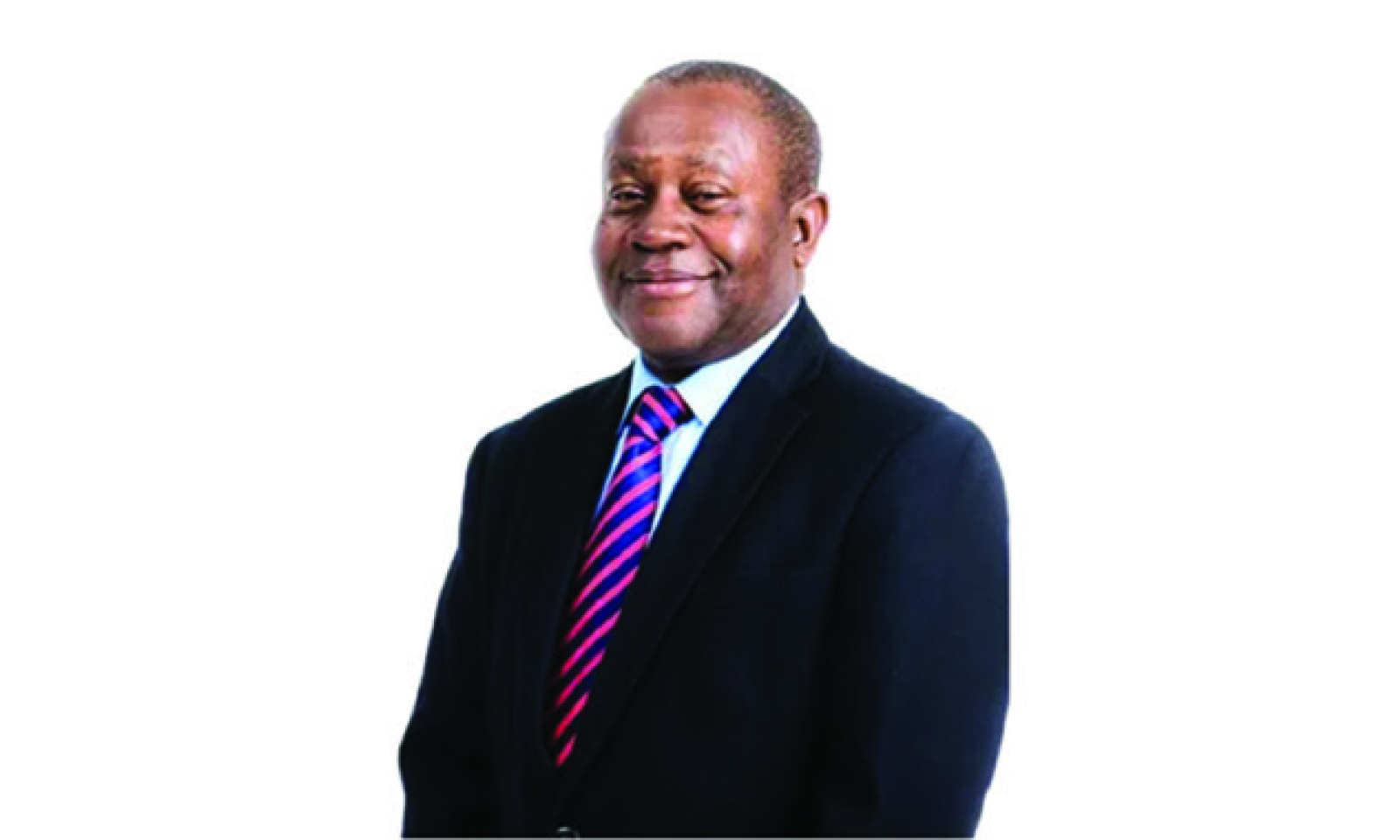
Elliot Ziwira-At the Bookstore
“This is war.”
Not a romantic interlude, not a cup of tea and certainly, not fish and chips. Not even a stadium riot.
War, in Thomas Sukutai Bvuma’s “The Chosen Generation” (2021), is the ultimate theatre of cruelty; a space where the grotesque is routine, and death wears the face of inevitability.
As Zimbabwe once again approaches Heroes Day on August 11, a day steeped in blood, honour and unresolved trauma, Bvuma’s searing novel offers a haunting, yet necessary engagement with the liberation soul.
Like Alexander Kanengoni in “Echoing Silences” (1997), Freedom Nyamubaya in “That Special Place” (2003) and “On the Road Again” (1998), the author candidly bares his soul, as he does in “Every Stone that Turns” (1999).
Soaked in remembrance, the book refuses to flinch and bow to sentiment. And in remembering, it demands the same of us.
At the heart of the novel and the nation’s own anxious memory, is the Chimoio massacre of November 23, 1977. This was no ordinary wartime skirmish, but a genocide. It was a strategic air and ground operation by Rhodesian forces, calculated to cripple the ZANLA liberation command and crush Zimbabwe’s dream of self-determination.
Carried out with the precision of cowards and the logic of brutality, the raid targeted not only trained cadres, but schools, clinics, and nurseries —unarmed civilians, pregnant women, and infants. Bvuma, himself a liberation war veteran, renders this tragedy not as an abstract historical event but as a lived catastrophe. His fictional protagonist, Cde Nyika Yababa, is in training at Chimoio when the bombs fall.
His recounting is as vivid as it is traumatic: “For Selous Scouts, it was sweet and proper. It was sweet to slaughter thousands of unarmed boys and girls. It was decorous to massacre black ‘terrorists’. But it was not sweet to be massacred and maimed by the thousand. There is no desecration in massacre and mass graves.”
The language is deliberately ironic, forcing the reader to confront the moral vacuum of colonial violence and the cowardice that justified the killing of children as counter-insurgency.
The 14 camps that formed the Chimoio base; Chaminuka, Chindunduma, Nehanda, Takawira, among others, were not just military outposts. They were sanctuaries of hope, and ideological nurseries for Zimbabwe to come.
The attack razed them all. The airstrike, cunningly foreshadowed by a flyover from a civilian DC-8 aircraft to lull the occupants into a false sense of security, caught thousands on the morning parade.
Some were still singing and others were cooking, while others were nursing babies. All died as symbols of a people’s dream.
Bvuma asserts that war is not a myth. It is a festering wound. His greatest triumph in “The Chosen Generation” is his refusal to romanticise the war. Unlike propaganda-laden wartime fiction or celebratory official histories, his narrative insists on war’s cost, its absurdity and its moral ambiguity.
There are no victors in war, Bvuma maintains, only victims and ghosts.
Through Yababa’s eyes, the reader encounters the lived experience of a young man, who flees Umtali (now Mutare), after striking back at a white employer who assaults him.
Yababa, born Masara Musamba of Sakubva African Township, belongs to the chosen generation that selflessly sacrificed for the liberation of black Zimbabweans from Ian Smith’s oppressive regime.
He has dreams: of university, of love and of family. But colonial Rhodesia allows no such luxuries, hence, his only recourse becomes the gun.
He crosses into Mozambique, leaving behind Wadiwa, the girl he promised to marry. At Chibawawa Refugee Camp, where he is interrogated by the chillingly named Comrade Killer Mabhunu, the fantasy of liberation war as the hero’s journey is quickly dismantled.
What awaits him is suspicion, hunger, ideological dilemma, betrayal, and the omnipresence of death.
Along his journey from Chibawawa to Chimoio, from lover to fighter, and survivor, Yababa meets figures who are not characters but embodiments of the liberation struggle and its paradoxes.
The 15-year-old Taurai (Comrade Watoto), his younger brother, follows him across the border only to die in battle. The pregnant Comrade Ndodini, whom he loves and loses, turns out to have been impregnated by Killer Mabhunu. The wounded Comrade Dadirai, whom he carries on his back from the warfront, simply disappears.
Each loss is deeply personal, and yet unmistakably political. Symbolically, the nation’s soul is embodied in man’s soul.
Bvuma’s fictionalised war memoir works on multiple levels. It is not just Yababa’s story but Zimbabwe’s. Among the finest historical fiction, “The Chosen Generation” uses one life to hold a mirror to the lives of many. Yababa’s experiences allow for the exploration of the ideological, personal, and geopolitical ruptures that define liberation movements.
The novel revisits the Nhari Rebellion of 1974; internal dynamics within ZANU and ZAPU; the rise of Robert Mugabe; the Vashandi movement and their Marxist/Leninist ambitions; and the tragic collapse of the Zimbabwe People’s Army (ZIPA).
However, Bvuma does not treat these historical touchpoints as lecture notes. They emerge naturally from Yababa’s inner and outer conflicts – his soul a battleground.
The more he fights for Zimbabwe, the more he questions the nature of war. This questioning comes to a head in the novel’s framing device. It begins in medias res in 2008, as Yababa, a war veteran living in Zengeza, Chitungwiza, watches a terrorist attack unfold in Mumbai, India on television.
Children splash in raw sewage outside. The local council has collapsed “abandoning ratepayers to wade and lament in their own piss and faeces.”
The targets of the attack, led by a young man, Mohammed Ajmal Amir Kasab, include the Taj Mahal Palace Hotel, the Oberoi Trident Hotel, Cama Hospital and the Chhatrapati Shivaji Maharaj Terminus.
Yababa reflects on what distinguishes a terrorist from a freedom fighter. While war frames the novel, Bvuma does not forget the emotional landscape behind the gun.
Thus, “The Chosen Generation” can be read as much a novel of love and longing as it is of struggle and ideology.
A yearning for peace, Yababa’s relationship with Wadiwa is moving. His encounter with Ndodini, the mother of his unborn child, is tender, desperate, and short-lived.
His attempt to save Dadirai, the naked and disembowelled comrade in a hideout following the Chimoio massacre, is one of the most devastating scenes in Zimbabwean war literature; surpassed only, perhaps, by Kanengoni’s “Echoing Silences” or Marechera’s “The House of Hunger” in its ability to haunt.
Although Yababa helps her limp to Chimoio Town, and carries her on his back when she can no longer walk, he never sees her again. Such is the nature of war and the travesty of social justice.
On reflection, these relationships do more than humanise the guerrilla. They reveal the cost of war, not in strategy, but in intimacy, in the “brief, but intimate encounters” that vanish in smoke and shrapnel.
The protagonist wonders: “Why do people have such brief, but intimate encounters, never to meet again? What was the purpose? The entertainment of the Creator shuffling minute pawns on a giant chessboard?”
As a mirror into the present, the brilliance of “The Chosen Generation” lies in its structure. Forever engaged, the past is always in dialogue with the present. In this conversation, the reader is never allowed to forget that the ideals of the liberation struggle were not ends in themselves, but were meant to lead somewhere.
And that somewhere, Bvuma implies, is a pending collective destination.
In Yababa’s son, Masara Junior, and his wife, Wadiwa, the reader glimpses a new generation – a chosen generation in its own right. But the question looms: Will they pick up the torch? Or has it already burned out?
Far from being mere literary speculation, this calls for national introspection.
This upcoming Heroes Day, therefore, and as we lay garlands in memory of our fallen and living heroes, we should not forget the essence of reading as remembrance. Perhaps, the most enduring tribute would be a collective reading of Bvuma’s novel, in schools, homes, libraries, and community halls.
“The Chosen Generation” is more than fiction. It is a sacred archive – an emotional, philosophical, and political document. It is the memory of pain, the anatomy of sacrifice, and the lament of pending promises.
In Bvuma’s view, heroism is neither loud nor always triumphant. Sometimes, it lies in carrying a dying comrade on one’s back. Sometimes it is in returning home and wondering what distinguishes a terrorist from a freedom fighter. And, sometimes, it is in writing a book.
On Heroes Day, we remember not just those who fell, but what they fell for. Bvuma’s novel is not only a fitting tribute to their memory; it is a challenge to the living.
All of us are inheritors of sacrifice, yet the question persists: what will we do with that inheritance?
Read “The Chosen Generation”, and let it stir you, wound you and heal you in celebration of collective sacrifice.
For an immersive reading experience, visit Typocrafters Book Shop (DigiHub) at Herald House, corner George Silundika Avenue and Sam Nujoma Street in Harare. Contact: Leon on 0733100191.