Online Reporter
Fidelis Munyoro
Chief Court Reporter
BUSINESS partners at the centre of the Presidential Goat Pass-On Scheme were jailed yesterday for long terms after being convicted of defrauding the Government of more than $7 million in public funds meant for vulnerable rural households.
High Court Judge Justice Pisirayi Kwenda sentenced Moses Mpofu (50) to 22 years in jail with an effective term of 15 years if he pays back what he stole. Mike Chimombe (44) was sentenced to 17 years in prison with an effective term of 12 years.
The court found the two guilty of orchestrating a well-planned fraud using forged documents and the creation of a fictitious company to secure an $87 million Government contract meant to supply over 500 000 goats to impoverished communities.
“The Government of Zimbabwe trusted you to act with integrity and probity, but you betrayed that trust for personal enrichment,” Justice Kwenda said.
“This court must send a clear message: enough is enough.”
The Presidential Goat Pass-On Scheme was launched to improve nutrition, food security and income for vulnerable households, including those headed by orphans, the elderly and the disabled.
Instead, the court heard how Mpofu and Chimombe submitted a fraudulent tender under the name Blackdeck Livestock and Poultry Farming, a non-existent entity. Using forged Zimbabwe Revenue Authority (ZIMRA) and National Social Security Authority (NSSA) certificates, they misled Government officials into awarding them a lucrative contract.
Once awarded the contract, Mpofu and Chimombe acted as representatives of the fictitious company, receiving Z$1,6 billion (approximately US$7,7 million) as an advance payment. Instead of fulfilling their obligations, the funds were funnelled through a range of accounts, including a company owned by Chimombe, and traded on the black market.
State witnesses testified that while the contract required delivering 85 000 goats to meet the terms of the advance payment, only 4 208 goats were supplied, representing a shortfall of over 89 percent. The court heard that the fraud had devastating consequences for the rural communities that were supposed to benefit from the scheme.
In his sentencing judgment, Judge Kwenda described the crime as “premeditated, complex, and meticulously executed.”
He noted that both accused had abused their positions of influence and trust. The judge rejected arguments by the defence that Government officials should have detected the fraud earlier, pointing out that the accused manipulated the system to escape scrutiny.
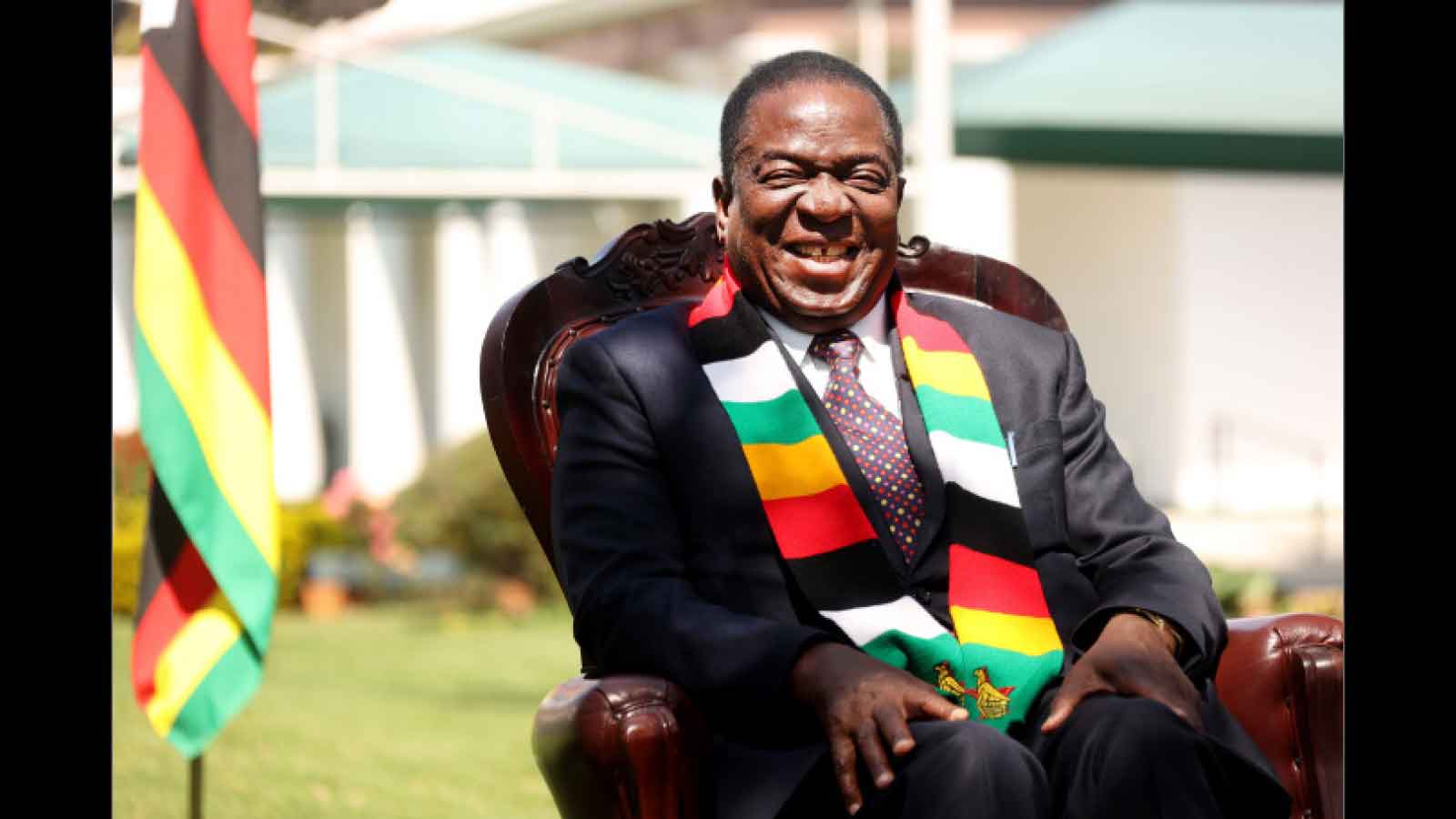
The court also highlighted the broader impact of the crime, including reputational damage to the Head of State and Government, President Mnangagwa, and the derailment of a project designed to uplift Zimbabwe’s poorest communities. The State prosecutor had called for harsh penalties, arguing that theft from the public purse required a deterrent sentence.
“This offence has shocked the conscience of the nation. If this case does not warrant a lengthy imprisonment, what will it take for someone to go to jail for stealing public funds?” the prosecutor submitted.
Mpofu’s 22-year sentence includes a three-year suspension for good behaviour after his eventual release and another four years suspended on condition he pays US$2 060 250,60 in restitution by February 28 next year.
Chimombe’s 17-year sentence includes the three-year suspension on good behaviour and two years suspended on condition he pays US$964 064,64 in restitution by the same date.
Both men have already spent 18 months in pre-trial detention, which was taken into account in sentencing.
While the court acknowledged mitigating factors such as the accused being first-time offenders and Chimombe’s health issues, Justice Kwenda emphasised that these were outweighed by the aggravating circumstances.
“This crime was not only a theft of public funds; it was a theft of hope for the poorest members of our society,” he said.
The sentencing marks a significant moment in Zimbabwe’s fight against corruption, with the court signalling that economic crimes involving public funds will attract severe consequences.
Both the defence and the prosecution are gearing up since the two will appeal to the Supreme Court. On one side, the defence, acting on their clients’ instructions, plans to challenge both the conviction and the sentence. On the other, the prosecution is far from satisfied with the leniency of the penalties handed down to the two offenders.
The State is adamant that the sentences fail to reflect the gravity of the crime. Officials argue that the punishment does not deliver justice or send a strong enough warning to potential wrongdoers.