Online Reporter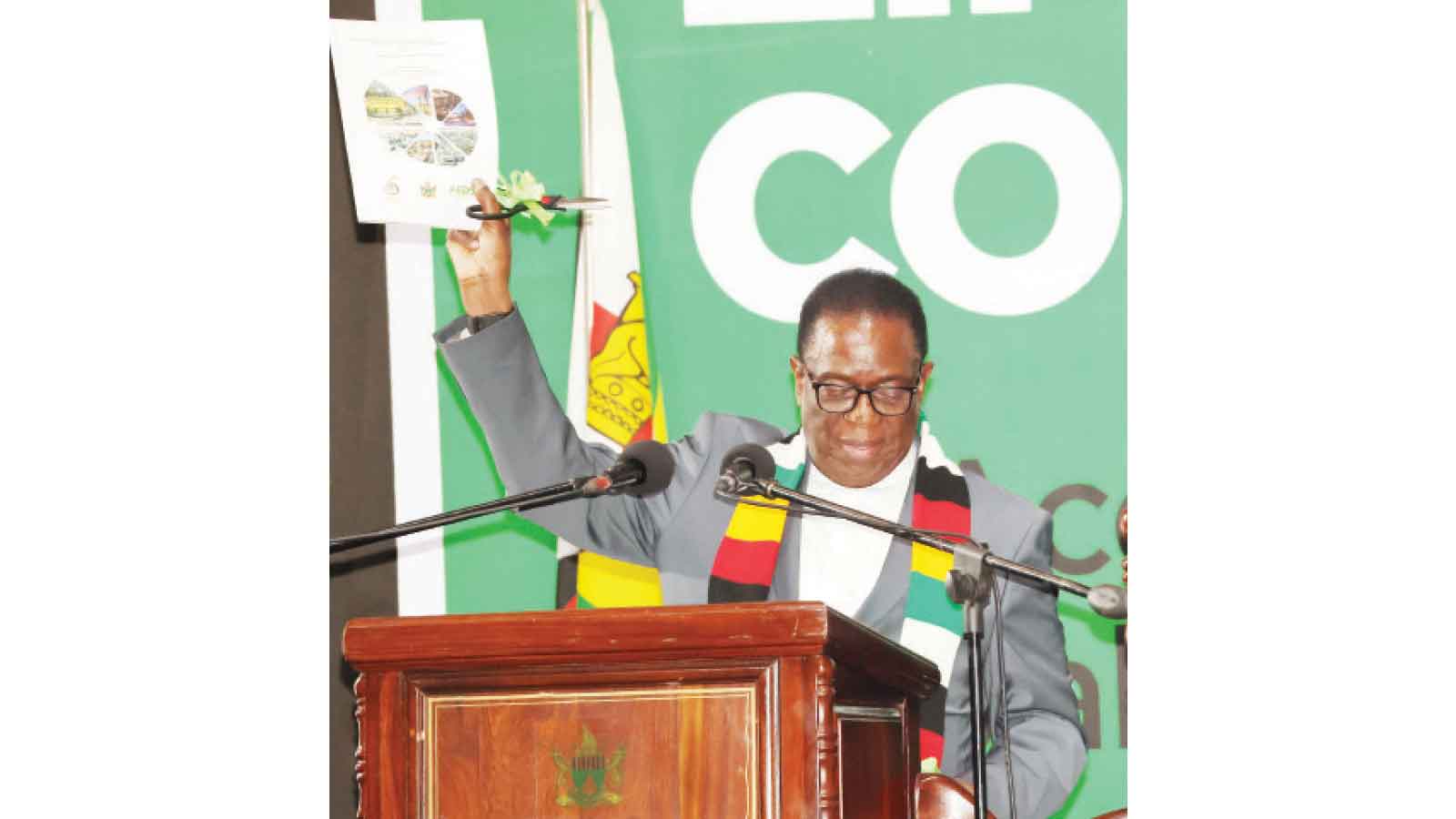
Zvamaida Murwira-Senior Reporter
ZIMBABWE’S manufacturing sector will be an industrial hub for regional, continental and international markets as Government facilitates the implementation of its industrialisation agenda and accompanying institutional reforms, President Mnangagwa has said.
The country’s future, he said, remained bright with the ongoing green industrialisation presenting the country with an opportunity to build competitive industries while preserving its natural heritage for future generations.
President Mnangagwa made the remarks yesterday while opening the Zimbabwe Industrialisation Conference and Expo 2026 under the theme: “Accelerating industrialisation through regional value chains, innovation and trade.”
He also launched a research finding of the State of Industry and 2027 Prospects Study.
“Modern and resilient infrastructure, stable energy supply, efficient transport systems, reliable logistics, digital connectivity and secure water supplies are fundamental pre-requisites which must be continually revisited.
“In doing so, we are able to boost industrial growth, lower production costs, towards enhancing competitiveness and facilitating trade,” said President Mnangagwa.
“I am pleased that to date, these aspects are being incrementally addressed with tangible benefits accruing to a favourable regulatory framework as well as the ease and cost of doing business. The broader objective, is to strategically position our country as a high-performing and competitive manufacturing and industrial hub, for regional, continental and international markets.”
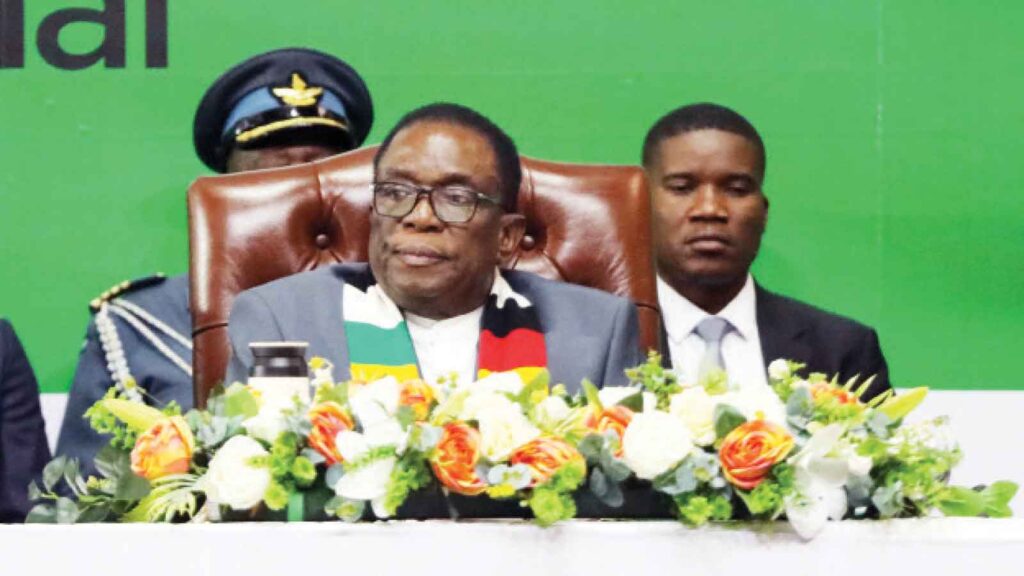
President Mnangagwa follows proceedings at the Zimbabwe Industrialisation Conference and Expo 2026 in Harare yesterday. — Picture: Memory Mangombe.
Zimbabwe’s modernisation and industrialisation must be accompanied by sustainability as the future belonged to industries that were energy efficient, environmentally responsible and climate resilient.
“Green industrialisation, therefore, presents Zimbabwe with an opportunity to build competitive industries, while preserving our natural heritage for future generations. I call upon all sectors of the economy to adjust processes and technologies with this reality in mind,” said President Mnangagwa.
“The future of our nation is bright. Be assured of policy certainty and an enabling environment for business diversification and growth.”
He called for collaboration among all stakeholders to ensure the success of the milestones.
“However, Government policy alone will not suffice. There is need to embrace the whole of industry and society approach for us to speedily realise more success milestones.
“Industry must invest and innovate, financial institutions must provide affordable capital and the academia ensure relevant knowledge and skills. Development partners are always welcome to support and complement the ongoing transformative national development agenda,” said President Mnangagwa.
He noted that the conference was held following research findings of the State of Industry and the 2027 Prospects Study that outlined substantial progress in stimulating growth.
“Additionally, the study confirms that Zimbabwe’s industrial sector has demonstrated remarkable resilience, recording higher capacity utilisation, which is now at 61.2 percent in the first quarter of 2026, up from 35 percent in 2019.
“During the same period manufactured exports also increased from US$360 million (2019) to the current US$584 million, reflecting improved value addition and beneficiation. The manufacturing sector now accounts for 17 percent of GDP. I applaud the sector for this phenomenal growth,” he said.
President Mnangagwa however bemoaned the country’s import bill which the study showed US$2,5 billion worth of manufactured products that can be made locally and implored Industry and Commerce Minister Mangaliso Ndlovu to address the issue.
“The situation highlighted in the State of Industry Report, that the country is currently importing approximately US$2.5 billion worth of manufactured products which can be produced locally is untenable.
“Zvokwadi, zvokwadi, nyika ine vanhu vakadzidza semi, tinema innovation hubs nemaindustrial parks kumaUniversity, nemaskills akawanda-wanda munyika totenga zvinhu chero, kwete! Izvi Minister Ndlovu, ngazvigadziriswe. Mari iyoyo, ngaishande muno munyika, ichitenga maproducts agadzirwa muno,” said President Mnangagwa.
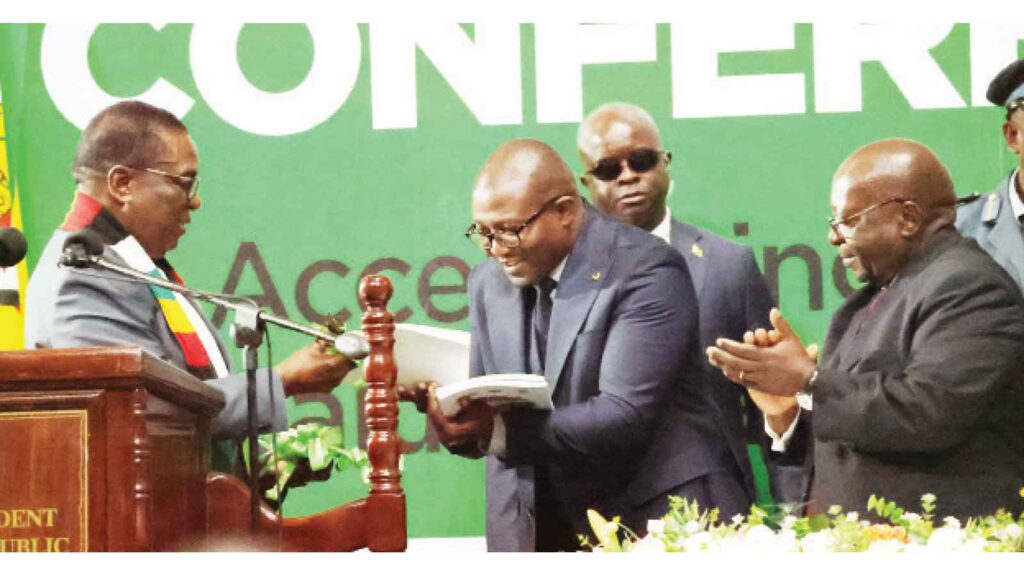
President Mnangagwa hands over a copy of the industrialisation study report, The State of Industry and 2027 Industrialisation Prospects, to Industry and Commerce Minister Mangaliso Ndlovu at the official opening of the Zimbabwe Industrialisation Conference and Expo 2026 in Harare yesterday, while Chief Secretary to the President and Cabinet Dr Martin Rushwaya (right) claps hands in support. —Picture: HTEISTD Communication and Advocacy Officer Kudakwashe Hunda.
He said there was need to scale up beneficiation and value addition manufacturing, since export of processed materials had become urgent.
“Minister Ndlovu, I am confident that through stronger synergies within the manufacturing and other sectors of the economy, more can be done to accelerate the realisation of set targets. Focus must not only be on import substitution, but also on new economic drivers, trade in high value exports, regional integration and export diversification,” he said.
President Mnangagwa said Zimbabwe was committed to work with regional blocs such as Sadc, Comesa and the African Continental Free Trade Area.
“Our nation is honoured to host the official Southern African Hub and Headquarters of the Intra-African Trade Fair Company as well as the Afreximbank Africa Trade Centre here in Harare. As you are now well aware, my administration is about results, hence your industry and sector targets should be deliberately pursued with clear time bound strategies,” said President Mnangagwa.
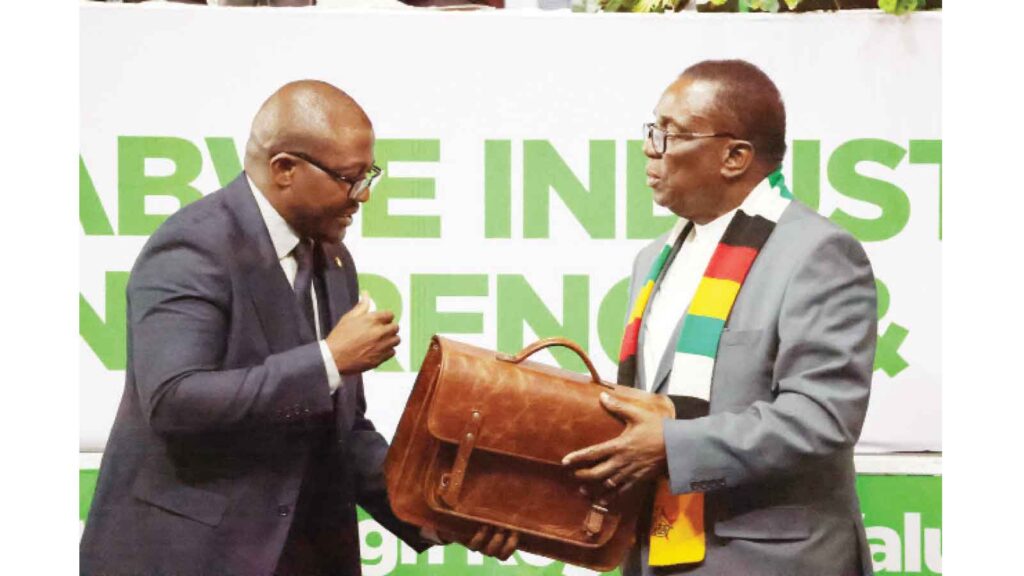
President Mnangagwa receives a token of appreciation from Industry and Commerce Minister Mangaliso Ndlovu at the event.
The country, he said, was strengthening industry-financing mechanisms, improving the investment climate and mobilising domestic as well as international capital to bolster the productive sectors of the economy.
The intricate connection between successful industrial revolution, research, development, technology and innovation could not be overlooked.
President Mnangagwa commended local firms for deploying appropriate technology upgrades and investments, including in artificial intelligence, to improve production efficiencies.
“This reflects the growing commitment by industry players to continuous improvement and innovation. Well done. Under the Second Republic, industrial innovation must translate into stronger domestic value chains, supplier development programmes, industrial clusters and local procurement initiatives that deepen backward and forward linkages,” he said.
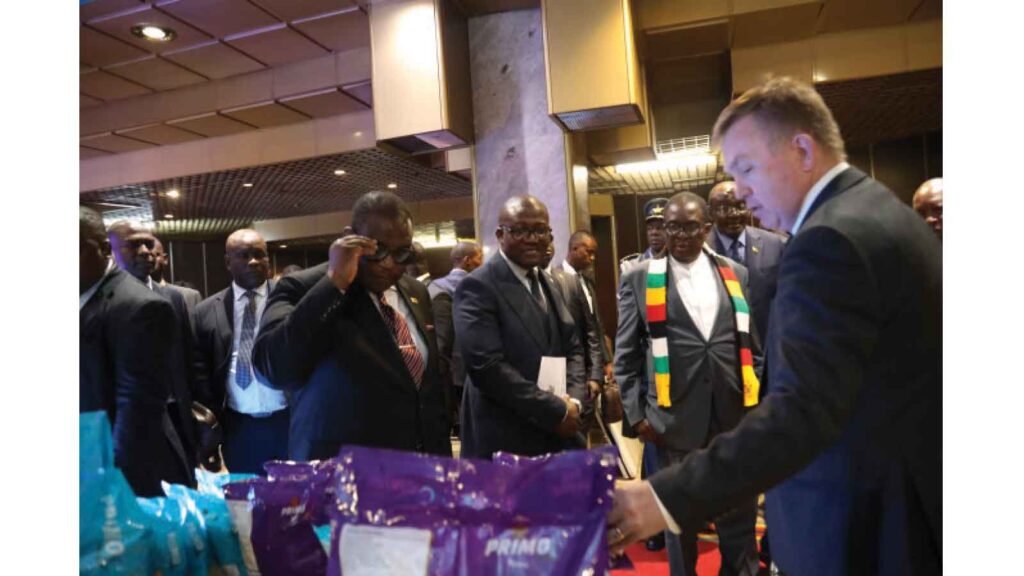
President Mnangagwa (third right) listens as National Foods Group chief executive officer Mr Mike Lashbrook (right) explains his firm’s operations at the Zimbabwe Industrialisation Conference and Expo 2026 in Harare yesterday. Accompanying him are Vice Presidents Dr Constantino Chiwenga (left), Dr Kembo Mohadi (second right), and Industry and Commerce Minister Mangaliso Ndlovu (second left). — Picture: Memory Mangombe.
“Stakeholders in mining and mineral value chain industries are challenged to quickly adapt and ensure that our strategic minerals are value added and beneficiated for win-win benefits. As I have said in the past, my Government does not accept ‘horse and rider’ economic cooperation or investments, including from local manufacturing players.”
He said national resources must be shared equally.
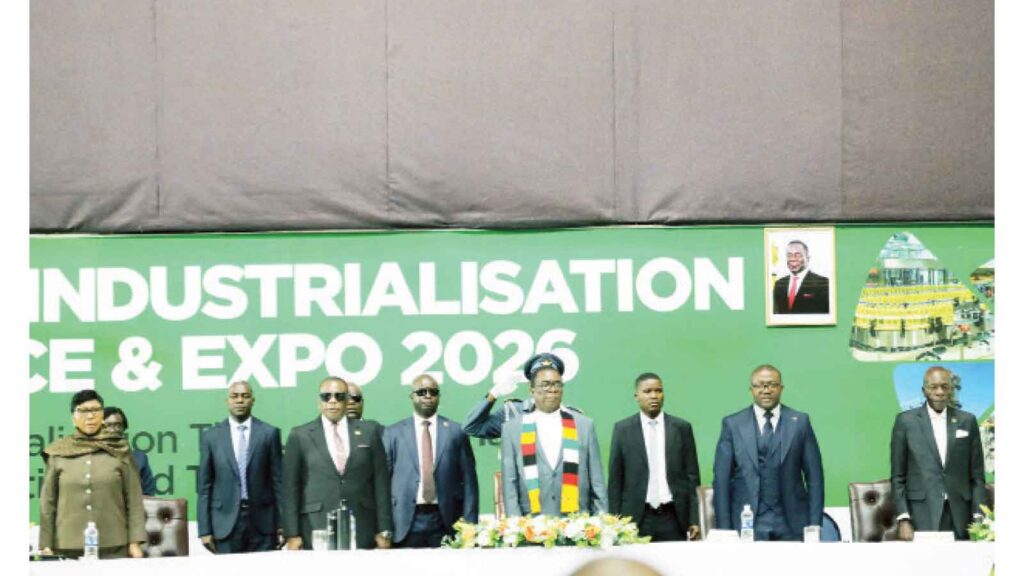
President Mnangagwa, flanked by Vice President Dr Constantino Chiwenga (second from left), Industry and Commerce Minister Mangaliso Ndlovu (second from right), Defence Minister Cde Oppah Muchinguri-Kashiri (left), and Minister of State for Provincial Affairs and Devolution for Harare Metropolitan Province Charles Tawengwa (right), rise for the National anthem at the official opening of the Zimbabwe Industrialisation Conference and Expo 2026 in Harare yesterday. — Picture: Memory Mangombe.
“Our policy stance is unequivocal. National resources must be processed and beneficiated for the realisation of maximum economic returns that benefit all our people, and the economy as a whole, not merely a few shareholders, directors and management,” he said.
He commended the Micro, Small and Medium Enterprises Development Indaba, held last week, where some SMEs which attained a turn-over of US$3 million and above, were moved to the Ministry of Industry and Commerce for contact with Government, joining established companies.
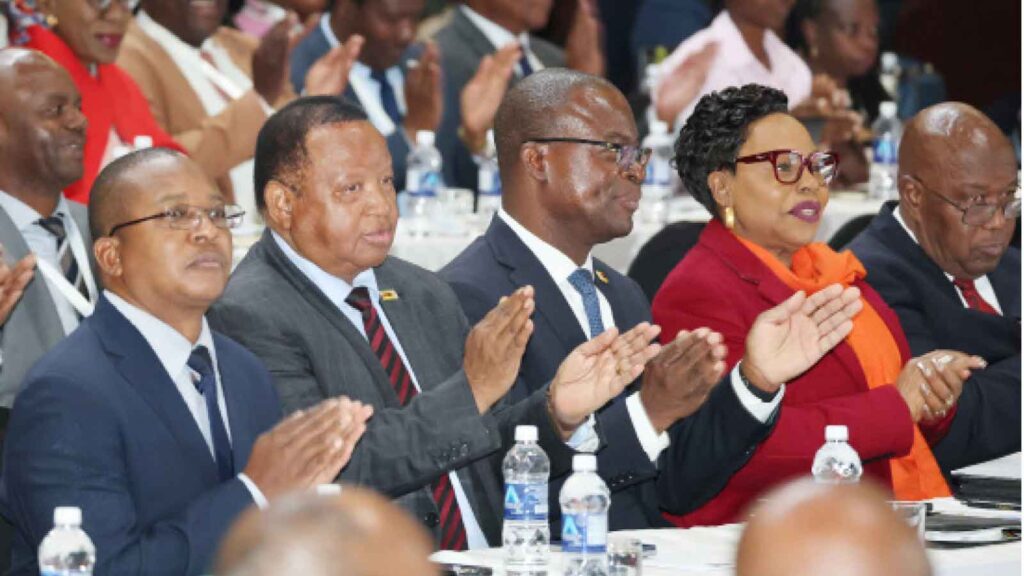
(From left) Mines and Mining Development Minister Dr Polite Kambamura, Higher and Tertiary Education, Innovation, Science and Technology Development Minister Dr Frederick Shava, Foreign Affairs and International Trade Minister Professor Amon Murwira, Women Affairs, Community, Small and Medium Enterprises Development Minister Senator Monica Mutsvangwa and Ambassador Chris Mutsvangwa clap hands as they join delegates in thanking President Mnangagwa for officially opening the Zimbabwe Industrialisation Conference and Expo 2026 in Harare yesterday. — Picture: HTEISTD Communication and Advocacy Officer Kudakwashe Hunda.
“This is commendable and such more entities should be nurtured as we empower our youth and women entrepreneurs,” he said.
The event was attended by Vice President Dr Constantino Chiwenga, Cabinet Ministers, captains of industry, academics, and diplomats accredited to Zimbabwe, among others.