Online Reporter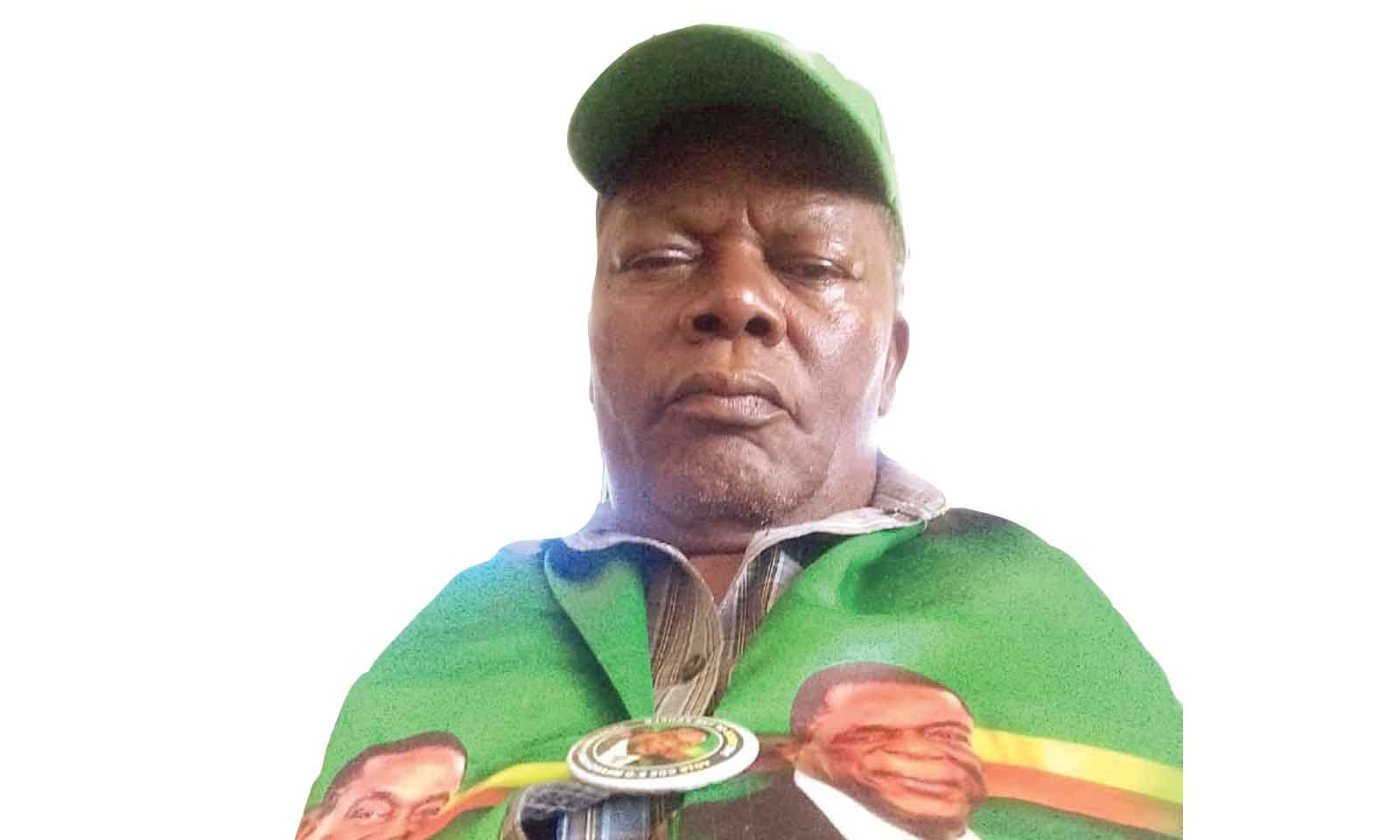
CDE SAMUEL MAKUREYA, who was known by his nom de guerre Knox Zvichapera, continues his account of the famous Mukamba battle, which took place shortly after his unit’s arrival in Hwedza. He chronicles to our Society Editor PRINCE MUSHAWEVATO how they successfully repelled Rhodesian Security Forces following a surprise attack on one of their camps.
********************
Q: Our previous discussion ended just as the Rhodesian soldiers began attacking your camp. How did you survive that assault?
A: The enemy’s lack of intelligence regarding our camp worked to our advantage. They targeted only two specific positions, leaving several of our groups untouched. When they opened fire on those two spots, our remaining units — which they had overlooked — returned fire.
This caught them (Rhodesian soldiers) by surprise and gave the comrades under attack the chance to strategically retreat and regroup. It was a fierce battle. Villagers and war collaborators (mujibhas and chimbwidos) were present when the attack began.
Some were cooking while others performed various tasks around the base. These collaborators played a crucial role in the liberation struggle and were often deployed alongside us, even participating in patrols. They were integrated into almost every position.
Q: War collaborators were not trained fighters. What happened to them during an attack like the one at Mukamba?
A: When attacked, we would defend the base while ensuring their escape.
They followed our instructions strictly; we would tell them where to hide while we engaged the enemy and signal them when it was time to move.
Regarding the ambush, there was a busy road leading to Mukamba because of an adjacent enemy camp called Zvidhuri.
Rhodesian spies (mapuruvheya) and district assistants (DAs) would travel between there and Zvidhuri. The Rhodesians also used that base for reinforcements and to launch attacks, and even helicopters landed there. Because the enemy used that road daily for supplies and movements, we were able to track them.
The noise from their trucks always alerted us to their approach.
One day, hearing the vehicles moving, we left our mountain hideout, crossed the road and set an ambush on a nearby hill.
We were armed with a bazooka. The Rhodesian convoy included several lorries and a mine detector vehicle, which we called chidhimudhimu. As soon as the detector entered our range, we hit it with the bazooka.
The impact was so great that the vehicle spun around, facing back the way it had come.
Q: What happened next?
A: Immediately after hitting the landmine detector, we opened fire on the lorry carrying the soldiers. We neutralised several enemy fighters in that ambush. However, in keeping with guerrilla warfare tactics, we hit them hard and fast before quickly retreating.
This was a deliberate strategy; we knew that whenever the Rhodesian forces were attacked, they would immediately use their radios to call for air or ground reinforcements.
The goal was to strike and vanish before they could respond.
The landmine detector was so heavily damaged it had to be towed away. We retreated through the back of the mountain to return to our original base. The enemy was under the impression we were still hiding on the mountain where the ambush took place. When their reinforcements arrived, they searched that mountain thoroughly but found nothing. We had already crossed the road and returned to our main base.
I was later told that we killed many Rhodesian soldiers in that engagement. It remains one of the most significant battles I participated in during the liberation struggle.
Q: You mentioned the bazooka. Which other weapons did you use for this assault?
A: Typically, a section of about 15 people would carry a bazooka, RPG-2s, lancer assault rifles and LMGs (light machine guns).
Sometimes we were assigned a Mortar 60, but these were not standard for groups of 12 or fewer. Usually, a mortar operator would be seconded to a group specifically for a mission.
The mortar was often kept at the main camp and only released for special operations. For the Mukamba mission, we did not have a Mortar 60, but we did have an RPG-7, which is a larger, more powerful weapon.
You would only be assigned an RPG-7 and a mortar if your numbers were high — for instance, if two sections combined for a joint operation.
Even then, the sections would not necessarily stay together. We would have one group of 15 and another of about 14, each occupying different bases in close proximity.
One group would carry the RPG-7, while the other carried the mortar and LMGs.
Cde Makureya will conclude his narration next week by taking us through his experiences during the transition to peace and his life in post-independence Zimbabwe.