Online Reporter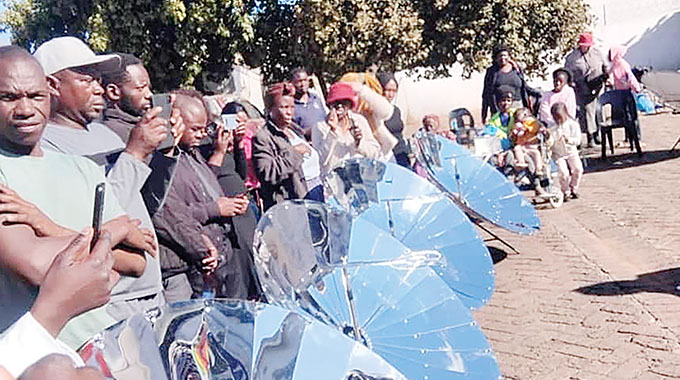
Patrick Chitumba, [email protected]
A CHINESE renewable energy company, Sunflower Solar Technologies, has partnered with people with disabilities in Gweru to launch a solar cooking project, an initiative expected to transform lives while promoting sustainable energy use in Zimbabwe.
As part of the project, the company donated 25 solar cooker kits to persons with disabilities, easing the burden of relying on firewood and electricity for cooking. For many beneficiaries, gathering firewood had been a daunting task due to their conditions, while alternative energy sources such as gas proved costly and unsafe.
Driven by high school students from China under the Education 5.0 Model implementation, the initiative not only provides clean energy but also helps reduce deforestation and cut down on carbon emissions. The move comes at a time when the Government has strengthened its commitment to renewable energy, allocating US$24 million under the Renewable Energy Fund.
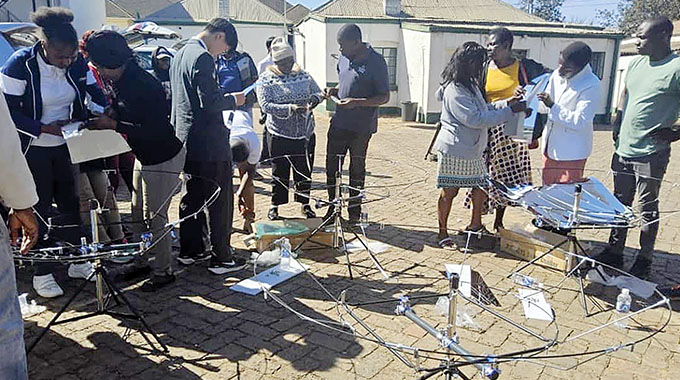
Sunflower Solar Technologies director, Mr Feihan Li, said the project deliberately targeted persons with disabilities in its initial phase as they are among the most vulnerable groups when it comes to energy access.
“When I visited my father, who was working here in 2024, I realised that most people were still relying heavily on firewood and electricity. We want to ensure that people with disabilities are equipped not only with the cookers but also with the skills to assemble them and generate income,” he said.
Mr Feihan said they can produce at least 100 cookers a month, and are hoping to increase.
A representative of persons with disabilities in the Senate, Senator Annah Shiri, commended the project as a symbol of the strong ties between Harare and Beijing.
“What we are witnessing today is a direct result of the enduring co-operation between Zimbabwe and the People’s Republic of China. The need for alternative energy is critical in the face of climate change,” she said.
“What we need as a country is to engage these youngsters so that we can exchange critical knowledge on how to produce such products. If these students from China can produce such innovations, we as a country can also replicate them through our own Education 5.0 model.”
Sen Shiri added that she would engage the Ministry of Higher and Tertiary Education, Innovation, Science and Technology Development and the Ministry of Foreign Affairs to explore ways of tapping into this knowledge for local benefit.
Some of the beneficiaries described the project as life-changing.
“I was finding it difficult to use alternative sources of energy. With load shedding, gas was the only option, but I feared its dangers. I am grateful for this initiative because it provides a safer alternative,” said Ms Vimbai Sibanda.
Another beneficiary added: “This initiative has given me not just a vital cooking tool but also a skill that can transform my life. Being able to assemble solar cookers empowers me economically and socially.”